Editor’s note: this is a developing story. Last updated August 14, 2026.
A Texas federal court blocked NFA registration for certain suppressor transfers on August 13. Coverage is still splitting by state, by dealer, and by who was actually protected by the order. We will update this post if the government files an appeal, if an appeals court stays the order, or if states change their own suppressor rules.
The short version: On August 5, 2026, a federal judge in Texas ruled that the National Firearms Act’s registration and approval process is unconstitutional for suppressors, short-barreled rifles, and short-barreled shotguns, because Congress cut the federal tax on those items to zero. The order took effect August 13. In a large group of states, some covered dealers are now transferring suppressors with only a Form 4473 and a NICS background check, the same paperwork as a regular firearm purchase. The ruling is not a nationwide repeal. It does not cover every buyer or every shop. State bans still stand. The government can still appeal.
This article is general information, not legal advice. Firearm and suppressor laws vary by state and can change quickly. Confirm current federal and state law, or talk to a qualified attorney, before buying or transferring any NFA item.
What the Texas court actually held
Judge James Wesley Hendrix of the U.S. District Court for the Northern District of Texas issued the decision in Silencer Shop Foundation v. ATF (consolidated with Jensen v. ATF) on August 5, 2026.
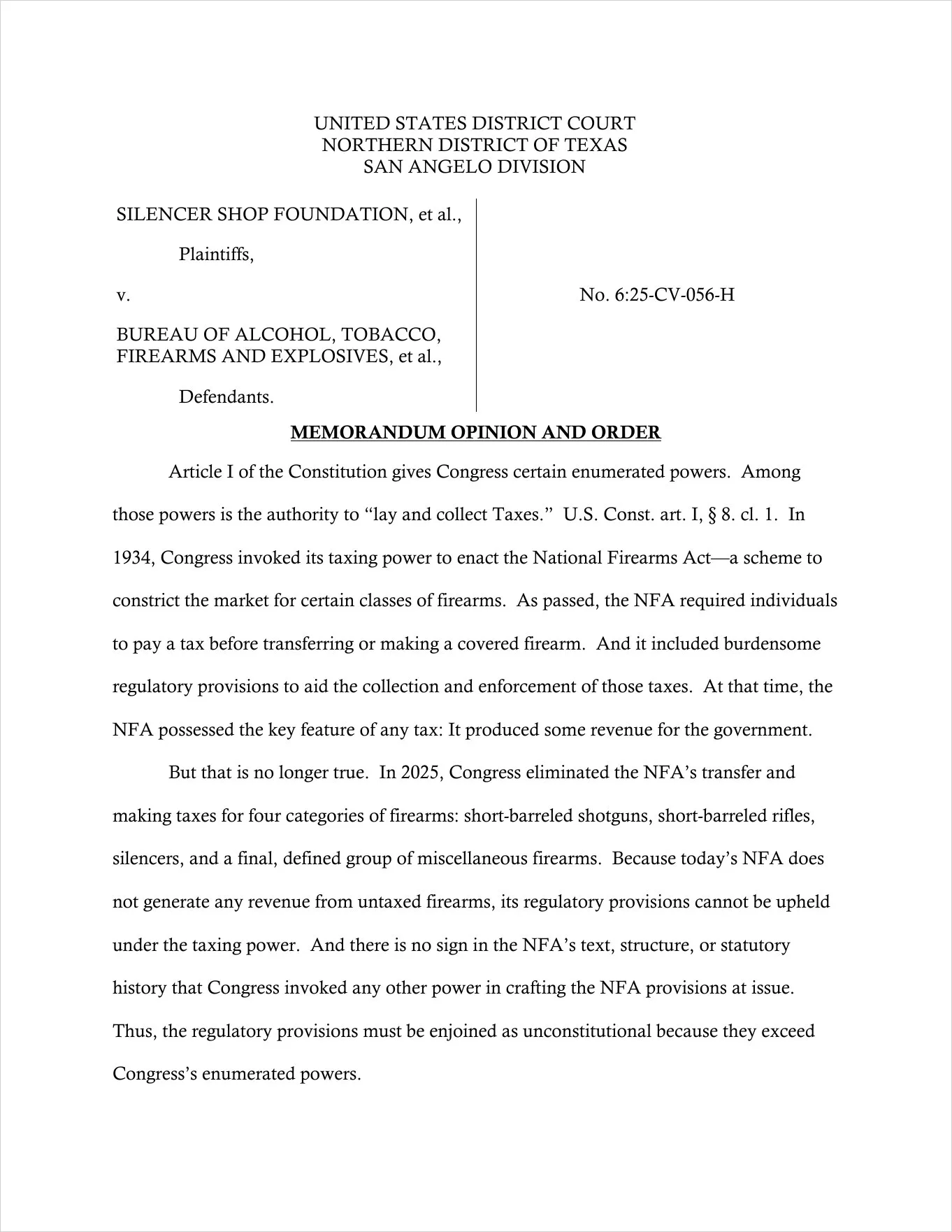
The reasoning is not the Second Amendment argument most people assumed. The NFA passed in 1934 as a tax statute. The $200 tax on making or transferring items like suppressors was the constitutional hook, and the registration system existed to collect that tax. When the One Big Beautiful Bill Act cut the tax on suppressors, short-barreled rifles, short-barreled shotguns, and AOWs to $0 effective January 1, 2026, the court held that a zero-dollar tax raises no revenue. The registration and approval machinery built to collect it no longer has a constitutional basis for those items.
The court gave the government seven days to seek a stay from the appeals court. That deadline passed without a stay, and the injunction took effect at 12:01 a.m. Central on August 13, 2026. Minutes later, the first suppressor transfers without NFA registration since 1934 were completed at a Texas dealer, using a standard Form 4473 and NICS check. No Form 4. No fingerprints. No tax stamp. No new registry entry.
What changed for a suppressor buy
For covered transactions, the federal process got a lot shorter:
- No ATF Form 4 application or multi-month approval wait
- No $200 tax stamp (that tax has already been $0 since January 1, 2026)
- No fingerprints, photographs, or new NFA registry entry
- A covered suppressor purchase can be same-day, like a regular firearm transfer
A lot of the old rules did not move at all:
- The Gun Control Act still fully applies. Buyers still complete a Form 4473 and pass a NICS background check through a licensed dealer. Prohibited persons still cannot buy.
- Machine guns and destructive devices are unaffected. Their $200 tax remains, and so does their registration requirement.
- State law still controls. A federal injunction does not override a state suppressor ban or a state rule that still ties legality to NFA paperwork.
- The NFA statutes are still on the books. The court blocked enforcement for protected parties. It did not erase the law.
- Short-barreled rifles and shotguns are messy in practice. The opinion covers them. Some dealer guidance still keeps those items on a Form 4 because the Gun Control Act separately requires Attorney General approval. Follow the process your dealer is actually using.
Where this applies, and where it doesn’t
Do not treat social media maps as a shopping list. Coverage right now is breaking into three groups. Industry compliance lists circulating this week put roughly half the states in the first group. We have not independently verified every state statute, so confirm with your dealer and your state’s current law before you act.
- States where some covered dealers are running 4473-only transfers. This group includes Texas, Florida, Tennessee, Arizona, Missouri, and much of the South, Midwest, and Mountain West. Even there, plenty of independent shops are still using a Form 4 until they get written guidance.
- States whose own laws still tie suppressor legality to federal NFA registration. Ohio, Pennsylvania, North Carolina, Georgia, Michigan, Washington, Oregon, and Colorado are commonly listed here. Dealers in those states are generally staying on the traditional Form 4 process until the state law changes.
- States (and D.C.) that ban civilian suppressor possession outright. California, New York, New Jersey, Illinois, Massachusetts, Hawaii, Delaware, Rhode Island, and the District of Columbia. Nothing about this ruling legalized a suppressor there.
Most state legislatures are out of session until January 2027, so this map should hold in the near term. A few states were already moving on their own. South Dakota removed silencers from its controlled weapons list in February 2026. Missouri has had suppressor legislation moving through its House this year. We will keep this post current as states react.
Why this is not “the NFA is dead”
The ruling is party-specific, not nationwide. The judge declined to issue a universal injunction. Protection extends to the plaintiff organizations, their members, and customers transacting through protected dealers, which is also how compliance analysts are reading the order. Buying outside a covered channel is not clearly protected. Industry compliance people have been warning against treating this as a repeal of the NFA, and that warning is correct.
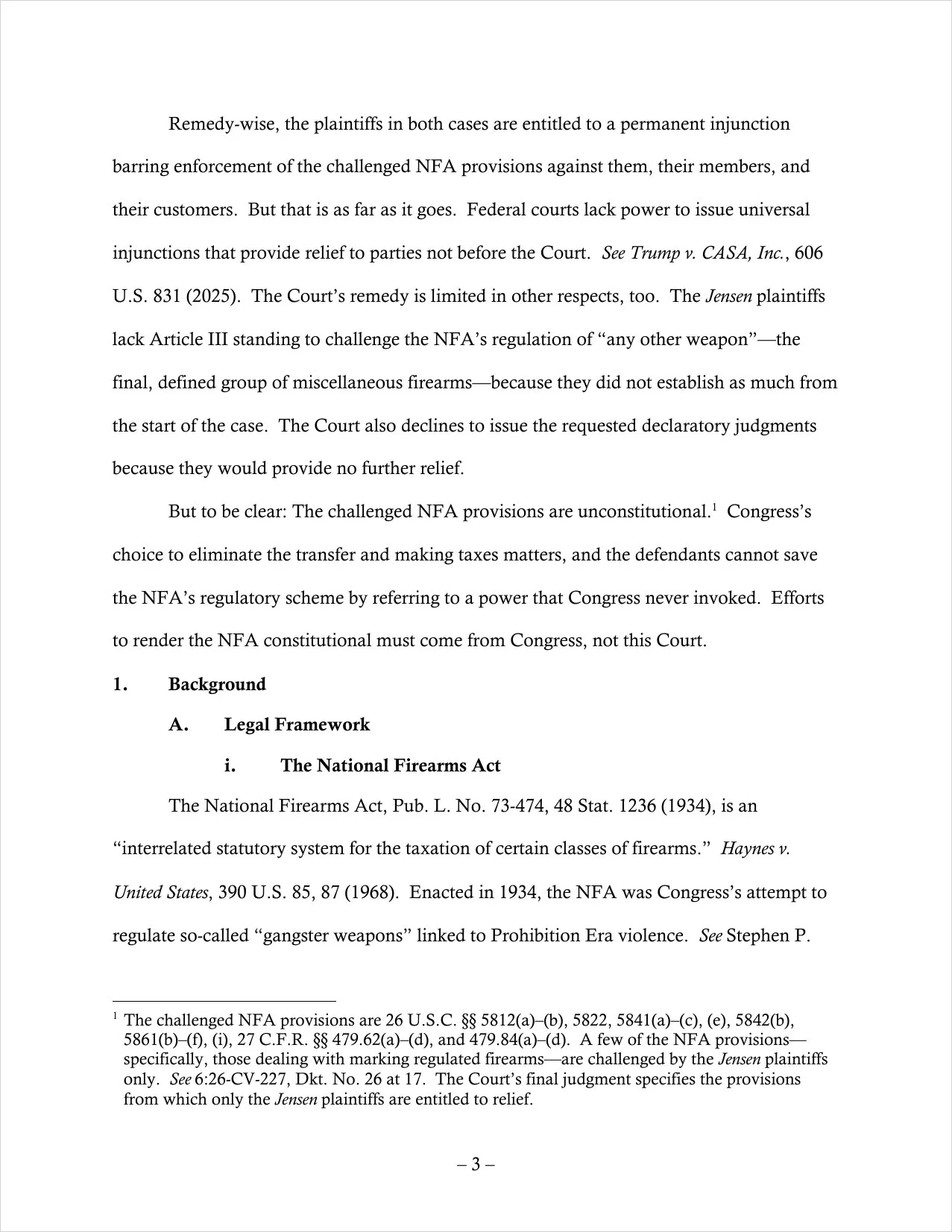
CBS News put the limit in the headline itself: some Americans, not all Americans.
The government can still appeal. The Department of Justice declined to stay the ruling. As of August 14 it has not formally waived appeal, and the ordinary deadline runs into early October. If the Fifth Circuit stays or reverses the decision, the Form 4 process comes back. Anyone buying under the new process should keep the transaction records and stay current.
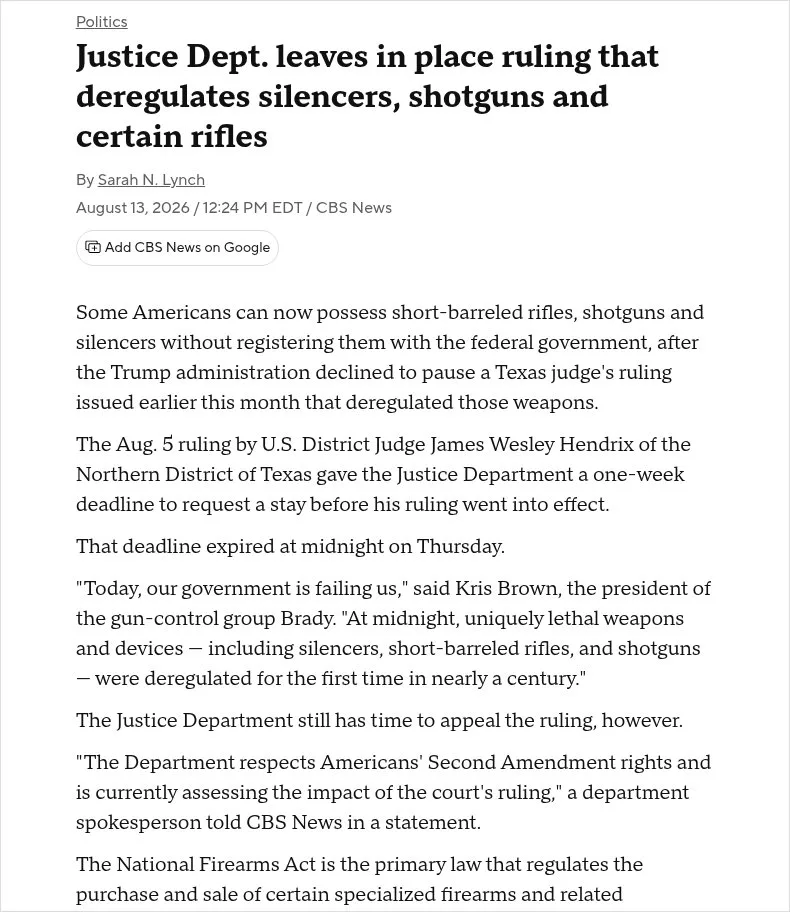
Many shops cannot flip a switch even if they want to. A suppressor that was manufactured, serialized, and moved on Form 2 / Form 3 is already sitting on that dealer’s NFA book. A 4473 does not, by itself, take the item off the National Firearms Registration and Transfer Record. ATF has not published operational guidance on that point. That is why a lot of reputable stores are still running Form 4s. It is not them being difficult. It is them protecting their license.
When in doubt, follow the process your dealer uses. If your shop is still collecting fingerprints and filing a Form 4, that is the lawful path in front of you. Do not try to talk a dealer into skipping paperwork they are not comfortable skipping.
The ammo side
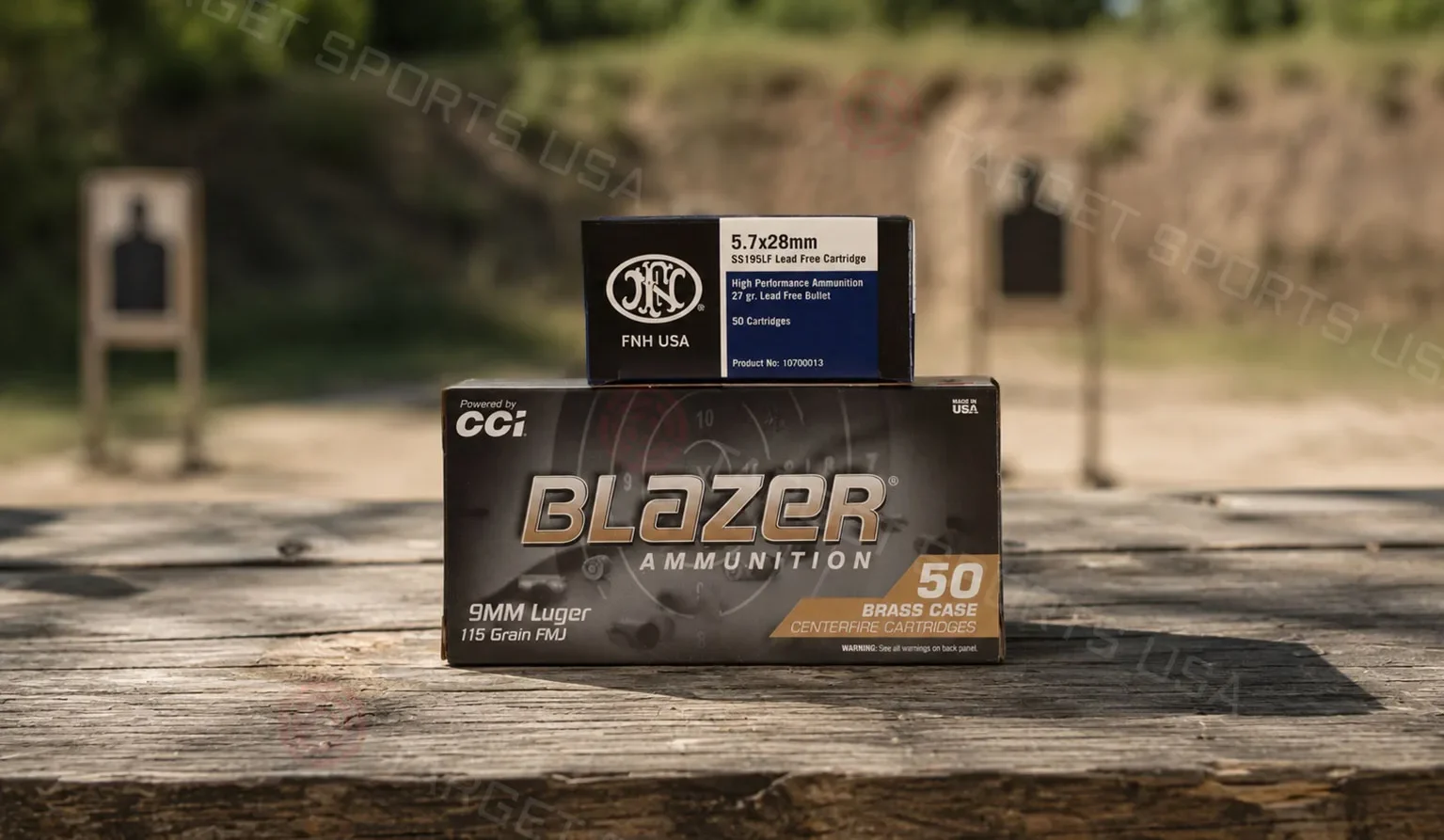
Target Sports USA sells ammunition. We do not sell suppressors. If a transfer just got simpler where you live, the next question is usually what you shoot through the host. A suppressor cuts mechanical noise. It does not erase the crack of a supersonic bullet. Shooters looking for a quieter setup often start with subsonic loads in a few common calibers. We do not recommend a specific load for any firearm. Match ammunition to the caliber stamped on the gun and to the manufacturer’s guidance.
We already walked through caliber choice in Best Calibers for Subsonic Shooting and the speed tradeoffs in Subsonic vs Supersonic Ammo. If you want to browse by caliber:
- .22 LR: .22 LR buyer’s guide · .22 LR ammo
- 9mm: Best Subsonic 9mm Ammo · subsonic 9mm
- .300 Blackout: 6.8 SPC vs 300 Blackout · .300 Blackout ammo
- .45 ACP: .45 ACP ammo
You do not need a suppressor to shoot subsonic ammunition. Plenty of people run it at indoor ranges just to cut the crack. All subsonic ammunition.
Frequently asked questions
The $200 federal tax on suppressors dropped to $0 on January 1, 2026. As of August 13, 2026, a federal court ruling also blocked the registration requirement for covered transactions. In those cases, some dealers now transfer a suppressor with only a Form 4473 and a background check. In other states, the Form 4 process still applies under state law.
No. The ruling blocks enforcement of NFA registration for suppressors, short-barreled rifles, and short-barreled shotguns for protected parties and transactions. Machine guns and destructive devices are unaffected. The statutes remain on the books. The government can still appeal.
Yes. Suppressor buyers still complete a Form 4473 and pass a NICS background check through a licensed dealer, the same as buying a firearm. Prohibited persons still cannot purchase.
Suppressors remain illegal for civilians in California, New York, New Jersey, Illinois, Massachusetts, Hawaii, Delaware, Rhode Island, and D.C. Other states still tie legality to federal NFA registration, so the traditional Form 4 process still applies there. Verify your state’s current law before buying.
Yes. The government has until early October 2026 to appeal to the Fifth Circuit, which could stay or overturn the decision. This post will be updated if the legal situation changes.
No. Subsonic ammunition can be used in any firearm chambered for that caliber. A suppressor reduces mechanical noise. Subsonic loads remove the sonic crack whether a suppressor is attached or not.
Sources
Court opinion · Final judgment · CBS News · New York Times · Orchid Advisors · NRA-ILA · South Dakota SB 2 · Missouri HB 1730. Legislative tracking data via LegiScan.
Disclaimer: This article is general information, not legal advice. Firearm and suppressor laws change often, vary by state and locality, and can be affected by appeals and later court orders. The details here reflect our reading of the August 5, 2026 opinion, the August 13 effective date, and public reporting as of August 14, 2026. Verify current federal and state law, or consult a qualified attorney licensed in your state, before buying or transferring any NFA item. Customers are responsible for knowing and following the federal, state, and local laws that apply to them. Target Sports USA sells ammunition. We do not sell suppressors and assume no liability for actions taken based on this content.

Kailon Kirby covers the ammunition market for Target Sports USA, where he has a view most writers never get. Working inside one of the country's largest online ammo retailers, he tracks pricing movements, supply conditions, and brand-level shifts as they happen, not after the fact.
A Connecticut State Pistol Permit and Concealed Carry holder, Kailon isn't just watching the numbers. He shoots, he carries, and he understands what market changes actually mean for the person standing at the counter or checking out online. That combination of ground-level industry access and shooter perspective is what shapes everything he writes.
When something is moving in the ammunition market, Kailon is usually the first to see it.
- Kailon Kirby
- Kailon Kirby

- Kailon Kirby
- Kailon Kirby

The Target Sports USA editorial team is made up of licensed firearms owners, competitive shooters, and industry professionals with decades of combined experience in the ammunition and shooting sports space. Content published under this byline reflects the collective expertise of the TSUSA team and is reviewed for accuracy before publication.
- Target Sports USA
- Target Sports USA
- Target Sports USA
- Target Sports USA