New Items!
Explore Latest AMMO Deals

Shotgun Calibers Size Chart and Guide
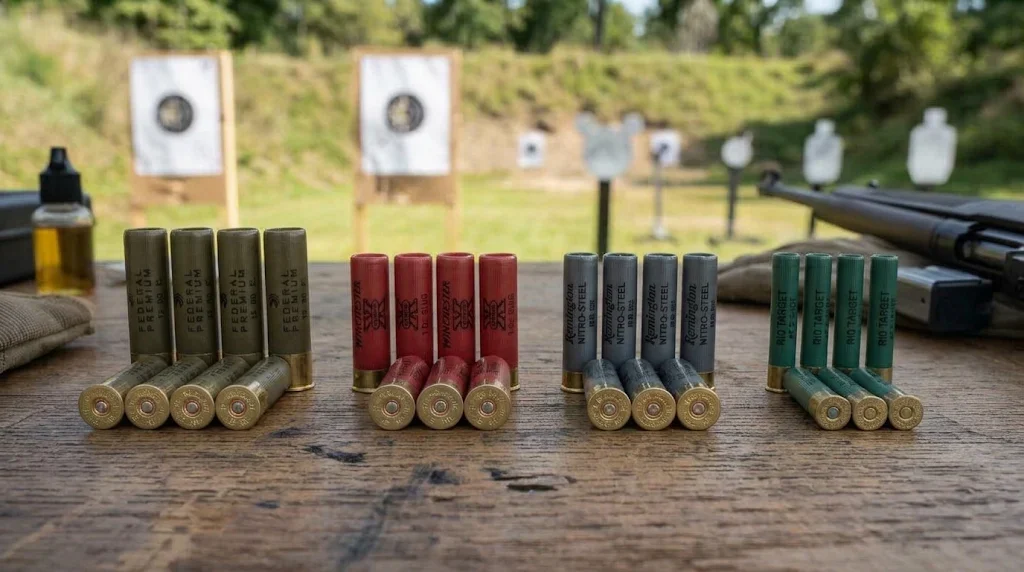
Comprehensive guide to shotgun gauges and loads, from .410 bore to 10 gauge. Compare shell length, shot size, velocity, payload weight, and ideal applications for waterfowl, upland game, home defense, and clay target sports.
8 cartridges · 12 Gauge ranked #1 · Data reviewed September 2026
Target Sports USA · Data reviewed September 2026 · Part of the Ammo Caliber Hub
Quick answer
Most shooters land on one of three: 12 Gauge for maximum power and endless load variety across hunting, clay sports, and defense, 20 Gauge for lightweight carrying with manageable recoil, and .410 Bore for subtle, low-recoil control and training. Everything else on this chart is a specialist.
The most popular, side by side
Every Shotgun Cartridge
Search, filter by use, or click a column to sort.
Pick by what you will shoot
Shotgun calibers, head to head
Common Shotgun caliber questions
Short answers. The comparisons above go deeper.
What is the difference between 12 gauge and 20 gauge?
A 12 gauge has a larger bore (about 0.729 in) than a 20 gauge (about 0.615 in), so it holds a heavier shot charge, roughly 7/8 to 2 oz against 5/8 to 1 1/4 oz. That makes 12 gauge the most versatile choice for waterfowl, turkey and defense. A 20 gauge kicks less and its guns are usually lighter, which suits upland hunting and smaller-framed or younger shooters.
What does gauge mean on a shotgun?
Gauge is the number of lead balls, each the diameter of the bore, that together weigh one pound. A 12 gauge bore fits a ball weighing 1/12 lb, so a smaller number means a bigger bore: 10 gauge is larger than 12, and 28 gauge is smaller than 20. The .410 is the exception, named for its bore diameter in inches.
Is a .410 a gauge, and what is it good for?
No. The .410 is named for its bore diameter in inches, which works out to roughly 67 gauge. It fires a light shot charge (about 1/4 to 11/16 oz) with mild recoil, so it is used for small game such as squirrels and rabbits at close range and in skeet. The small charge leaves less room for error on moving targets than a 20 or 28 gauge.
Is 20 gauge good for home defense?
Yes, 20 gauge is a common home-defense choice for shooters who want less recoil than a 12 gauge, and buckshot loads are made for it. A 12 gauge carries a heavier payload and has the widest choice of defensive loads. The better choice is the one you can shoot accurately and control.
Caliber Hub
By Purpose