Skip the Guesswork — We’ve Done the Homework (And So Have 55,000+ of Our Customers)
Trying to decide between .308 Winchester and 5.56 NATO? You’re in the right place.
Having been in the ammo game for over 15 years here at Target Sports USA, we’ve shipped truckloads of both — and our customers have left more than 55,000 verified reviews across these two calibers telling us exactly how each one runs in the real world. AR-15s, AR-10s, M1As, bolt guns, deer stands, 3-gun matches, 800-yard steel… it’s all in there.
Most “308 vs 556” articles give you the same recycled ballistics talk. We’ll cover that ground too (properly), but then we’ll show you something nobody else can: what thousands of actual buyers say after running these exact loads through their own rifles.
Who this guide is for:
- Shooters trying to decide on their first (or next) rifle caliber — AR-15 vs AR-10/bolt gun
- Hunters wondering if 5.56 is enough gun, or if they should step up to .308
- High-volume shooters comparing the real cost, recoil, and range of each cartridge
- Anyone who wants review-backed load recommendations, not just theory
What’s in the guide:
- A true side-by-side spec and ballistics comparison using named, purchasable loads (not vague “manufacturer averages”)
- Aggregate ratings pulled from our own verified review database — 12,500+ reviews on .308 ammo and 43,000+ on 5.56/.223 ammo
- Hands-on breakdowns of the top loads in each caliber, with real customer feedback quoted word-for-word
- Real questions customers asked our ammo desk — and the answers we gave them
- A deep-dive FAQ to button up everything else (5.56 vs .223 chambers, .308 vs 7.62 NATO, green tip rules, and more)
BONUS: Every load featured in this article links to its live product page, where you can read all of its reviews and customer Q&As yourself. We’re not asking you to take our word for anything.
TLDR: The Short Answer on 308 vs 5.56
The .308 Winchester hits roughly twice as hard and stays effective further out; the 5.56 NATO is cheaper, lighter, and far easier to shoot fast and well. The 5.56 carries about half the muzzle energy, but it also generates roughly a third of the recoil, costs about half as much per round, and lets you carry more than twice the ammo for the same weight. If your priorities are big game, barriers, or energy past 600 yards, the .308 wins. If your priorities are volume training, home defense, varmints, deer-and-down game at modest range, or all-day shootability, the 5.56 wins. That’s why so many shooters eventually own both.
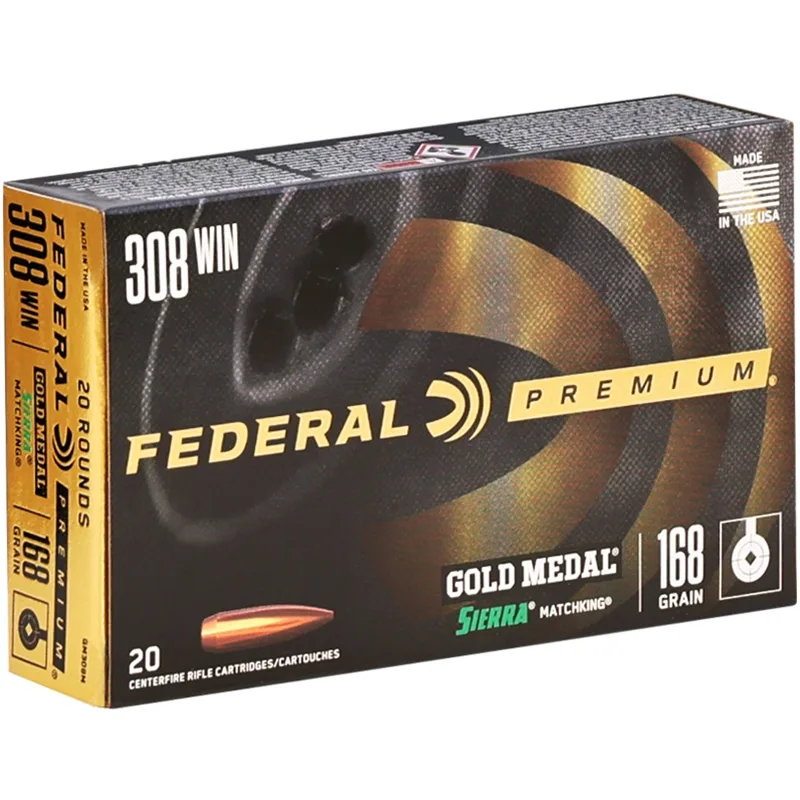
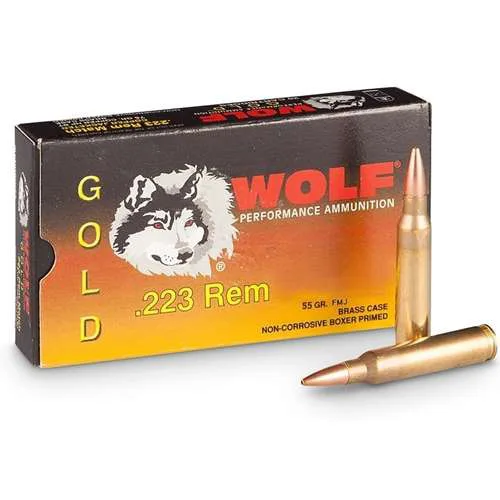
Join AMMO+ to save even more on every load in this article | Notice: Ratings and review counts are from our verified customer review database at the time of writing and will only grow from here.
308 vs 5.56 Side-by-Side: The Spec Sheet
Here’s the head-to-head at a glance. (We’ll unpack every row below.)
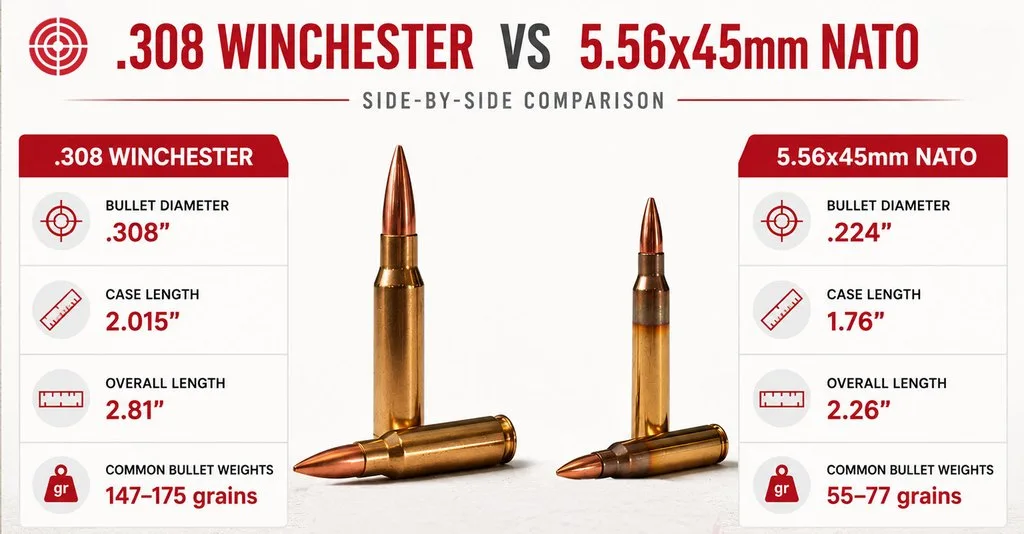
| Spec | 5.56x45mm NATO | .308 Winchester |
|---|---|---|
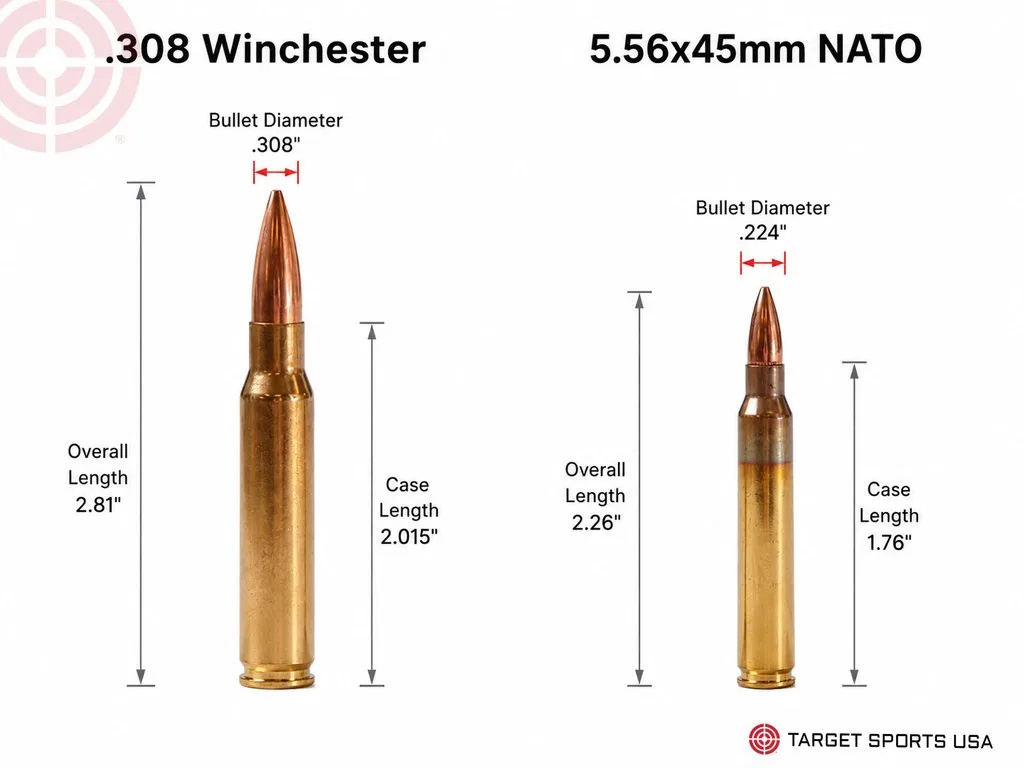
| Bullet Diameter | .224” | .308” |
| Case Length | 1.76” | 2.015” |
| Overall Length | 2.26” | 2.81” |
| Parent Case | .223 Remington (.222 lineage) | .30-06 via the T65 program |
| Common Bullet Weights | 55, 62, 75–77 grains | 147, 150, 168, 175 grains |
| Typical Muzzle Velocity | 2,700–3,300 fps | 2,600–2,850 fps |
| Typical Muzzle Energy | ~1,250–1,350 ft lbs | ~2,400–2,650 ft lbs |
| Felt Recoil (typical rifle) | ~5–7 ft lbs | ~18–22 ft lbs |
| Action Length | Mini/AR-15 length | Short action / AR-10 length |
| Rounds per 22 lbs of ammo | ~660 | ~280 |
| Relative Cost Per Round | Baseline (cheapest centerfire rifle practice) | Roughly 2x the price of 5.56 |
| Practical Strong Suit | Volume, speed, low recoil, capacity | Energy, barriers, big game, wind |
What Is .308 Winchester? (And How It Differs From 7.62 NATO)
The .308 Winchester is the commercial cartridge Winchester introduced in 1952, born from the U.S. military’s T65 program to shorten the .30-06 without giving up much performance. The military version — 7.62x51mm NATO — was standardized shortly after and fed legends like the M14 and M60. The civilian .308 Win went on to become arguably the most popular short-action big game cartridge in America.
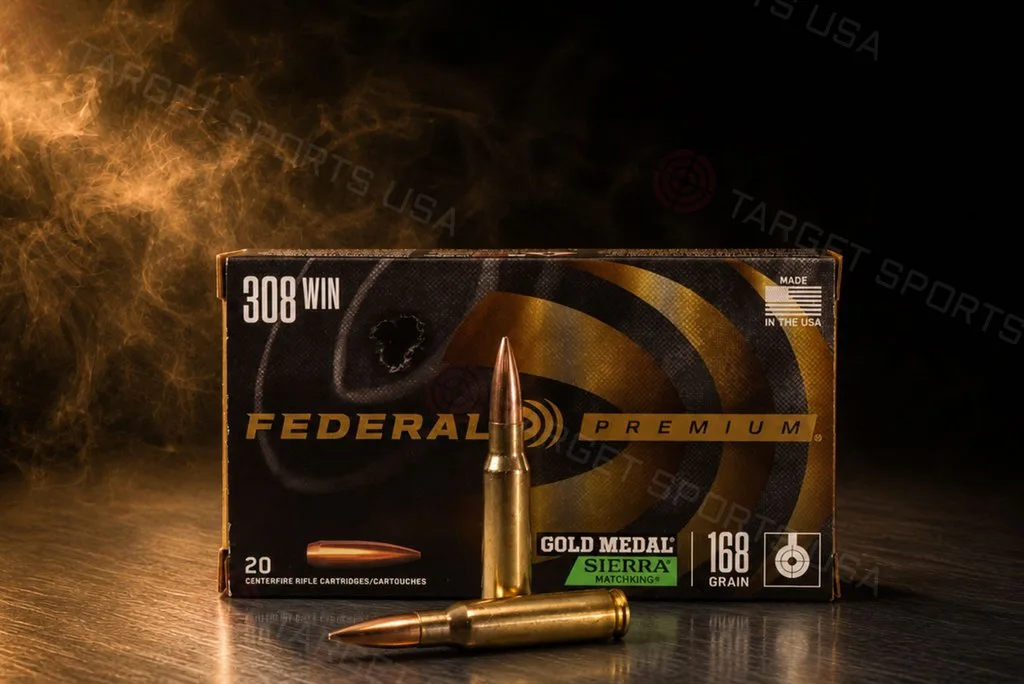
What you get with .308: a .30-caliber bullet in the 147–180 grain range moving 2,600–2,850 fps, which works out to roughly 2,400–2,650 ft lbs of muzzle energy in the common loadings we sell. That’s the “hits like a truck” half of this comparison.
The .308 vs 7.62×51 NATO wrinkle: they’re dimensionally interchangeable, but they’re not identical twins. Commercial .308 Win is loaded to a higher SAAMI pressure ceiling (62,000 psi) than 7.62 NATO (roughly 60,000 psi), while NATO brass tends to run thicker and NATO chambers run slightly longer headspace. The practical rule most shooters follow: 7.62 NATO is fine in a .308 Win rifle; check your manual before running hot commercial .308 in older or looser military 7.62 chambers — and gas guns like the M1A have their own ammo etiquette (more on that in the FAQ desk section below).
Browse all in-stock .308 Winchester ammo here.
What Is 5.56 NATO? (And How It Differs From .223 Remington)
The 5.56x45mm NATO came out of the late-1950s/early-1960s small-caliber, high-velocity push that gave us the AR-15 — the .223 Remington came first commercially, the U.S. military fielded the M16 in the early 1960s, and NATO later standardized the 5.56 with the heavier SS109 (62 grain “green tip”) loading around 1980. (For what it’s worth, the top-ranking articles on this topic give four different dates for this history — we’ve kept to the parts everyone agrees on.)
What you get with 5.56: a .224-caliber bullet, most commonly 55 grains (M193 spec) or 62 grains (M855 spec), at 2,900–3,300 fps for roughly 1,250–1,350 ft lbs of muzzle energy. Half the punch of .308 — but at half the cost, a fraction of the recoil, and in a rifle that weighs a pound and a half less.
The 5.56 vs .223 wrinkle: the cartridges look identical, but 5.56 NATO is loaded to a higher pressure spec and fired in a chamber with a longer throat (freebore). The universally safe rule: .223 Remington is fine in any 5.56 chamber. Firing 5.56 in a true .223 chamber raises pressures and is not recommended — though we’ll be honest with you in the FAQ below about how hotly that risk is debated. A 223 Wylde chamber happily runs both with match accuracy.
Browse all in-stock 5.56mm NATO ammo here and .223 Remington ammo here.
308 vs 5.56 Ballistics: Real Loads, Real Numbers
Most comparison articles quote vague “manufacturer averages” — one top-ranking article literally compares a 178 grain .308 hunting load against a 73 grain .223 match load and calls it a day. We’d rather show you the factory specs for the exact loads our customers actually buy, so every number in this table has a product page (and hundreds-to-thousands of reviews) behind it:
| Load | Caliber | Grain | Muzzle Velocity | Muzzle Energy | Verified Reviews | Avg Performance |
|---|---|---|---|---|---|---|
| PMC X-Tac 556X (M193 spec) | 5.56 NATO | 55 gr | 3,270 fps | 1,306 ft lbs | 1,943 | 4.83 / 5 |
| Federal XM193 Bulk 1000rd | 5.56 NATO | 55 gr | 3,240 fps | 1,282 ft lbs | 1,022 | 4.86 / 5 |
| PMC X-Tac 556K (M855 green tip) | 5.56 NATO | 62 gr | 3,100 fps | 1,323 ft lbs | 2,069 | 4.83 / 5 |
| Wolf Gold WG22355 | .223 Rem | 55 gr | 3,250 fps | 1,290 ft lbs | 2,201 | 4.74 / 5 |
| Federal Gold Medal GM223M3 (77gr SMK) | .223 Rem | 77 gr | 2,720 fps | 1,265 ft lbs | 157 | 4.86 / 5 |
| Black Hills MK262 Mod 1-C (77gr OTM) | 5.56 NATO | 77 gr | 2,725 fps | 1,269 ft lbs | 115 | 4.87 / 5 |
| PMC Bronze 308B | .308 Win | 147 gr | 2,780 fps | ~2,520 ft lbs | 946 | 4.73 / 5 |
| Aguila 308 FMJ 1E308110 | .308 Win | 150 gr | 2,751 fps | 2,428 ft lbs | 298 | 4.50 / 5 |
| Federal Power-Shok 308A (hunting SP) | .308 Win | 150 gr | 2,820 fps | 2,648 ft lbs | 151 | 4.78 / 5 |
| Hornady American Whitetail 8090 | .308 Win | 150 gr | 2,820 fps | 2,649 ft lbs | 118 | 4.77 / 5 |
| Federal Gold Medal GM308M (168gr SMK) | .308 Win | 168 gr | 2,650 fps | 2,619 ft lbs | 1,708 | 4.91 / 5 |
| Federal Gold Medal GM308M2 (175gr SMK) | .308 Win | 175 gr | 2,600 fps | 2,627 ft lbs | 852 | 4.87 / 5 |
Note: Velocity and energy figures are manufacturer specs (5.56/.223 typically from a 20” test barrel, .308 typically from a 24” test barrel). Your 16” carbine will run slower — customer chronograph reports in our reviews back this up, like the buyer who measured 2,404 fps from Gold Medal 175gr in a 16.5” Remington 700.
What the downrange picture looks like
A few things the muzzle numbers don’t show:
- Energy gap widens, then matters most. The .308 leaves the muzzle with roughly double the energy of 5.56, and because heavier .30-cal bullets carry higher ballistic coefficients, that gap grows downrange. Past 500 yards, common 55 grain 5.56 loads drop below the energy of some handgun rounds at the muzzle, while a 168–175 grain .308 match load is still carrying well over 1,000 ft lbs.
- Trajectory is closer than you’d think. Inside 300 yards there’s little practical difference for a zeroed rifle. With a 200-yard zero, both cartridges drop roughly 8–9 inches at 300 yards with quality loads. At 500 yards, depending on the load, you’re looking at roughly 45–70 inches of drop with either — dial or hold, you’re doing math either way.
- Wind is where .308 earns its keep. A 10 mph crosswind pushes a 55–73 grain .223/5.56 bullet noticeably harder than a 168–178 grain .308 — published comparisons of match loads show roughly 25–30% more drift for the small bore at 500 yards. Heavy 77 grain 5.56 match loads (like the MK262 below) close a lot of that gap, which is exactly why they exist.
- Accuracy is a wash inside 600. Modern factory rifles in both calibers shoot 1–2 MOA with quality ammo, and our customer reviews report sub-MOA groups with the match loads in both calibers. Don’t pick a caliber expecting it to out-shoot the other on paper at 100 yards — it won’t.
What 55,000+ Verified Buyers Told Us About These Two Calibers
Here’s the part of this comparison nobody else on page one can show you. We pulled the numbers from our verified customer review database (approved reviews only) across every 5.56/.223 and .308 Winchester product we carry:
| 5.56 / .223 | .308 Winchester | |
|---|---|---|
| Verified customer reviews | 43,234 | 12,573 |
| Products reviewed | 463 | 253 |
| Average performance rating | 4.73 / 5 | 4.70 / 5 |
| Five-star performance ratings | 35,026 (81%) | 10,090 (80%) |
A few honest takeaways from reading through this mountain of feedback:
1. Satisfaction is a dead heat. A 4.73 vs 4.70 average across 55,000+ reviews is statistical noise. Pick the caliber that fits your use case — our customers are equally happy on both sides of the fence.
2. The 5.56 crowd buys volume; the .308 crowd buys precision. The best-reviewed 5.56/.223 products are bulk FMJ — 1,000-round cases of PMC X-Tac, Wolf Gold, and Federal XM193. The best-reviewed .308 products are match loads — Federal Gold Medal 168 and 175 grain. That tells you exactly how people actually use these calibers: 5.56 for reps, .308 for results.
3. Our single highest-rated rifle load is a .308. Federal Gold Medal Match 168gr sits at 4.91/5 performance across 1,708 reviews — the strongest performance score of any high-volume rifle SKU we sell in either caliber.
4. Budget .308 is the one place reviews dip. Steel-case .308 (Tula, Wolf MC) averages in the 4.4s — fine for trigger time, but .308 buyers grading practice ammo against match expectations show it in the scores. Budget 5.56/.223 doesn’t suffer the same penalty; Wolf Gold runs a 4.74 with 2,200+ reviews.
The Best 5.56 / .223 Ammo (Ranked by Our Customers)
Each pick includes specs, the live review count and average performance rating, and real customer feedback quoted word-for-word. Click any product name to see it on Target Sports USA.
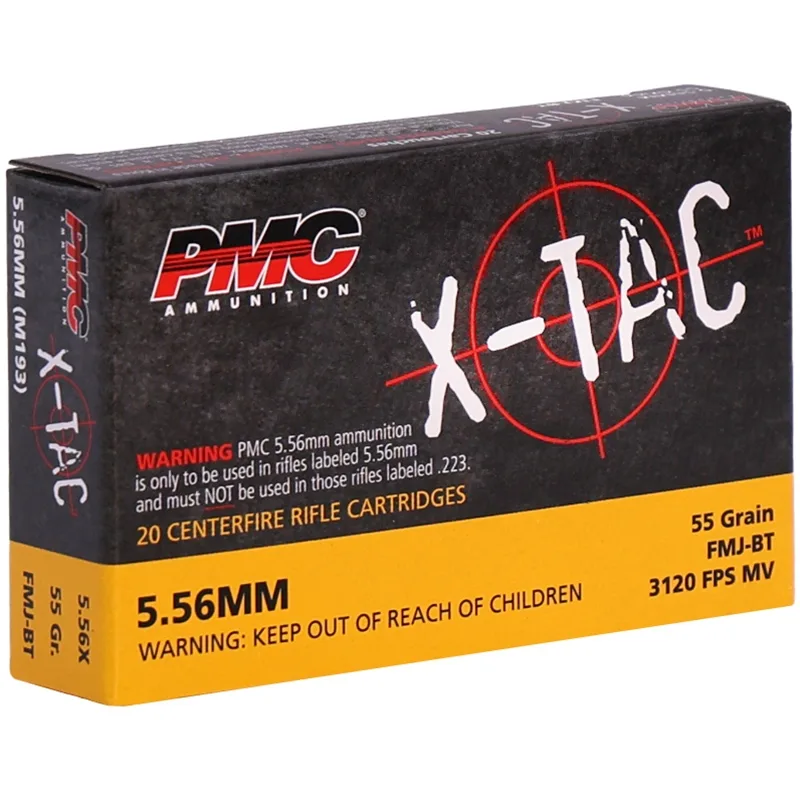
PMC X-Tac 5.56x45mm NATO 55 Grain FMJ – 556X – Best All-Around 5.56
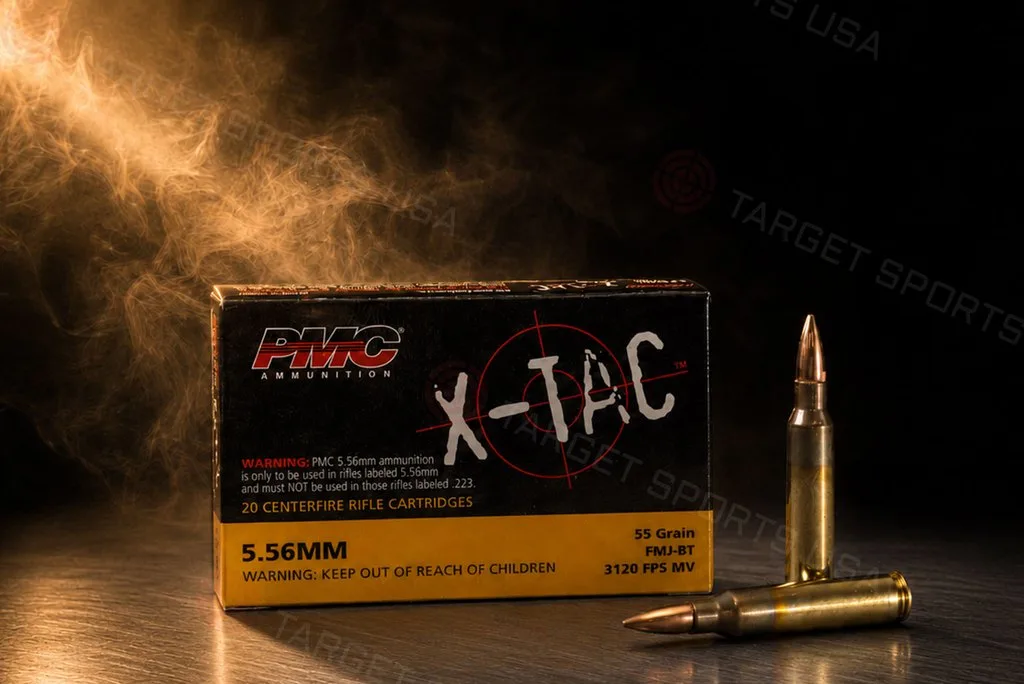
| Manufacturer | PMC |
| Caliber | 5.56x45mm NATO |
| Bullet Type | Full Metal Jacket (M193 spec) |
| Muzzle Velocity | 3,270 fps |
| Muzzle Energy | 1,306 ft lbs |
| Casing | Brass (Boxer primed, reloadable) |
| Grain | 55 |
| Verified Reviews | 1,943 |
| Avg Performance Rating | 4.83 / 5 |
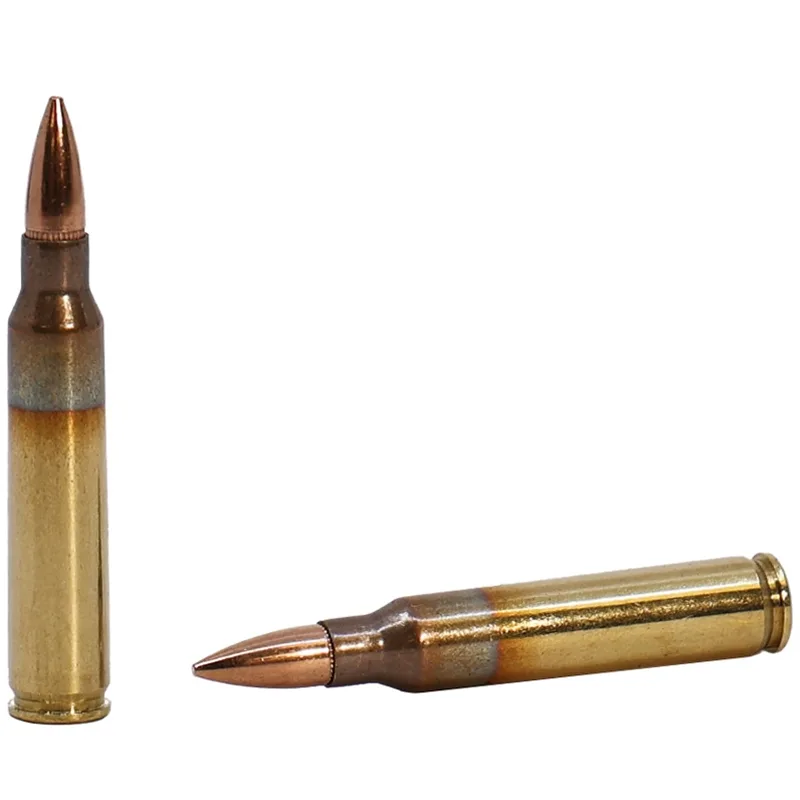
X-Tac is true mil-spec 5.56 — full NATO pressure, brass-cased, sealed, and consistent. Nearly 2,000 of our customers have weighed in, and the theme is the same: it just runs.
“Good full power ammo. Cycled through my AR no problems… 2”-2.5” moa that was able to ring steel out 400-500 yards (no wind)”
— Jose Q., verified buyer
“Over the course of this weekend I tried 5 different types of ammo and for whatever reason my AR liked this one the most. Great groupings and soft recoil. This is now my new go to ammo”
— Vincent C., verified buyer
“I shot over 1000 rounds of PMC X-tac and never had a problem. Powerful rounds and just as accurate as anything out there.”
— Curtis G., verified buyer
PMC X-Tac 5.56 M855 62 Grain Green Tip FMJ – 556K – Best Green Tip / Penetrator
| Manufacturer | PMC |
| Caliber | 5.56x45mm NATO |
| Bullet Type | M855 FMJ w/ Steel Penetrator (Green Tip) |
| Muzzle Velocity | 3,100 fps |
| Muzzle Energy | 1,323 ft lbs |
| Casing | Brass (Boxer primed, reloadable) |
| Grain | 62 |
| Verified Reviews | 2,069 |
| Avg Performance Rating | 4.83 / 5 |
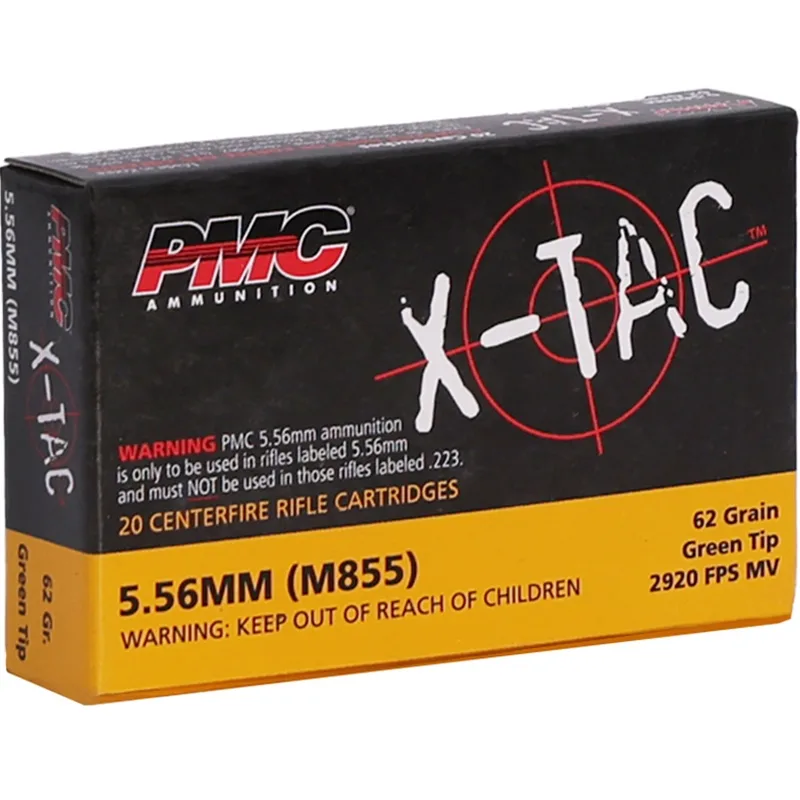
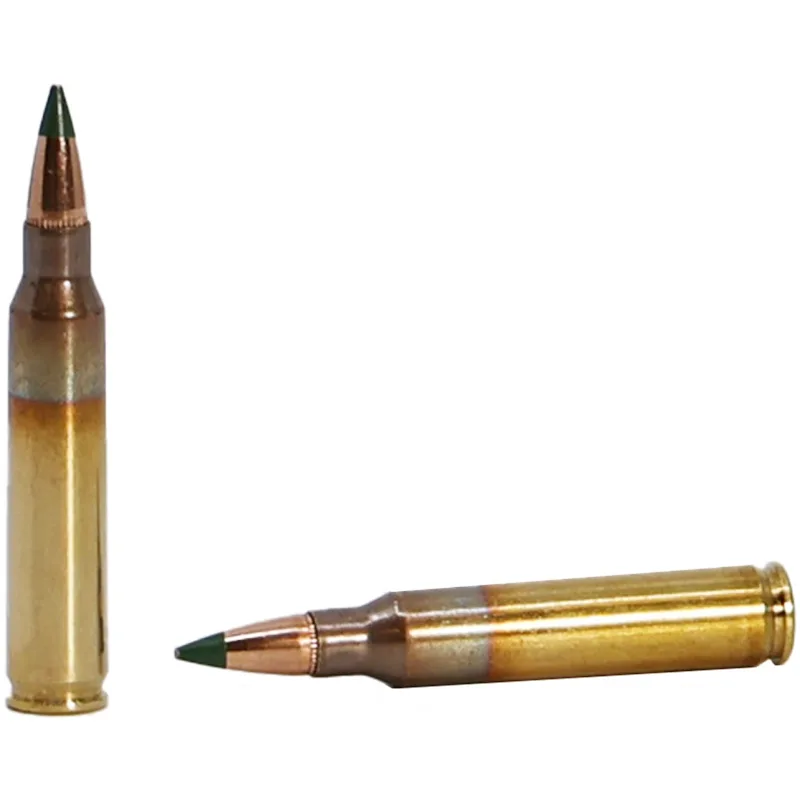
The SS109/M855 loading is the NATO-standard answer to “what if I need it to punch through stuff.” Heads up: the steel penetrator tip is magnetic — many indoor ranges prohibit it, so check before you go (we cover this in the FAQ desk section below).
“5.56 green tip ammo runs reliably and offers solid penetration performance, especially for range training and longer-distance shooting. Consistent accuracy, dependable cycling, and military-style performance make it a great option for AR-platform rifles.”
— Aaron B., verified buyer
“Very good NATO 5.56 ammo for the price. Shot consistently well and not a single FTF or FTE occured. I used a hardened 3/4″ piece of tempered steel for a target at 100 yards and was surprised to see about 75% penetration.”
— Carlos A., verified buyer
“Never had any problems, run this in all mt ARs… ran 600 rounds in a new pistol build last weekend flawless, no FTF no feed problems at all.”
— Ben S., verified buyer
Check Prices on TARGET SPORTS USA
Wolf Gold 223 Remington 55 Grain FMJ – WG22355 – Best Budget Brass-Cased
| Manufacturer | Wolf (made in Taiwan) |
| Caliber | 223 Remington |
| Bullet Type | Full Metal Jacket |
| Muzzle Velocity | 3,250 fps |
| Muzzle Energy | 1,290 ft lbs |
| Casing | Brass (Boxer primed, reloadable) |
| Grain | 55 |
| Verified Reviews | 2,201 |
| Avg Performance Rating | 4.74 / 5 |
Don’t let the Wolf name fool you — this is brass-cased, boxer-primed, reloadable ammo with a sealed primer, and it’s our single most-reviewed product in either caliber in this article.
“This is high quality 223 ammo and shoots cleaner than many other commercial and military offerings. In addition, at least in my rifles, it shoots very close to MOA accuracy, and significantly better than the other brands I tried.”
— David E., verified buyer
“It may be Wolf, but it earns that Gold that comes after it. Got nice, tight groups consistently out of my RDB with this at 100 meters, and you can’t beat the price.”
— Samuel C., verified buyer
“Supremely accurate at this price point, reliable (no defects in well over 2000 rounds) great inexpensive ammo.”
— Marco G., verified buyer
Check Prices on TARGET SPORTS USA
PMC Bronze 223 Remington 55 Grain FMJ-BT – 223A – Most Trusted .223 Training Round
| Manufacturer | PMC |
| Caliber | 223 Remington |
| Bullet Type | Full Metal Jacket Boat Tail |
| Muzzle Velocity | 2,900 fps |
| Muzzle Energy | 1,250 ft lbs |
| Casing | Brass (Boxer primed, reloadable) |
| Grain | 55 |
| Verified Reviews | 2,154 |
| Avg Performance Rating | 4.81 / 5 |
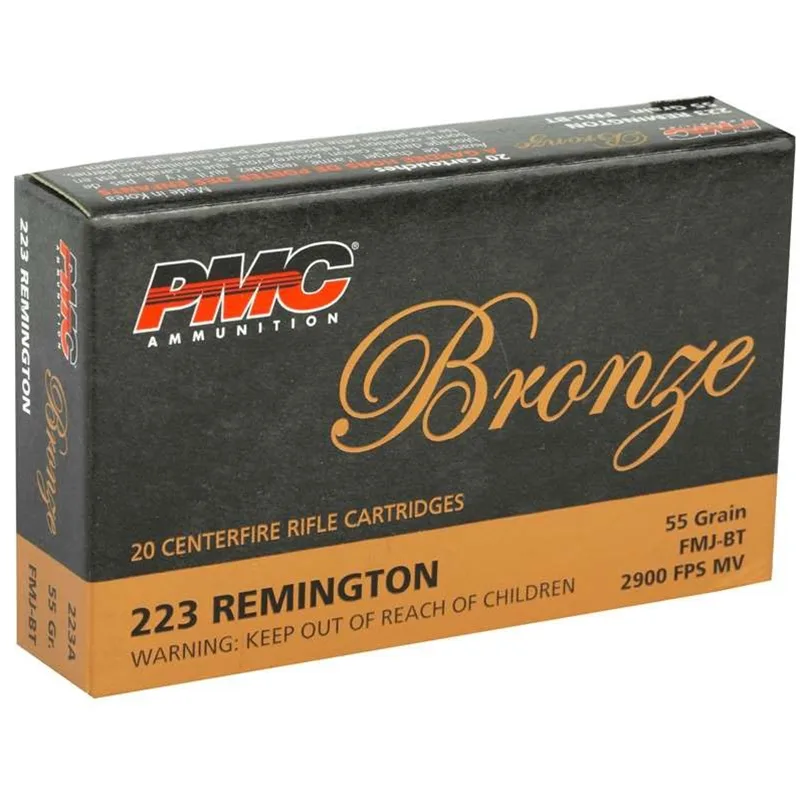
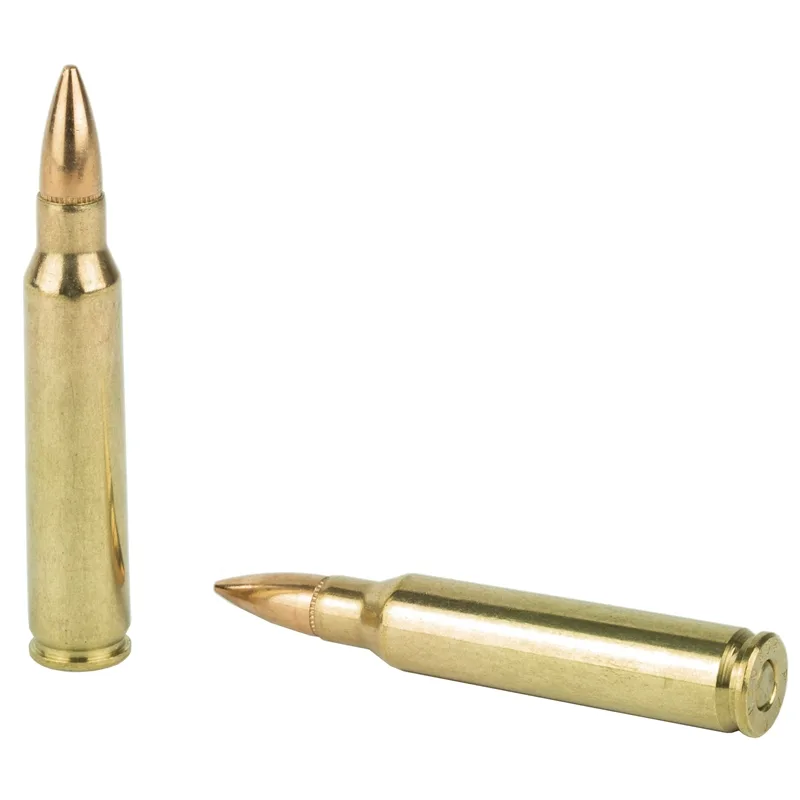
The .223-pressure sibling to X-Tac — slightly softer shooting, safe in any .223 or 5.56 chamber, and a long-running customer favorite for training.
“One of the most accurate rounds in my 1-8 twist stainless 16 inch barrel. PMC Bronze 223 ammo is very clean polished shells. No issues at all.”
— Bryan U., verified buyer
“I used this ammo for a lesson with a new AR-15. The instructor thought so highly of the accuracy and the consistency that he asked what I paid and where I bought the ammo.”
— Marshall F., verified buyer
“My 10.5″ AR eats this all day long and likes lighter bullets… this stuff seems good and will easily make ragged holes and stack rounds on target.”
— Noah L., verified buyer
Check Prices on TARGET SPORTS USA
Federal American Eagle XM193 5.56 Bulk 1000 Rounds – XM193BK – Best Bulk Buy
| Manufacturer | Federal (Lake City) |
| Caliber | 5.56x45mm NATO |
| Bullet Type | Full Metal Jacket (M193) |
| Muzzle Velocity | 3,240 fps |
| Muzzle Energy | 1,282 ft lbs |
| Casing | Brass (Boxer primed, reloadable) |
| Grain | 55 |
| Verified Reviews | 1,022 |
| Avg Performance Rating | 4.86 / 5 |
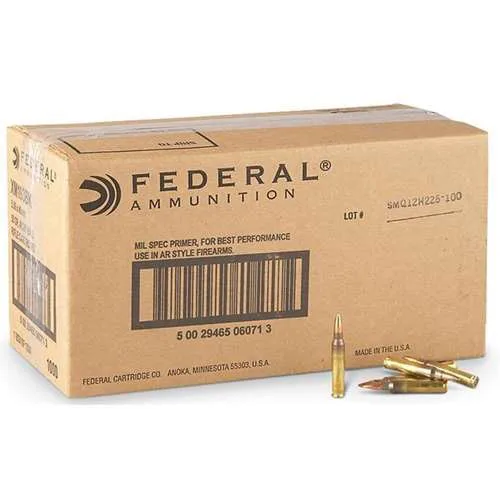
The classic case buy: 1,000 rounds of Lake City-made M193 with free shipping. The 4.86 performance average across 1,000+ reviews is remarkable for bulk ammo.
“Excellent shooting, accurate and reliable. Zero issues over thousands of rounds with consistent, repeatable performance. Is this match ammo? No, but for what it is and steel plates, etc. it works quite well.”
— James S., verified buyer
“Great Federal American Eagle ammo…in my guns a little more accurate but dirtier than Wolf Gold.”
— Kenneth U., verified buyer
Also available as 62 grain XM855 green tip in 1,000-round cases (984 reviews, 4.83/5) — one customer reported keeping “a 2 inch group at 100 yards” from a 16” barrel, and another ran it across 1:7, 1:8, and 1:9 twist barrels with “all shots in the 9-ring or better.”
Check Prices on TARGET SPORTS USA
Federal Gold Medal 223 77 Grain Sierra MatchKing – GM223M3 & Black Hills MK262 Mod 1-C 77 Grain OTM – When 5.56 Reaches Out
| Spec | GM223M3 | MK262 Mod 1-C |
|---|---|---|
| Grain / Bullet | 77 gr Sierra MatchKing | 77 gr Open Tip Match |
| Muzzle Velocity | 2,720 fps | 2,725 fps |
| Muzzle Energy | 1,265 ft lbs | 1,269 ft lbs |
| Verified Reviews | 157 | 115 |
| Avg Performance Rating | 4.86 / 5 | 4.87 / 5 |
This is the answer to “.308 owns long range.” Heavy 77 grain match bullets transformed what the 5.56 platform can do — the MK262 is the load that stretched the black rifle to 700+ yards in military service, and our customers report the same:
“ragged holes at 100 if i do my part with my rifle. i have a 1:8 twist and getting demonstrated clean holes at 400 yards and consistent performance at 780 meters.” – Paul P. (Gold Medal 77gr)
“Solid function from this 5.56mm ammo from Black Hills. Hitting reliably all the way out to 700 yards through a 20” barrel.” – Erik A. (MK262)
“Hands down the best 556 load I’ve shot. Produced MOA groups out of a gun that shoots 2-3 MOA with almost every other factory ammo I’ve used.” – Caleb B. (MK262)
Twist rate note: 77 grain bullets want a 1:7 or 1:8 twist barrel. One customer with a 1:9 Savage reported under 1” groups at 200 yards, but that’s the happy exception — know your twist before buying heavy.
The Best .308 Winchester Ammo (Ranked by Our Customers)
Federal Gold Medal 308 Win 168 Grain Sierra MatchKing – GM308M – Our Highest-Rated Rifle Load, Period
| Manufacturer | Federal |
| Caliber | 308 Winchester |
| Bullet Type | Sierra MatchKing Hollow Point Boat Tail |
| Muzzle Velocity | 2,650 fps |
| Muzzle Energy | 2,619 ft lbs |
| Casing | Brass (Boxer primed, reloadable) |
| Grain | 168 |
| Verified Reviews | 1,708 |
| Avg Performance Rating | 4.91 / 5 |
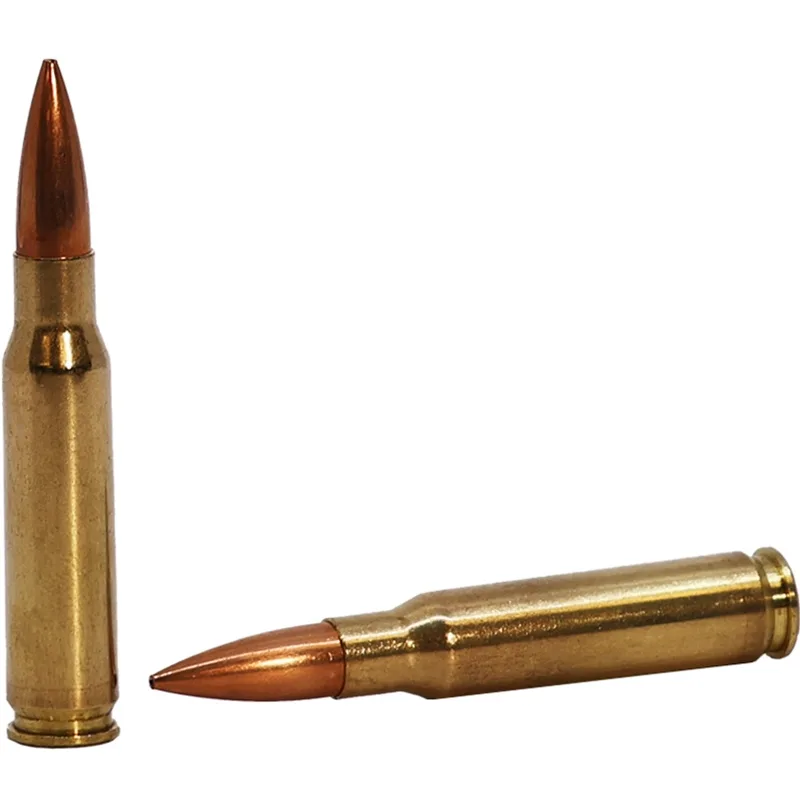
4.91 out of 5 across 1,708 verified reviews. Nothing else we sell at this volume — in either caliber — touches that score. This is the load .308 precision reputations are built on, and it runs in everything from bolt guns to M1As:
“I shoot these rounds from a 2004 Tikka T3 Tactical and an AR-10 gas gun that I built… I pull 1/2 MOA from Tikka 1/11 20” and 3/4 MOA from 1/10 24” Lilja gas gun. What else could you ask for?”
— Rickey V., verified buyer
“shoots nice and tight with an m1a. really clean burning, it didn’t leave any fouling in my gas system. the m1a ran like a sewing machine in rapid fire, i can see why they are the competition favorite.”
— Douglas D., verified buyer
“The go to standard in accuracy for years and it still rings true. One of the most accurate .308 rounds available in every rifle I’ve tried it in.”
— Gregory L., verified buyer
Check Prices on TARGET SPORTS USA
Federal Gold Medal 308 Win 175 Grain Sierra MatchKing – GM308M2 – Best for True Long Range
| Manufacturer | Federal |
| Caliber | 308 Winchester |
| Bullet Type | Sierra MatchKing Hollow Point Boat Tail |
| Muzzle Velocity | 2,600 fps |
| Muzzle Energy | 2,627 ft lbs |
| Casing | Brass (Boxer primed, reloadable) |
| Grain | 175 |
| Verified Reviews | 852 |
| Avg Performance Rating | 4.87 / 5 |
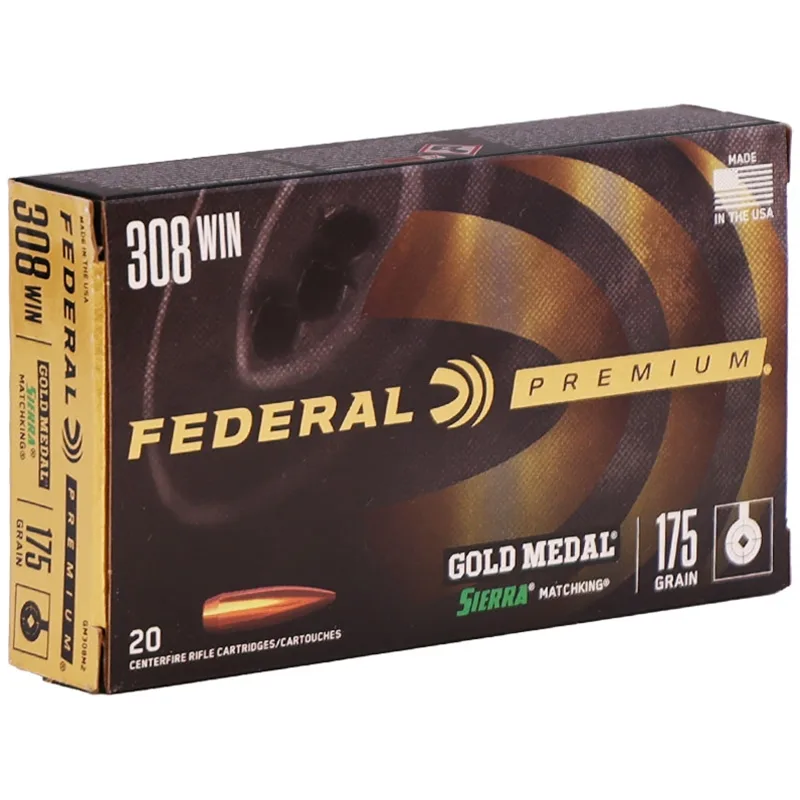
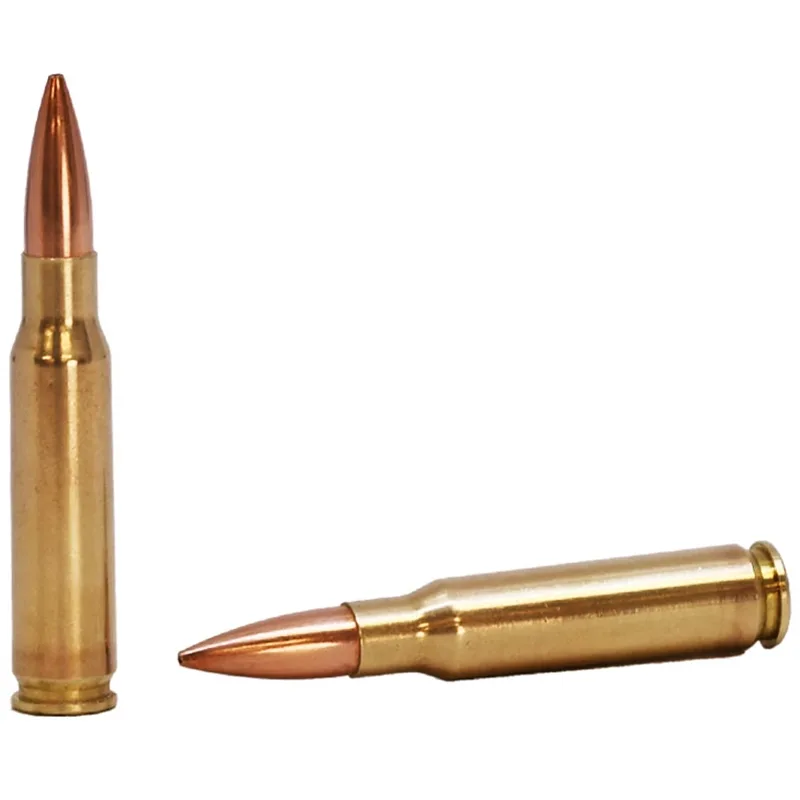
The 175 grain SMK is the M118LR-style answer for shooters pushing past 600, where it stays supersonic longer than the 168. Our reviews read like a long-range logbook:
“I was making consistent hits at 800 yards with my 16” POF Revolution DI. At 100 yards it runs about .6-.8 MOA out of that rifle.”
— Michael C., verified buyer
“In my Ruger Precision rifle, this is the best factory ammo. Smallest 3 shot group so far was .300 so less than 1/3 MOA!”
— Sam N., verified buyer
“Great quality ammo I took this to South Africa hunting Antelope species. From 110 to 475 yards it performed well… One well placed shot on each put them down quickly.”
— Robert D., verified buyer
Check Prices on TARGET SPORTS USA
PMC Bronze 308 Win 147 Grain FMJ-BT – 308B – Best .308 Range/Training Ammo
| Manufacturer | PMC |
| Caliber | 308 Winchester |
| Bullet Type | Full Metal Jacket Boat Tail |
| Muzzle Velocity | 2,780 fps |
| Casing | Brass (Boxer primed, reloadable) |
| Grain | 147 |
| Verified Reviews | 946 |
| Avg Performance Rating | 4.73 / 5 |
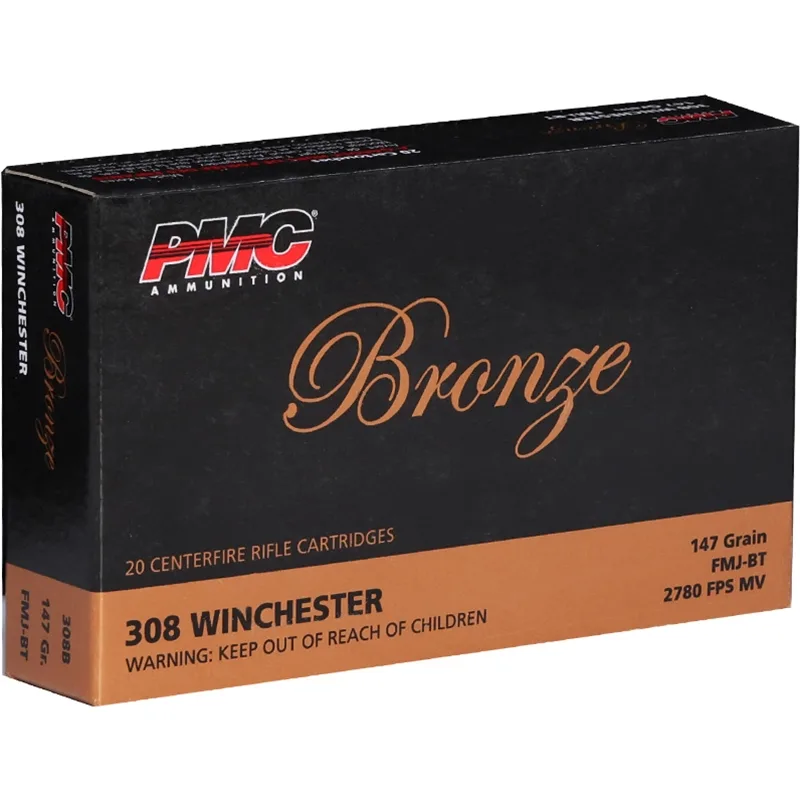
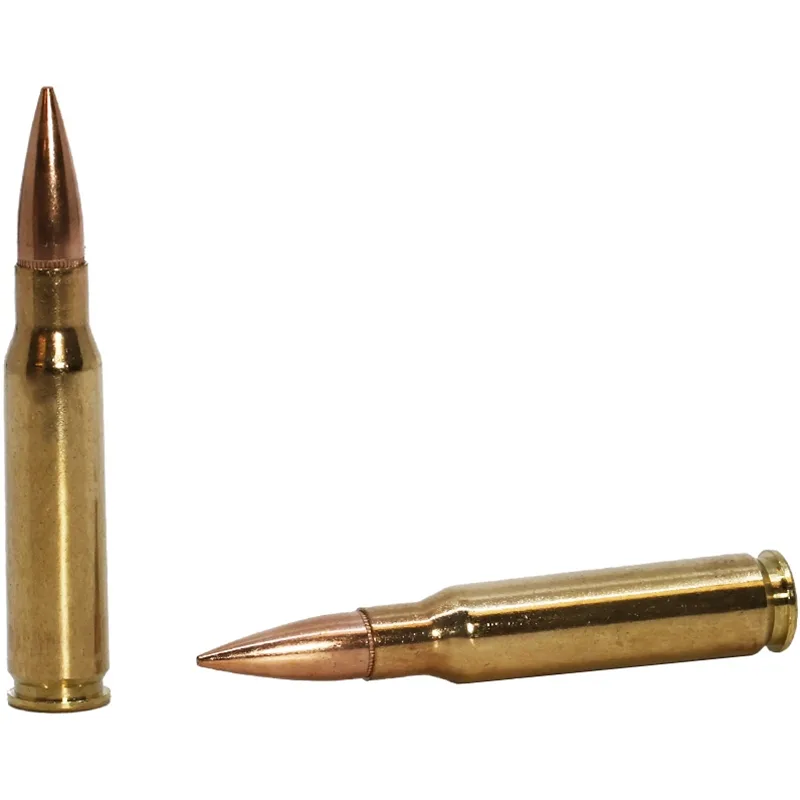
The .308 equivalent of a gym membership: affordable trigger time for AR-10s, M1As, PTRs, and bolt guns. Honest expectations from honest reviewers:
“Clean shooting, consistent performance and quality. I use this exclusively when shooting heavy metal division in 3 gun matches. Best value for your money that I’ve found.”
— William D., verified buyer
“Shoots and cycles really well out of a PTR91 with iron sights. Groups on a good day were about 1-1.5 inches.”
— Meng V., verified buyer
“Reliable ammo. No feeding or cycling issues. Good price. Does not group well. Could not get 5 round groups under 3 MOA… Good ammo for training and trigger time.”
— Michael M., verified buyer
That last review is exactly why we quote customers verbatim — 147 grain FMJ is for reps, not for bragging-rights groups. Train with this, zero and compete with Gold Medal.
Aguila 308 Winchester 150 Grain FMJ – 1E308110 – Budget Brass .308
| Manufacturer | Aguila |
| Caliber | 308 Winchester |
| Bullet Type | Full Metal Jacket |
| Muzzle Velocity | 2,751 fps |
| Muzzle Energy | 2,428 ft lbs |
| Casing | Brass (Boxer primed, reloadable) |
| Grain | 150 |
| Verified Reviews | 298 |
| Avg Performance Rating | 4.50 / 5 |
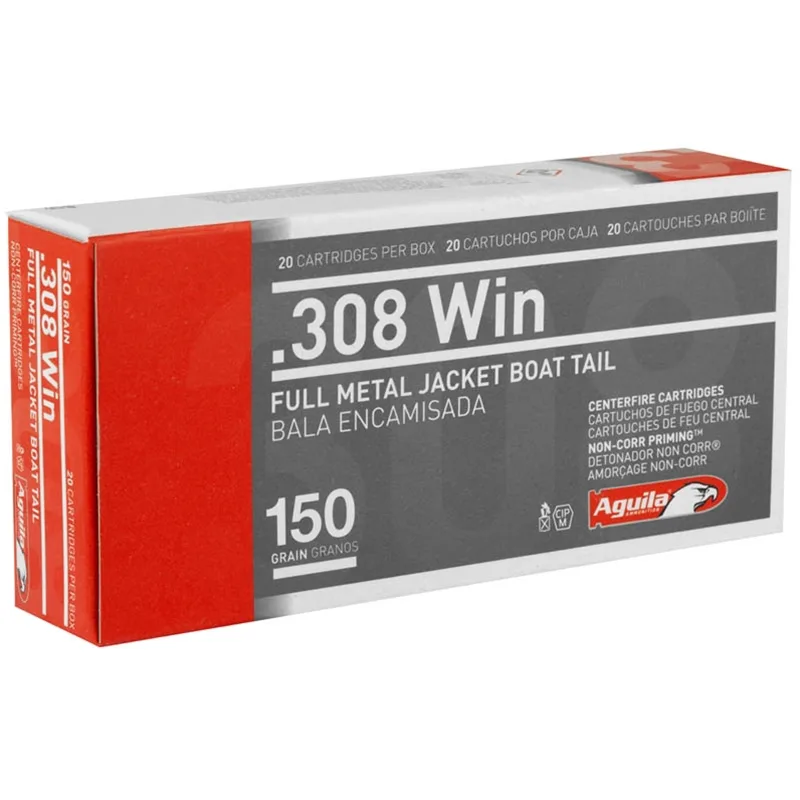
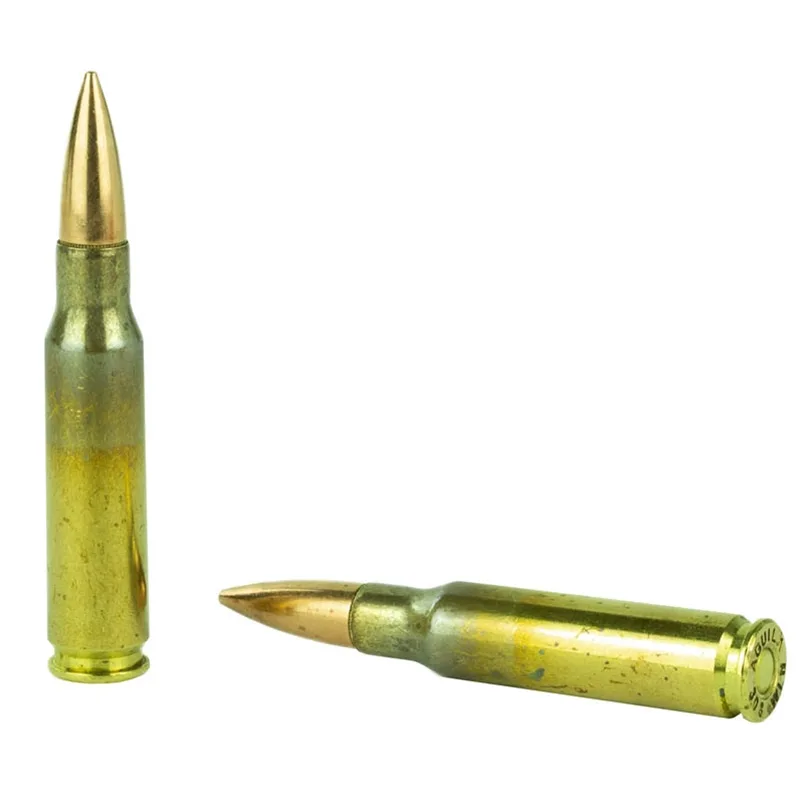
Aguila’s 150 grain FMJ is the price-per-round play in brass-cased .308. Customers consistently report 1–1.25 MOA accuracy for the money — with the honest caveat that a few have hit light primer strikes:
“This ammo seems to be consistently 1-1.25 moa on paper. Target Sports USA has a great price, which makes it hard to pass up. I did have 1 dud round out of the 75 that I’ve shot so far.”
— Alex H., verified buyer
“I’m not a precision shooter by any means but I’ve shot higher priced ammo that wasn’t half as accurate.”
— Joe L., verified buyer
“Great price, nice, clean and accurate ammo… Only problem in 200 rounds was a light primer strike but it went bang on the second run thru!”
— Shawn B., verified buyer
Check Prices on TARGET SPORTS USA
Federal Power-Shok 308 Win 150 Grain Soft Point – 308A & Hornady American Whitetail 308 Win 150 Grain InterLock – 8090 – Best .308 Hunting Loads
| Spec | Power-Shok 308A | American Whitetail 8090 |
|---|---|---|
| Grain / Bullet | 150 gr Soft Point | 150 gr InterLock Spire Point |
| Muzzle Velocity | 2,820 fps | 2,820 fps |
| Muzzle Energy | 2,648 ft lbs | 2,649 ft lbs |
| Verified Reviews | 151 | 118 |
| Avg Performance Rating | 4.78 / 5 | 4.77 / 5 |
This is the .308’s home turf — the do-everything deer cartridge. You will not find a single 5.56 load in our database with reviews like these:
“works great in my browning blr for deer hunting. took a deer in n.carolina at about 80yds, one shot kill… also took a wild pig in vt. one shot, one dead pig!!!” – Joseph E. (Power-Shok)
“Shoots great out of my rem 700 action… Took out many hogs, deer and coyotes this year!” – John C. (Power-Shok)
“Love this Hornady ammo super accurate and clean shooting my Savage axis 2 loves them took a nice doe Clean and quick just what you want in hunting ammo” – Joel G. (American Whitetail)
“it has filled my freezer more times than I can count.” – James O. (Power-Shok)
Which One Should You Pick? (Home Defense, Hunting, Long Range, One-Rifle)
Home Defense: 5.56
This one surprises people, but it’s near-unanimous among the experts and the data: a 5.56 carbine is the better home defense tool. You get 30 rounds of low-recoil, fast-handling firepower, and — counterintuitively — lightweight 5.56 bullets tend to fragment and dump energy in barriers, often penetrating fewer interior walls than a .308, buckshot, or even some handgun loads. A .308 indoors is a flash-and-blast cannon that will exit walls with authority. If a defensive rifle is the mission, pick the 5.56 and load it with quality ammo (a bonded soft point like Speer Gold Dot 223 75gr — 4.94/5 across 144 reviews, our highest-rated .223 defensive load — or Federal Tactical TRU 55gr SP at 4.86/5).
Hunting: .308 for big game, 5.56 for varmints (and deer, where legal, with the right bullet)
The .308 is legal and ethical for essentially every non-dangerous game animal in North America — deer, hogs, black bear, elk at reasonable range. Our Power-Shok and American Whitetail review sections read like a freezer inventory. The 5.56/.223 is the varmint and predator king, and with heavy-for-caliber bonded or controlled-expansion bullets it has cleanly taken plenty of deer and hogs at modest distances — but check your state first (several states restrict .22-caliber centerfire for deer), and keep your shots inside the bullet’s expansion window.
Long Range: .308 — but it’s closer than it used to be
Inside 600 yards, a 77 grain 5.56 match load and a .308 match load are trading blows on paper, and the 5.56 shooter is doing it with less recoil and cheaper practice. Past 600, the .308’s heavier, higher-BC bullets keep supersonic longer, drift less in wind, and arrive with several times the energy. Our customers confirm both halves: MK262 buyers reporting reliable hits at 700 yards, and Gold Medal 175 buyers reporting consistent 800-yard hits — but only the .308 crowd talks about what happens when the bullet gets there.
The One-Rifle / SHTF Question: 5.56, for most people
If you can only have one, the honest answer for most shooters is a 5.56 AR-15: ammo is everywhere, it’s half the price (so you’ll actually train), recoil is a non-issue for every member of the household, and you can carry 660 rounds for the weight of 280 rounds of .308. The .308 one-rifle case is real if you live somewhere with long sightlines and big animals — but the 5.56’s logistics are unbeatable. (This is also why the “buy both, eventually” answer keeps winning Reddit threads on this exact question.)
Cost, Recoil, and Carry Weight: The Practical Stuff
Cost per round
Across comparable quality tiers, expect .308 to run roughly twice the price of 5.56/.223 — that ratio holds from budget FMJ up through match ammo. It compounds fast: a 500-round training month costs you one case of 5.56 or two-cases-worth of .308 budget. This is the single biggest reason high-volume shooters standardize on 5.56 and save the .308 for purpose-driven shooting. Check live pricing on the 5.56 NATO, .223 Remington, and .308 Winchester category pages — and remember bulk case purchases ship free.
Recoil
Published recoil energy figures put typical 5.56 loads around 5–7 ft lbs of free recoil and typical .308 loads around 18–22 ft lbs from similar-weight rifles — roughly three times the push. That’s the difference between watching your own impacts through the optic and losing the target on every shot. Recoil also compounds: 200 rounds of .308 off the bench is a workout; 200 rounds of 5.56 is a warm-up. A brake or suppressor tames the .308 considerably (at the cost of blast).
Weight — the part everyone forgets
- Loaded 5.56 runs roughly 12 grams per round vs roughly 24 grams for .308: per the standard infantry math, that’s about 660 rounds vs 280 rounds in a 22 lb ammo loadout.
- Six loaded magazines: 180 rounds of 5.56 vs 120 rounds of .308 — and the .308 mags are bigger and heavier.
- The rifles follow suit: an AR-10 typically runs 1.5+ lbs heavier than the equivalent AR-15.
If you’ll ever carry the rifle and its food farther than the bench-to-truck distance, weight is a real argument for 5.56.
Straight From Our FAQ Desk: Real Customer Questions
We answer customer questions on product pages every day — over 11,000 of them and counting. Here are real exchanges (lightly trimmed) that map perfectly onto the 308 vs 5.56 decision:
Q: “What is the difference between this [.308] and the 7.62×51 by Aguila? Other than the headstamp, of course.” A: 7.62x51mm ammo is loaded with different pressure in mind — more for AR-10-platform semi-automatic firearms, for smoother feeding, whereas .308 Winchester ammo leans toward bolt guns. Dimensionally interchangeable; know your rifle.
Q: “Is this Magtech ammo loaded with hard primers and safe to shoot in an M1-A rifle with the free float firing pin?” A: For free-floating firing pin guns like the M1A, it’s best to stay with true 7.62 NATO-spec ammo (hard primers) to avoid slamfire risk. This is the single most overlooked detail when shooters move from bolt .308s to military-pattern gas guns.
Q: “Can this [M855 green tip] ammo be used with steel targets?” A: M855’s steel penetrator tip is magnetic, and many ranges — especially indoor — prohibit it on steel or entirely. Lead-core FMJ like M193 or X-Tac 55gr avoids the problem. (This question, in some form — “is it magnetic?”, “is it green tip?”, “lead or steel core?” — is one of the most common questions in our entire FAQ database.)
Q: “Will this fire through my Bushmaster AR-15 XM-15 that takes .223 or 5.56 ammunition?” A: Yes — a 5.56 NATO chamber happily runs both 5.56 and .223. It’s the reverse (5.56 ammo in a .223-only chamber) where the pressure caution applies.
Q: “Will the steel case put more wear on my rifle than brass cased ammo?” A: Yes — steel doesn’t expand and seal like brass, so you’ll see more carbon blowback and somewhat more wear over time. You get what you pay for; it’s a trade many high-volume shooters happily make.
Q: “What is the difference, other than grain weight, between the 55gr, 62gr, and the 75gr?” A: Grain weight changes trajectory, wind drift, and what your barrel twist can stabilize. Light 55gr bullets are fast and cheap; heavy 75–77gr bullets carry better at distance but want 1:7/1:8 twist barrels.
FAQ: Frequently Asked Questions About 308 vs 5.56
Yes — substantially. Comparing common loads we sell, a 168 grain .308 match load leaves the muzzle with 2,619 ft lbs of energy versus 1,306 ft lbs for a 55 grain 5.56 — almost exactly double. And because .30-caliber bullets hold velocity better, the .308’s energy advantage grows with distance.
.223 Remington in a 5.56 NATO chamber: always safe. 5.56 NATO in a .223 Remington chamber: the standard industry guidance is don’t — 5.56 is loaded to a higher pressure spec and a .223 chamber’s shorter throat raises pressures further. We’ll note for completeness that some experienced gun writers consider the real-world risk overstated, but the safe answer (and ours) is to follow the spec: if the barrel says .223 Rem only, feed it .223. A 223 Wylde chamber is purpose-built to shoot both safely and accurately.
Functionally interchangeable for most modern rifles, with caveats: commercial .308 Win runs a slightly higher pressure ceiling, NATO brass is typically thicker, and NATO chambers are cut longer. 7.62 NATO in a .308 rifle is a non-issue. Hot commercial .308 in older military 7.62 rifles (and ammo with soft primers in free-floating-firing-pin guns like the M1A) deserves a manual check first.
The .308 is the better deer cartridge, full stop — more energy, heavier bullets, bigger wound channels, longer ethical range, and legal everywhere deer are hunted. A 5.56/.223 with the right bullet (heavy bonded soft points, controlled-expansion hunting loads) cleanly takes deer at modest ranges where legal, but it’s the “can” answer, not the “best” answer. Check your state regulations before hunting deer with .22 centerfire.
5.56/.223 costs roughly half as much per round as .308 across every quality tier, and the gap holds for reloading components too. If round count matters — training, competition, plinking — the 5.56 wins the budget war decisively.
5.56. Lighter recoil, faster follow-ups, higher capacity, and lightweight bullets that tend to break up in building materials instead of sailing through your neighborhood like a .308 will. Load quality defensive ammo and pattern-test it in your rifle.
Depends on the load and the job. With standard 55 grain ball, the 5.56 is at its best inside ~500 yards; with 77 grain match loads our customers report consistent hits to 700+. The .308 with 168–175 grain match bullets stays supersonic and lethal meaningfully farther — our reviewers report consistent 800-yard performance — and it arrives with far more energy at every distance. For accuracy alone inside 600 yards, treat them as equals.
No — and this drives the cost of entry. The 5.56 fits the AR-15-pattern platform (and mini-actions); the .308 requires the larger, heavier AR-10/SR-25 pattern or a short-action bolt rifle. Same controls, different parts, magazines, and weight class.
The Round Up
If this comparison were a customer review, it’d read like this: both calibers earn their 4.7 stars — they’re just answering different questions. The 5.56 is the volume answer: cheap to feed, soft to shoot, deadly serious inside 500 yards, and increasingly capable beyond it with heavy match bullets. The .308 is the energy answer: twice the punch, real 800-yard legs, and the freezer-filling versatility that 55,000 reviews’ worth of our customers keep confirming season after season.
Our honest recommendation after 15+ years of selling both: start with the caliber that matches your next 1,000 rounds, not your fantasy scenario. For most shooters that’s a 5.56 — then the .308 follows the first time you want to hit harder, farther.
Shop the calibers: 5.56mm NATO Ammo | .223 Remington Ammo | .308 Winchester Ammo | Bulk Ammo – Free Shipping

Jon-Paul (JP) is a seasoned firearms industry professional with over a decade of experience spanning firearms, sport shooting merchandising, and customer service. Passionate about all things 2A, he brings a wealth of hands-on knowledge to the world of firearms and ammunition.
When he’s not working, you’ll likely find JP at the range, diving into the latest ballistics trends, or engaging with the shooting community on forums like AR15.com
Feel free to connect with him to collaborate or chat about anything ammo-related.