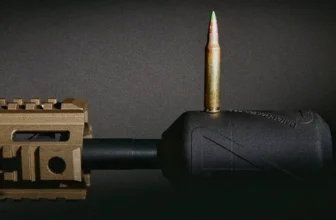
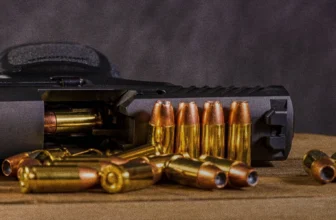
Subsonic ammunition has moved well beyond niche status as of January 1st, 2026. Whether you’re shooting suppressed on a private range, keeping noise to a minimum during early morning sessions, or simply exploring a quieter end of the shooting sports. Caliber selection plays a bigger role in subsonic performance than most shooters initially expect, especially when paring with your supressor. Not every round that dips below the speed of sound does so consistently, and not every firearm cycles reliably with loads that were tuned for reduced velocity.
I’ve put together this guide to help break down the calibers that deliver the most predictable subsonic performance in factory-loaded ammunition, what drives those results, and how to match the right option to your specific platform and purpose — including what pairs well with your suppressor, makes all the difference. “Do keep this in mind when reading this blog.”
Key Takeaway
As of January 1, 2026, the $200 federal tax stamp on suppressors has been eliminated as part of the One Big Beautiful Bill (H.R. 1) Signed by President Trump on July 4, 2025. While NFA registration, background checks, and ATF forms still apply, the financial barrier to suppressor ownership is gone — and interest in suppressed and subsonic shooting is growing fast.
What Makes a Round Subsonic
really quickly, and in short, the speed of sound at sea level is approximately 1,125 feet per second, the threshold SAAMI uses to define the upper boundary for subsonic performance. In practice, most shooters and manufacturers treat 1,100 fps as the working ceiling to maintain a reliable margin beneath it. When a projectile breaks that barrier, it generates a supersonic crack that is entirely separate from the mechanical noise of the firearm itself (See our full breakdown of Subsonic vs Supersonic). Subsonic ammunition eliminates that crack by keeping the bullet below that threshold from the moment it leaves the muzzle. What remains is the action noise, the report from propellant gases, and in suppressed setups, a significantly reduced overall sound signature.

Understanding this distinction matters because some calibers are naturally subsonic at standard bullet weights, while others require reduced powder charges or heavier projectiles to stay in that range. That engineering tradeoff affects pressure, cycling reliability, and terminal performance, which is why factory subsonic loads from reputable manufacturers are the most consistent starting point for most shooters.
“When a bullet breaks the sound barrier, it creates a supersonic crack no suppressor can eliminate. True subsonic performance starts with choosing the right caliber and load before anything else.”
The Calibers That Deliver Consistent Subsonic Performance
A handful of calibers stand out when it comes to reliable, factory-available subsonic loads, each with distinct strengths depending on how and where you shoot.
| Caliber | Typical Subsonic Velocity | Common Bullet Weight | Primary Use Case |
|---|---|---|---|
| .45 ACP | 830 to 900 fps | 230 gr | Suppressed pistol, range |
| 9mm Luger | 1,000 to 1,080 fps | 147 gr | Suppressed pistol, high volume |
| .300 Blackout | 1,010 to 1,060 fps | 220 gr | Suppressed rifle, AR platform |
| .22 LR | 1,050 fps and under | 40 gr | Training, small game, entry-level |
.45 ACP (230 gr, 830–900 fps target range)
The .45 ACP is one of the few pistol cartridges that is subsonic by design at standard loadings. Its standard 230-grain projectile typically travels between 830 and 900 fps, well below the sound barrier without any modification to the load. That makes it an exceptionally straightforward choice for suppressed pistol use, and its heavier bullet weight contributes to good terminal energy despite the reduced velocity.
Recommended 45 ACP Subsonic Ammo
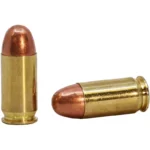
CCI Blazer Brass 45 ACP 230 Grain FMJ SKU: 5230
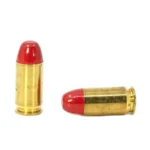
Federal Syntech 45 ACP 230 Grain Synthetic Jacket FN SKU: AE45SJ1
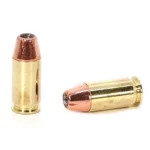
Hornady Subsonic 45 ACP 230 Grain XTP SKU: 90971
9mm Luger (147 gr, 1,000–1,080 fps target range)
9mm Luger is the most widely available subsonic option on the market, and factory subsonic loads are easy to find in 147-grain configurations that reliably stay beneath 1,100 fps. It cycles well in most modern semi-automatic platforms when paired with the right recoil spring setup, and the sheer volume of available product makes it the practical default for suppressed pistol shooting at any volume. Need more options? See our blog on the Best Subsonic 9mm Ammo: Top Picks.
Recommended 9mm Luger Subsonic Ammo
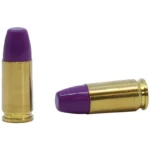
Federal Syntech 9mm 147 Grain TSJ SKU: AE9SJ3
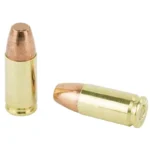
Winchester Super Suppressed 9mm 147 Grain FMJ SKU: SUP9
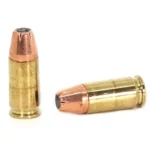
Hornady Subsonic 9mm 147 Grain XTP SKU: 90287
.300 Blackout (220 gr, 1,010–1,060 fps target range)
The .300 Blackout was purpose-built with subsonic performance in mind, specifically for use in AR-platform rifles with suppressors. Its 220-grain subsonic loads deliver excellent stability and energy transfer at typical engagement distances while staying well beneath the sound barrier. It also offers the flexibility of supersonic loads using the same magazine and platform, making it one of the most versatile options available for rifle-format subsonic shooting.
Recommended 300 Blackout Subsonic Ammo
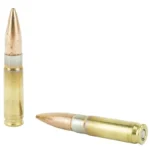
Federal American Eagle 300 BLK 220 Grain Subsonic OTM SKU: AE300BLKSUP2
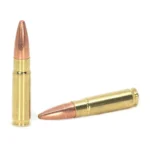
Ammo Inc Stelth 300 BLK 220 Grain Subsonic TMC SKU: 300B220TMC-STL
For shooters on a tighter budget or those just getting started with subsonic shooting, .22 LR subsonic loads offer an accessible and low-recoil entry point. While terminal performance and platform flexibility are more limited compared to centerfire options, .22 LR subsonic ammunition is widely available and works well for training, small game, and general familiarization with suppressed or quiet shooting.
| # | Product | SKU | URL |
|---|---|---|---|
| 1 | CCI Suppressor 22 LR 45 Grain Subsonic HP | 957 | Shop Now |
| 2 | CCI Suppressor Max 22 LR 45 Grain Mini-Mag Segmented HP | 22SMX | Shop Now |
Choosing the Right Caliber for Your Setup
Caliber performance in subsonic loads does not exist in isolation; the firearm platform, barrel length, and intended use all influence how well a given load performs in practice. A 9mm load that cycles cleanly in one pistol may short-stroke in another if the recoil spring is not matched to the reduced pressure of a subsonic load. Similarly, .300 Blackout subsonic loads require a properly headspaced barrel and ideally a suppressor to extract the full benefit of the cartridge’s design.
If you are running a semi-automatic platform, it is worth verifying that your firearm is rated for or commonly used with subsonic loads before committing to a bulk purchase. Many manufacturers note compatibility in their product documentation, and the subsonic shooting community has well-documented platform and load pairings across common setups.
Recommended Test Protocol: If you are evaluating a new subsonic load for semi-automatic use, a recommended approach is to run a minimum of 50 rounds through your specific platform before assessing cycling reliability. Note any failures to feed, eject, or return to battery, and compare results across at least two factory load options before drawing conclusions. This is especially relevant for 9mm and .300 Blackout in gas-operated systems.
Target Sports USA carries subsonic loads across all of the major calibers covered here. If you are comparing options by caliber or stocking up on a load you already trust, browsing the full subsonic ammo selection is a straightforward way to filter by caliber, grain weight, and brand in one place.
Common Questions About Subsonic Ammunition
Shooters new to subsonic loads often have practical questions that do not fit neatly into a caliber breakdown. The three questions below come up consistently and are worth addressing directly before you buy.
No. Subsonic ammunition can be used in any firearm chambered for the appropriate caliber. A suppressor reduces mechanical action noise, but subsonic loads eliminate the supersonic crack regardless of whether a suppressor is present. Some shooters use subsonic loads specifically to reduce noise at indoor ranges or in noise-sensitive environments without any suppressor at all.
It depends on the platform and the specific load. Subsonic ammunition generates lower chamber pressure than standard loads, which can affect the cycling of gas-operated and recoil-operated semi-automatics. Many modern pistols and rifles handle factory subsonic loads without issue, but it is advisable to confirm compatibility with your firearm manufacturer’s guidelines or test a smaller quantity before committing to a bulk purchase.
No. While .300 Blackout uses the same AR-15 lower receiver and magazines as .223/5.56, it requires a dedicated .300 Blackout upper receiver and barrel. The two cartridges are not interchangeable. Using the wrong ammunition in either chambering is a serious safety risk, and SAAMI maintains distinct specifications for each cartridge.
Subsonic shooting rewards good caliber selection and quality factory loads. Whether you are building a suppressed setup around .300 Blackout, stocking up on 9mm 147-grain for regular range use, or picking up .45 ACP for its naturally quiet profile, having the right ammunition on hand makes the difference. Browse the full selection of subsonic ammunition at Target Sports USA to find the calibers, grain weights, and brands that match your setup: Shop All Subsonic Ammo.
This guide is intended for informational purposes only. Ballistics and performance can vary based on your specific firearm, ammunition, and shooting conditions. Always follow your firearm manufacturer’s recommendations, observe all applicable laws and regulations, and practice safe firearm handling at all times. Target Sports USA is not responsible for misuse of the information provided.

Kailon Kirby covers the ammunition market for Target Sports USA, where he has a view most writers never get. Working inside one of the country's largest online ammo retailers, he tracks pricing movements, supply conditions, and brand-level shifts as they happen, not after the fact.
A Connecticut State Pistol Permit and Concealed Carry holder, Kailon isn't just watching the numbers. He shoots, he carries, and he understands what market changes actually mean for the person standing at the counter or checking out online. That combination of ground-level industry access and shooter perspective is what shapes everything he writes.
When something is moving in the ammunition market, Kailon is usually the first to see it.
- Kailon Kirby
- Kailon Kirby
- Kailon Kirby

- Kailon Kirby