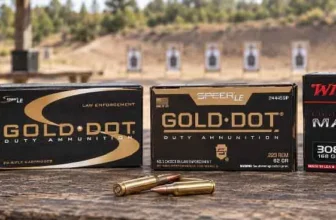
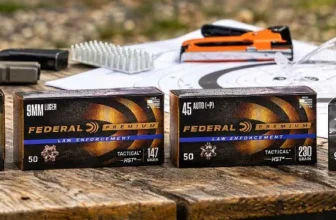
149,000+ Verified Buyers Walked This Road Before You — Here’s What They Found
9mm versus 45 ACP is the most-argued caliber debate on the internet. It’s been raging since before the internet existed — and we’re going to settle it the only way it can honestly be settled: with data.
Having been in the ammo game for over 15 years here at Target Sports USA, we’ve sold both of these cartridges by the truckload to cops, competitors, carriers, and 1911 romantics. Our customers have left nearly 150,000 verified reviews across these two calibers — over 126,000 on 9mm Luger and nearly 23,000 on 45 ACP. The 9mm is our most-reviewed caliber, period. The 45 ACP is our most-reviewed big-bore, period. Nobody else ranking for this comparison has anything like that dataset, and we’re going to show you exactly what it says.
Most “9mm vs 45” articles hand you one gel test, a Newton quote, and a shrug. We’ll give you the full picture: factory ballistics for named, purchasable loads on both sides, the real story behind the FBI’s famous switch back to 9mm, the recoil and capacity math, the suppressor angle everyone skims past, and review-backed recommendations you can click and buy today.
Who this guide is for:
- First-gun buyers whose range buddy said “9mm” and whose grandfather said “they don’t make a .46 for a reason“
- Concealed carriers deciding between a double-stack nine and a thinner, harder-hitting 45
- 1911 fans wondering if the old warhorse’s cartridge still earns its holster in 2026
- Suppressor owners (or soon-to-be owners) — because this debate flips upside down behind a can
- Anyone who wants review-backed ammo recommendations, not another comment-section opinion
What’s in the guide:
- A true side-by-side using named, purchasable loads with factory specs — including the energy overlap our own catalog data exposes (spoiler: it’s much smaller than the internet thinks)
- Aggregate ratings from our verified review database — 126,000+ reviews on 9mm and nearly 23,000 on 45 ACP
- The topics top-ranking articles fumble: what the FBI’s 2014 return to 9mm actually said, why modern bullets equalized this fight, and which caliber’s buyers are actually happier (the answer surprised us)
- Real questions customers asked our ammo desk — +P confusion, short-barrel hollow points, magnetic-bullet range rules, and a customer who fact-checked a spec sheet and won
- A deep-dive FAQ written to answer the exact questions people ask Google
BONUS: Every load featured links to its live product page where you can read all of its reviews and customer Q&As yourself. We’re not asking you to take our word for anything.
TLDR: 9mm vs 45 ACP at a Glance
For most shooters in 2026, the 9mm is the better practical choice: with modern hollow points it matches the 45 ACP’s defensive performance while holding nearly twice the rounds, costing meaningfully less per trigger pull, and recoiling lighter — which is exactly why the FBI and most police agencies went back to it. The 45 ACP still throws a bigger, heavier bullet that expands wider, runs naturally subsonic for suppressors, and carries a century of fight-stopping pedigree. Neither will leave you undergunned. One will leave you with more practice, more capacity, and more money — the other with more diameter, more push, and more history.
Join AMMO+ to save even more on every load in this article | Notice: Ratings and review counts are from our verified customer review database at the time of writing and will only grow from here.
9mm vs 45 ACP on Paper: The Spec Sheet
| Spec | 9mm Luger | 45 ACP |
|---|---|---|
| Introduced | 1901 (Georg Luger, DWM) | 1904–1905 (John M. Browning; adopted with the M1911 in 1911) |
| Parent Case | 7.65x21mm Parabellum | Original design |
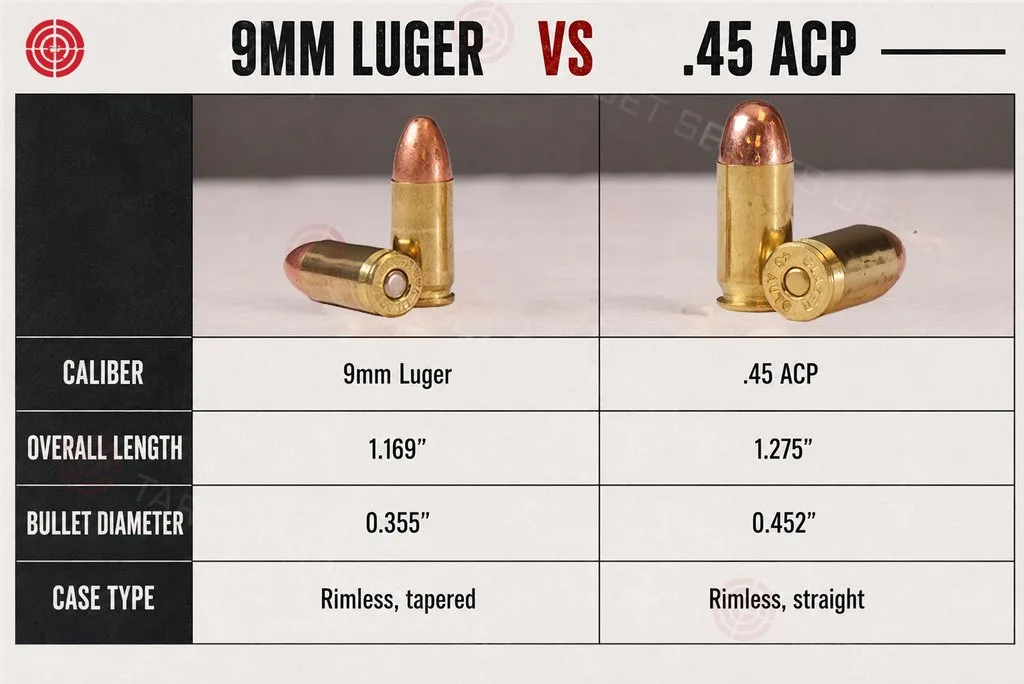
| Case Type | Rimless, tapered | Rimless, straight |
| Bullet Diameter | .355” | .452” |
| Case Length | 0.754” | 0.898” |
| Overall Length | 1.169” | 1.275” |
| Common Bullet Weights | 115–147 grains | 185–230 grains |
| SAAMI Max Pressure | ~35,000 psi | ~21,000 psi |
| Typical Muzzle Velocity (factory) | 1,000–1,280 fps | 830–950 fps |
| Typical Muzzle Energy (factory) | ~323–418 ft lbs | ~352–461 ft lbs (+P at the top) |
| Sound Profile | Mostly supersonic (147gr runs subsonic) | Subsonic by design |
| Typical Capacity (full-size) | 15–17+1 | 8–13+1 |
| Typical Cost per Round | The cheapest centerfire pistol round there is | Meaningfully more — often close to double for range ammo |
| Practical Strong Suit | Capacity, price, soft recoil, availability | Bullet diameter, expansion, suppressor manners, heritage |
[IMAGE SUGGESTION: side-by-side cartridge photo, 9mm Luger next to 45 ACP, with bullet-diameter and overall-length callouts; ideally next to a Glock 17 double-stack magazine and a 1911 single-stack magazine]
Two numbers in that table run this entire debate. First, bullet diameter: .355” versus .452”. The 45 really is a much bigger bullet — roughly a quarter wider before expansion, and twice the weight in its classic 230gr form. Second, pressure: the little 9mm runs at nearly 35,000 psi while the big 45 ambles along at about 21,000. That’s why the 9mm is fast and flat while the 45 is slow and heavy — and why, when you do the energy math, the two land far closer together than their silhouettes suggest.
And here’s the wrinkle most spec tables hide: because the 45’s bullets are heavy and slow, nearly every factory 45 ACP load is already subsonic — no sonic crack, ever. That detail matters more today than it has in a hundred years, and we’ll come back to it in the suppressor section.
What Is the 9mm Luger? (And How It Won the World)
Georg Luger developed the 9x19mm in 1901 from his 7.65mm Parabellum case, and it spent the 20th century quietly conquering the planet: the world’s militaries first, American police in the “wonder nine” era, the U.S. military with the Beretta M9 in 1985, and finally the FBI — twice (more on that saga below). Today it is, without serious argument, the most popular handgun cartridge on earth.
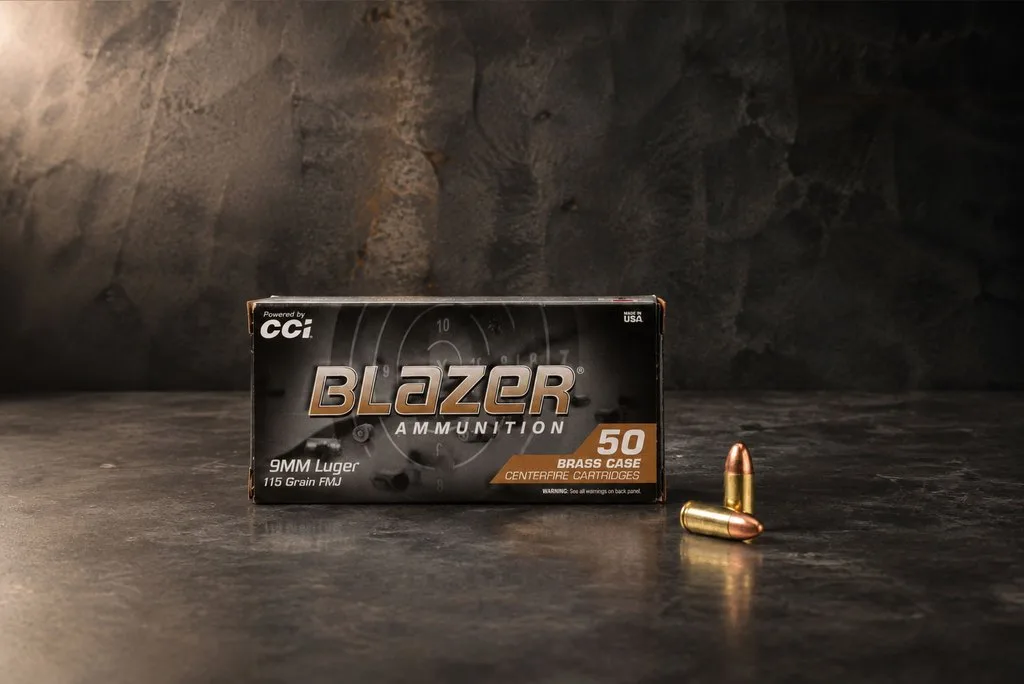
The reasons are boringly practical. Modern bullet engineering closed the old terminal-performance gap with bigger calibers, so shooters kept the cartridge that was cheaper, softer-shooting, and held more rounds. A Glock 17 carries 17+1; the classic 45 platform carries 8+1. And global production scale made 9mm the cheapest centerfire handgun ammo you can buy — which means more practice per dollar, which builds more skill, which matters more than any caliber argument ever written.
In our own review database, 9mm isn’t just popular — it’s the most-reviewed caliber we sell, in anything: over 126,000 verified reviews across 556 products and climbing daily.
Browse all in-stock 9mm Luger ammo here.
What Is the 45 ACP? (And Why It Refuses to Lose)
John Moses Browning designed the .45 Automatic Colt Pistol cartridge around 1904–1905 (sources split the year; the Army settled the argument by adopting it with the Colt M1911 in 1911). The brief was simple: after the .38 Long Colt’s failures in the Philippines, the U.S. military wanted a big-bore fight-stopper in a self-loading pistol. Browning delivered a 230-grain slug at about 830 fps, and that recipe served as the standard-issue American sidearm round through two world wars, Korea, and Vietnam — 74 years of continuous service until the M9 replaced the 1911 in 1985.
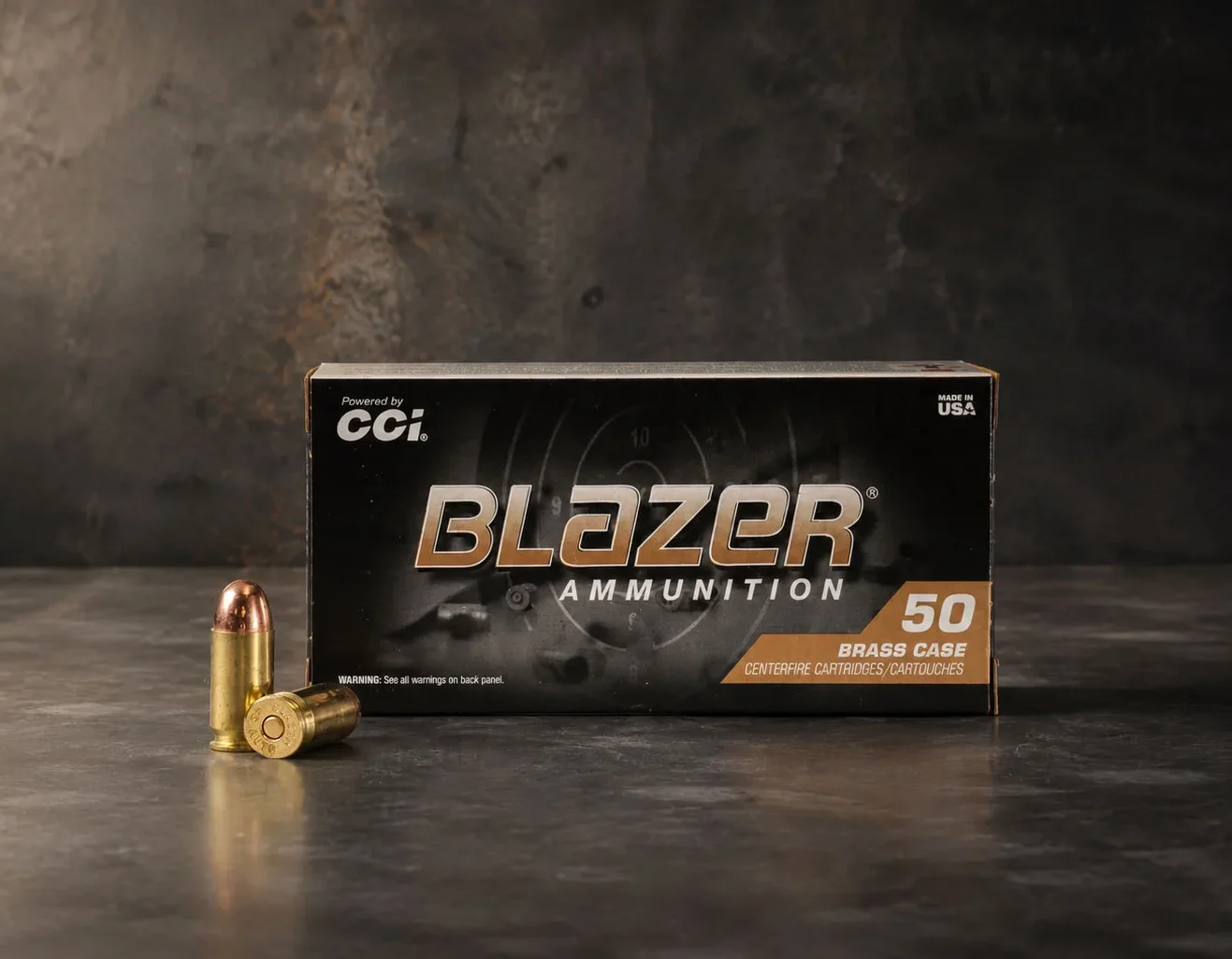
The 45 didn’t retire; it re-enlisted as a civilian. The 1911 remains one of the most beloved handgun platforms in existence, the 45 dominates big-bore pistol competition, and the cartridge has found an entirely modern second career as the suppressor crowd’s favorite pistol round — born subsonic, no special ammo required.
Our customers haven’t let it fade either: nearly 23,000 verified reviews across 244 products — and as you’re about to see, 45 buyers rate their ammo slightly higher than the 9mm crowd does. The old warhorse’s owners are not settling.
Browse all in-stock 45 ACP ammo here.
9mm vs 45 ACP Ballistics: Real Loads, Real Numbers
Here’s where most comparison articles hand you a generic chart of loads you can’t actually buy. Every load in this table is purchasable today, with its factory specs and its live customer rating next to it.
| Load | Caliber | Grain | Muzzle Velocity | Muzzle Energy | Verified Reviews | Avg Performance |
|---|---|---|---|---|---|---|
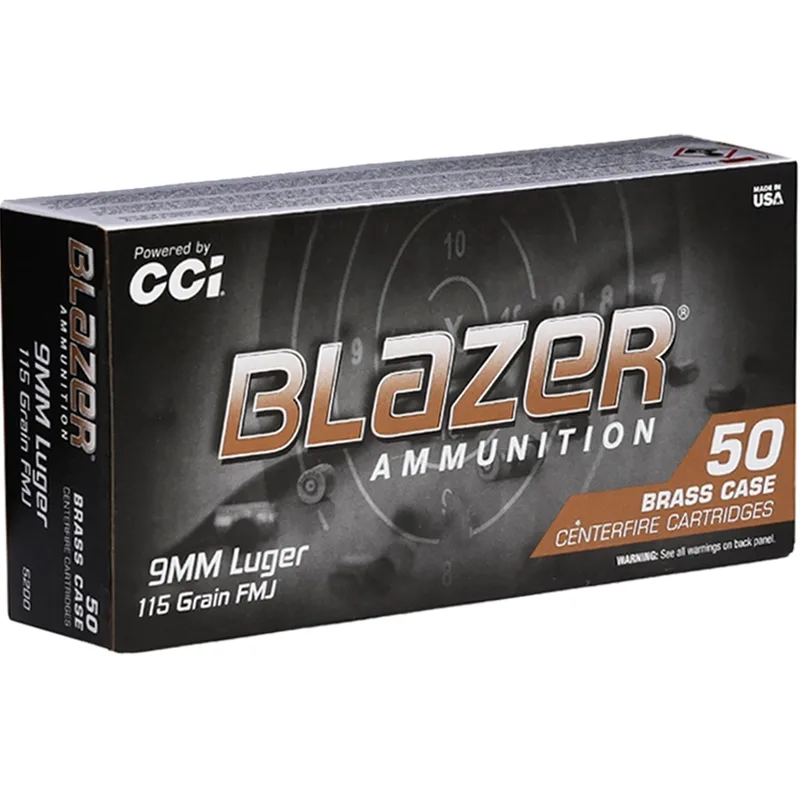
| CCI Blazer Brass 115gr FMJ – 5200 | 9mm | 115 | 1,125 fps | 323 ft lbs | 9,705 | 4.82 / 5 |
| CCI Blazer Brass 124gr FMJ – 5201 | 9mm | 124 | 1,090 fps | 327 ft lbs | 7,429 | 4.83 / 5 |
| Sellier & Bellot 115gr FMJ – SB9A | 9mm | 115 | 1,280 fps | 418 ft lbs | 2,920 | 4.84 / 5 |
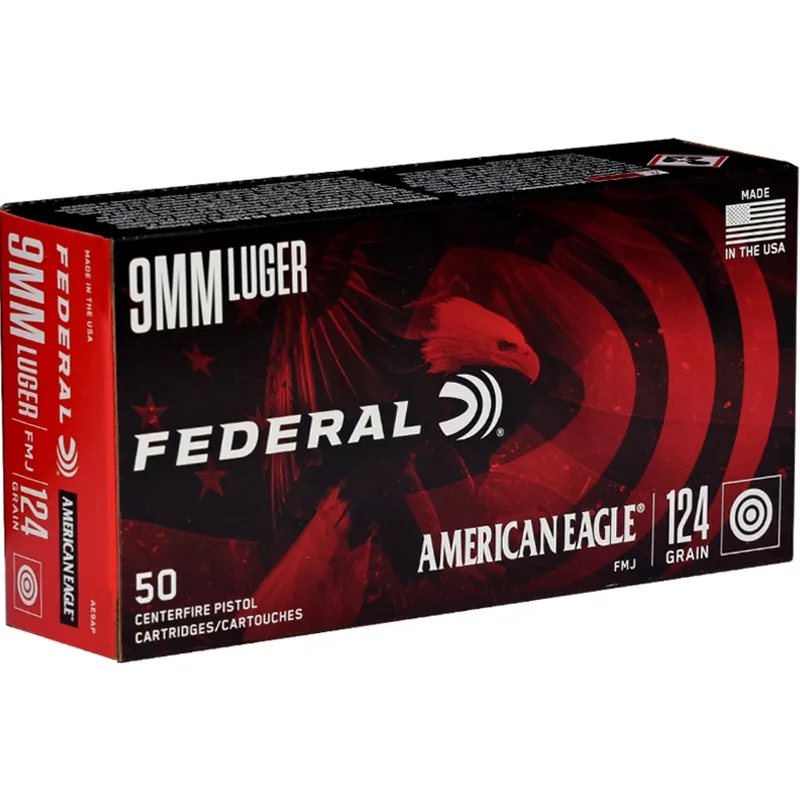
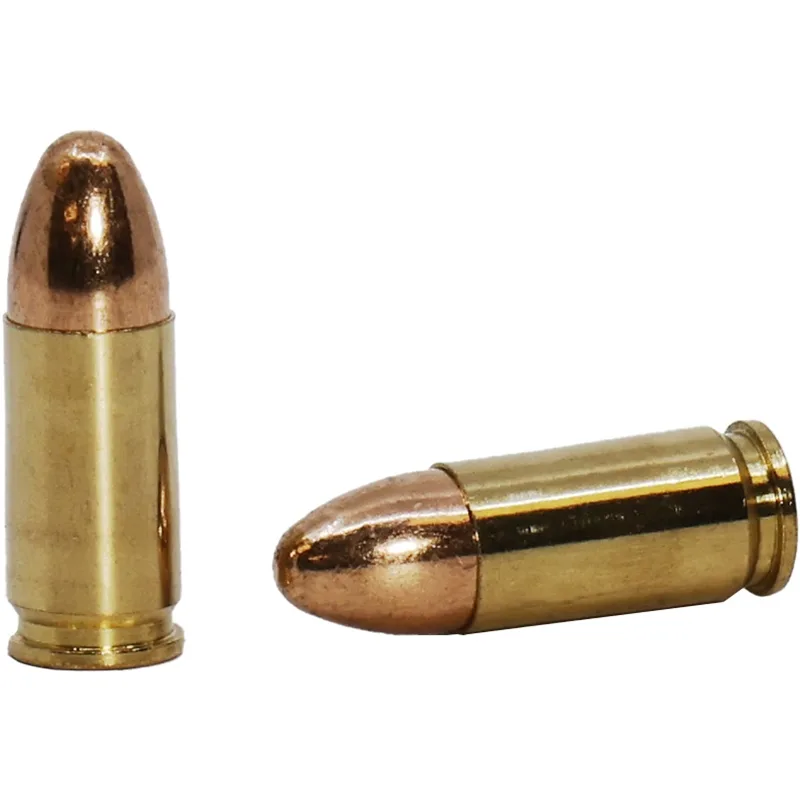
| Federal American Eagle 124gr FMJ – AE9AP | 9mm | 124 | 1,150 fps | 364 ft lbs | 3,180 | 4.84 / 5 |
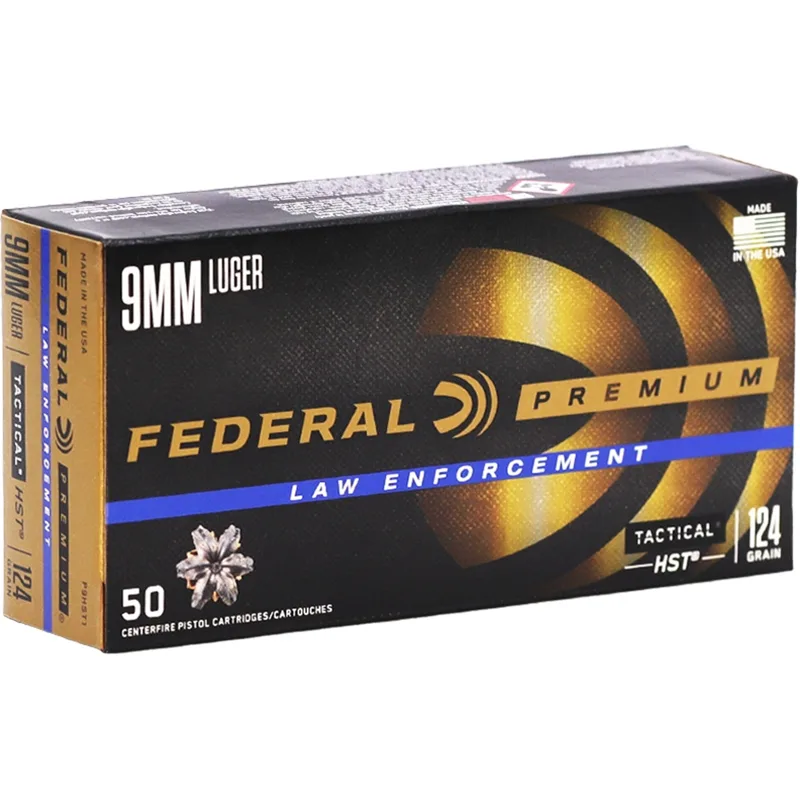
| Federal LE HST 124gr JHP – P9HST1 | 9mm | 124 | 1,150 fps | 365 ft lbs | 2,896 | 4.90 / 5 |
| Federal HST LE 147gr JHP – P9HST2 | 9mm | 147 | 1,000 fps | 326 ft lbs | 2,285 | 4.92 / 5 |
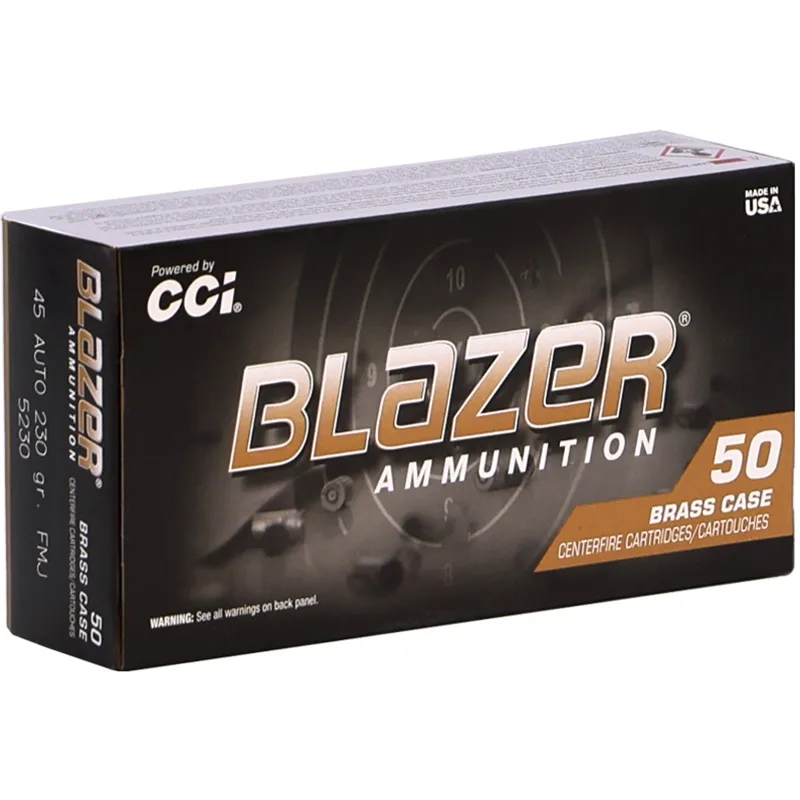
| CCI Blazer Brass 230gr FMJ – 5230 | 45 ACP | 230 | 830 fps | 352 ft lbs | 2,205 | 4.77 / 5 |
| Sellier & Bellot 230gr FMJ – SB45A | 45 ACP | 230 | 853 fps | 372 ft lbs | 1,488 | 4.84 / 5 |
| Federal American Eagle 230gr FMJ – AE45A | 45 ACP | 230 | 890 fps | 404 ft lbs | 1,027 | 4.83 / 5 |
| Remington UMC 230gr FMJ – L45AP4 | 45 ACP | 230 | 835 fps | 356 ft lbs | 1,305 | 4.73 / 5 |
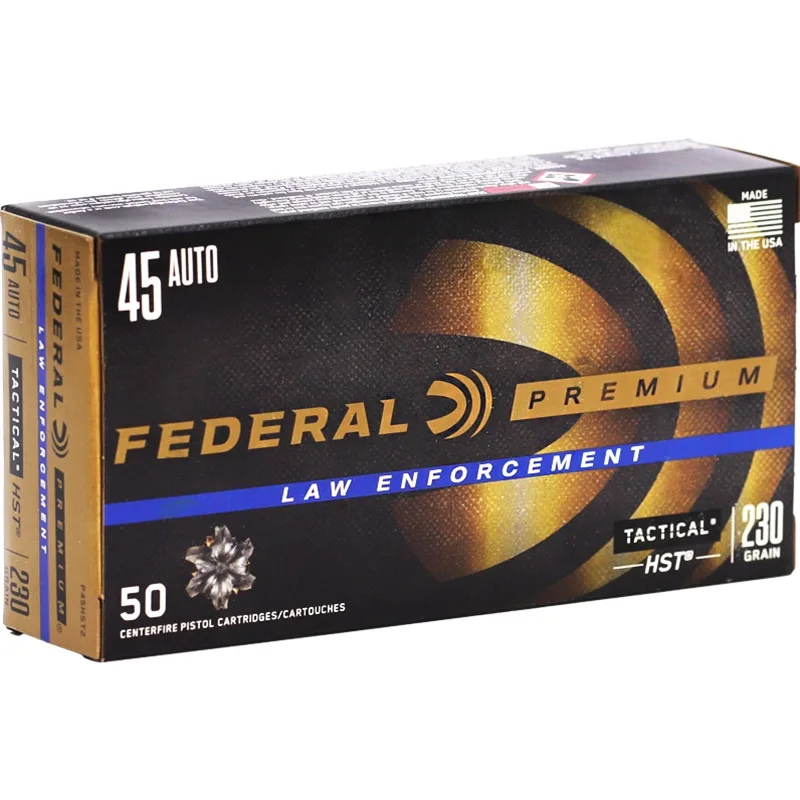
| Federal LE HST 230gr JHP – P45HST2 | 45 ACP | 230 | 890 fps | 405 ft lbs | 676 | 4.92 / 5 |
| Federal LE HST 230gr +P JHP – P45HST1 | 45 ACP +P | 230 | 950 fps | 461 ft lbs | 547 | 4.92 / 5 |
Note: Velocity and energy figures are manufacturer specs from factory test barrels (typically 4–5”). Compact and subcompact pistols will run slower than book values — independent chronograph testing commonly shows compact-pistol 9mm in the 1,000–1,100 fps range and 45 ACP from commander-length guns in the low-800s. Pressure-rated +P ammunition should only be used in firearms rated for it.
What the table actually tells you
- The energy “gap” is an overlap. Our featured 9mm range loads run 323–418 ft lbs of book energy; our featured 45s run 352–461. The mighty 45’s standard loads carry roughly 30–80 ft lbs more than comparable 9mm — real, but nothing like the different-universe framing the internet uses. Our hottest featured 9mm trainer (S&B at 418 ft lbs) out-muscles every standard-pressure 45 in this table on paper.
- They get there in opposite ways. The 9mm sends a 115–147gr bullet fast (1,000–1,280 fps); the 45 lobs a 185–230gr bullet slow (830–950 fps). Same kinetic-energy neighborhood, totally different personalities: snap versus push, crack versus thump.
- Diameter is the 45’s real argument, not energy. A .452” bullet starts wider than most expanded 9mm hollow points finish. Quality 45 JHPs commonly expand to .70–.80”+ in gel testing; premium 9mm JHPs typically expand to .50–.60”. Both calibers’ duty loads meet the FBI’s 12–18” penetration window — the 45 just cuts a wider channel doing it.
- The defense loads are the best-rated products on both sides. Federal’s HST posts a 4.90–4.92 average in both calibers across 6,400+ combined reviews. When customers are pickiest, both cartridges deliver — which previews the verdict of this whole article.
- Satisfaction doesn’t follow caliber. Read the ratings column: 4.73–4.92 everywhere. There is no losing caliber in that table, and 149,000 reviewers can’t be bribed.
The Stopping Power Question (And What the FBI Actually Concluded)
This is the section every “9mm vs 45” article writes — and most get half-wrong, because they either pretend the 45’s diameter doesn’t matter or pretend it’s the whole story. Here’s the honest version.
The old argument: the 45 ACP throws a bullet twice as heavy and a quarter wider; bigger holes stop fights faster; two world wars; case closed. For most of the 20th century, with ball ammo or primitive hollow points, that logic held real weight — a .45-caliber hole genuinely outperformed a 9mm hole when neither bullet expanded reliably.
What changed: the bullets got smart. Modern bonded and mechanically-locked hollow points — the HSTs and Gold Dots featured in this article — expand reliably through fabric, hold their weight, and penetrate to FBI spec from both calibers. Forensic literature was already pointing this direction decades ago: Vincent Di Maio’s standard textbook on gunshot wounds concluded there is no appreciable difference in effectiveness between the 9mm and the 45 ACP. Handgun bullets — all of them — stop threats through placement and penetration, not foot-pounds. Nobody gets to skip practice because their caliber starts with a 4.
Then the FBI made it official. After the famous 1986 Miami shootout sent the Bureau chasing bigger cartridges (10mm, then the .40 S&W it spawned), the FBI’s Training Division published its now-famous 2014 justification and began transitioning back to 9mm in 2015. The reasoning, paraphrased honestly: modern premium 9mm penetrates and expands as well as the bigger service calibers; agents shoot 9mm faster and more accurately under stress; pistols hold more of it; and ammo costs less — so agents train more. Most American police agencies followed. That’s not 9mm fanboy talk; that’s the largest law-enforcement ballistics program on earth publishing its homework.
So is “stopping power” settled? The measurable parts are: with modern JHPs, both calibers pass the same tests, and no gel block can detect your caliber pride. What remains true for the 45: it starts wider, ends wider, and transfers its energy with less risk of over-penetration in its slower loads. What remains true for the 9mm: you’ll likely land more hits, faster, with more rounds in reserve. Shot placement and round count are the only “stopping power” variables you actually control — and they both vote 9mm, while physics tips its cap to the 45.
One thing we won’t do is pretend the numbers say more than they do. Some top-ranking articles claim standard 9mm makes “upwards of 500 ft lbs” — no standard-pressure factory load in our entire catalog does. Print the real numbers and the debate gets calmer. That’s sort of our whole thing.
We Pulled the Numbers: 149,000+ Verified Buyers on 9mm and 45 ACP
Here’s the part nobody else ranking for this comparison can show you — aggregate stats from our verified customer review database (approved reviews only) across every 9mm Luger and 45 ACP product we carry:
| 9mm Luger | 45 ACP | |
|---|---|---|
| Verified customer reviews | 126,943 | 22,971 |
| Products reviewed | 556 | 244 |
| Average performance rating | 4.76 / 5 | 4.78 / 5 |
| Five-star performance ratings | 105,892 (83%) | 19,274 (84%) |
Honest takeaways from the data:
1. The market voted 9mm by a landslide — about 5.5 to 1. For every 45 ACP review in our database there are roughly five and a half 9mm reviews, and we stock more than twice as many 9mm products (556 vs 244). That ratio is the availability-and-price argument in one number: more demand, more competition, lower prices, more options.
2. But the 45 crowd is — measurably — slightly happier. Read that table again: 4.78 versus 4.76 average performance, 84% versus 83% five-star. The gap is statistical noise, but it falsifies the smug version of the 9mm argument. Nearly 23,000 people bought the “obsolete” cartridge and rated it just as well or a hair better. Nobody who chose the 45 is out there regretting it.
3. The 45 reviews read like a club; the 9mm reviews read like a country. Browse the 45 side and you meet 1911 owners by the dozen — Kimbers, Colts, Les Baers, Ed Browns, Rock Islands — plus retired LEOs and PCC owners. The 9mm side is everyone: first-timers, class-takers burning cases, competition shooters chasing power factor, and carriers of every micro-nine ever stamped. Whichever crowd sounds like you is a real signal.
4. Both calibers’ defense loads outrate their range loads. HST and Gold Dot post 4.90–4.92 in both calibers — higher than any bulk trainer in this article. When stakes rise, customers grade harder, and these loads still top the charts. Caliber war or no caliber war, bullet quality is the variable that actually shows up in 149,000 reviews.
The Best 9mm Ammo (Picked by the People Who Buy It)
Each pick includes specs, the live review count and average performance rating, and real customer feedback quoted word-for-word — typos and all. Click any product name to view it on Target Sports USA.
CCI Blazer Brass 9mm Luger 115 Grain FMJ – 5200 & 124 Grain FMJ – 5201 – The People’s Champ
| Spec | Blazer Brass 5200 | Blazer Brass 5201 |
|---|---|---|
| Grain / Bullet | 115gr FMJ | 124gr FMJ |
| Muzzle Velocity | 1,125 fps | 1,090 fps |
| Muzzle Energy | 323 ft lbs | 327 ft lbs |
| Packaging | Box of 50 / Case of 1000 | Box of 50 / Case of 1000 |
| Verified Reviews | 9,705 | 7,429 |
| Avg Performance Rating | 4.82 / 5 | 4.83 / 5 |
Seventeen thousand reviews between these two SKUs — nothing else in this article comes close. This is what America actually trains with:
“This 9mm ammo is really good for plinking. I use a Canik TP9 SA. I had no issues with the ammo. It fed reliably. Granted, it is a light load. It shoots soft, which is good because I took many first time shooters with this. They said that the recoil is mild.”
— Samuel L., verified buyer
“I purchased 1000 rounds of this for a class. At a time when some manufactures are letting quality control suffer to push out more rounds, I was one of the few on the line who didn’t have any ammo malfunctions. I’ll be getting more of this in the future.”
— Donald W., verified buyer
“Very good RANGE ammo. Some less expensive ammo is dirty but the Blazer Brass seems to be pretty clean. Performance is better than average as I notice very little drop at 50 yards from a 4″ Staccato C (2024). At 100 yards the performace is still very good.”
— Kenneth C., verified buyer
That last reviewer is stretching a 9mm to 100 yards for fun. Remember that when someone tells you these are “close range only” cartridges.
Federal American Eagle 9mm Luger 124 Grain FMJ – AE9AP – Best Premium 9mm Range Load
| Manufacturer | Federal |
| Caliber | 9mm Luger |
| Bullet Type | 124gr Full Metal Jacket |
| Muzzle Velocity | 1,150 fps |
| Muzzle Energy | 364 ft lbs |
| Grain | 124 |
| Packaging | Box of 50 / Case of 1000 |
| Verified Reviews | 3,180 |
| Avg Performance Rating | 4.84 / 5 |
“My favorite 9mm range ammo. I’ve never had an issue with any of it. About middle-ground in terms of “hotness”, or charge (higher than magtech, lower than fiocchi). If you want to test something hotter to match carry loads, try the same weight in fiocchi.”
— Greg P., verified buyer
“My new go-to ammo. I like the 124grain FMJ because it pairs well with my Federal 124 grain defense ammo. It is a good idea to have your range ammo match your self defense ammo for consistency sake. This is hard to do with the other manufacturers.”
— Grant S., verified buyer
Train-like-you-carry, straight from the customer base. You’ll hear the identical logic from our 45 reviewers below — smart shooters think alike across the caliber line.
Check Prices on TARGET SPORTS USA
Sellier & Bellot 9mm Luger 115 Grain FMJ – SB9A – Best Full-Power 9mm Trainer
| Manufacturer | Sellier & Bellot |
| Caliber | 9mm Luger |
| Bullet Type | 115gr Full Metal Jacket |
| Muzzle Velocity | 1,280 fps |
| Muzzle Energy | 418 ft lbs |
| Grain | 115 |
| Packaging | Box of 50 / Case of 1000 |
| Verified Reviews | 2,920 |
| Avg Performance Rating | 4.84 / 5 |
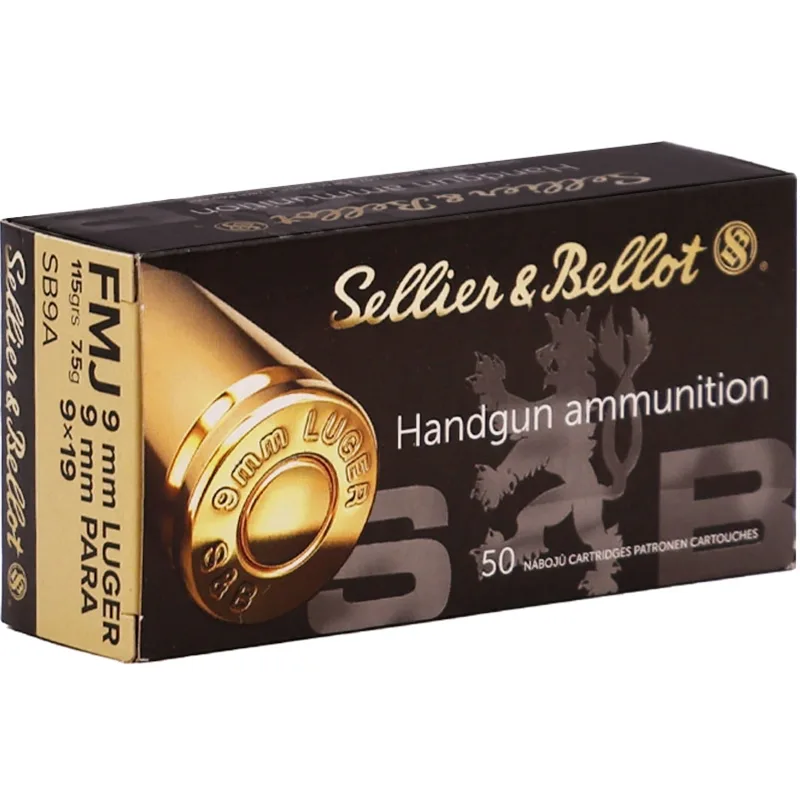
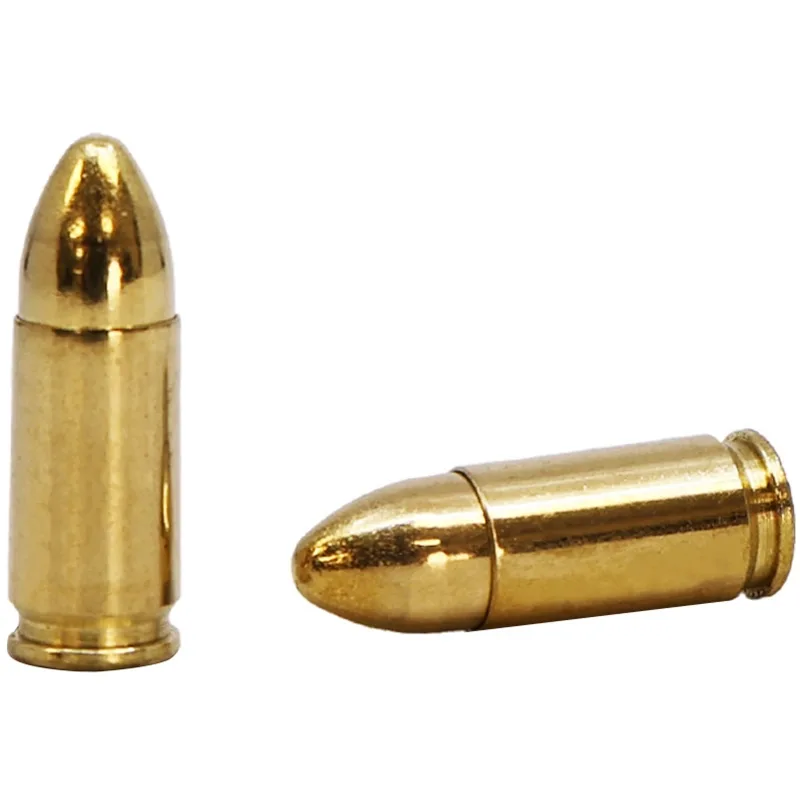
The hottest load in this article short of +P — 418 ft lbs of book energy, which quietly embarrasses the “9mm is weak” argument all by itself. And our favorite review of it comes from a 45 guy:
“Excellent 9mm ammo!! Just like the bigger .45ACP rounds they make (SB45A) they feed and eject smoothly as they should, accurate, clean, very good price point, and is new brass for all you Jessie’s that Re-Load. All across the board it’s a 5 star ammo!!”
— Daniel C., verified buyer
“Out of 200 rounds I only had one failure to load from a gen 5 glock 19. Wife shot 200 from glock 43 and no problems. Ammo ran clean. I will say these are a little too hot for her 43. I did notice they shot a tab low compared to other rounds I have used.” – Jeremy C. (4 stars)
Note Jeremy’s honesty: full-power European spec is real — lovely in a service pistol, “a little too hot” in a micro. Caliber isn’t the only thing that decides how a gun feels.
Check Prices on TARGET SPORTS USA
New Republic Training and Range 9mm 115 Grain FMJ – RTR9BR – Best Budget 9mm
| Manufacturer | New Republic |
| Caliber | 9mm Luger |
| Bullet Type | 115gr Full Metal Jacket |
| Muzzle Velocity | 1,180 fps |
| Muzzle Energy | 380 ft lbs |
| Grain | 115 |
| Verified Reviews | 3,699 |
| Avg Performance Rating | 4.75 / 5 |
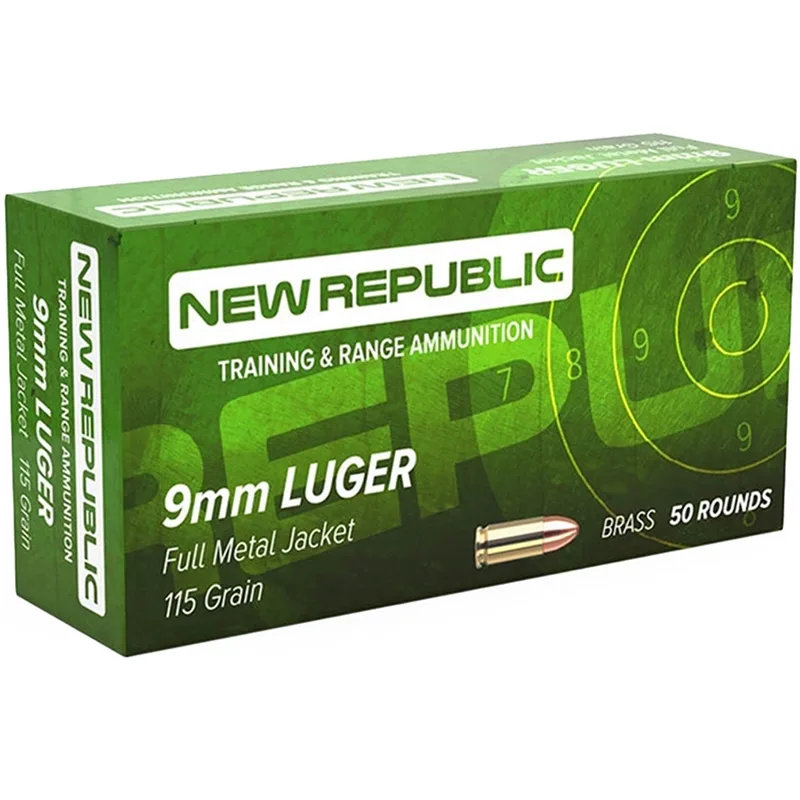
The price-floor pick and the reason “9mm is cheaper” stays true even in weird markets:
“Reluctant to try new stuff when plenty of old stuff works great, BUT. This was a little cheaper, a little hotter, a little faster, so what the heck. It was a good move 200 flawless. Glock 23,22, (9 conversion barrels) Glock 19. Sig 365 and 2 PSA PCC .”
— Michael S., verified buyer
“Great range ammo! This shoots well in all my pistols, and I haven’t had any problems with accuracy or dependability. I generally shoot about 200-250 rounds each time I visit the range, and I get 4-5 trips out of one case. Very pleased with this ammo!”
— JAMES H., verified buyer
And because we print the bad with the good:
“I bought 1000 rounds of this ammo in July of last year. I have been getting 2-3 duds in every box. Does not matter whether I shoot it with my VP9 or XDS Mod2. Strong dimple on the primer but no bang. I do not recommend this ammo.” – dennis g. (1 star)
That’s one voice against 3,699 averaging 4.75 — but budget primers occasionally miss, and we’d rather you read it here first. Buy a box before you buy a case.
Check Prices on TARGET SPORTS USA
Federal Law Enforcement HST 9mm 124 Grain JHP – P9HST1 & 147 Grain JHP – P9HST2 – The Defense Standard
| Spec | HST 124gr P9HST1 | HST 147gr P9HST2 |
|---|---|---|
| Grain / Bullet | 124gr HST JHP | 147gr HST JHP |
| Muzzle Velocity | 1,150 fps | 1,000 fps |
| Muzzle Energy | 365 ft lbs | 326 ft lbs |
| Verified Reviews | 2,896 | 2,285 |
| Avg Performance Rating | 4.90 / 5 | 4.92 / 5 |
The carry-ammo benchmark that helped end the caliber wars, in the two weights the duty world argues about:
“This is EXCELLENT JHP ammunition. Cheap enough to practice with at the range, quality enough to use for self defense. And that’s the ideal – you want to practice with what you’re going to be defending your life with. DEFINITELY re-ordering some of this.”
— Bill K., verified buyer
“I usually favor the +p flavor of this ammo, but I enjoy the low recoil for my Glock 26 and shield pistols. 3 shot averages from different pistols: Shield 2.0: 1069 Glock 26: 1087 Glock 19: 1134 Glock 17: 1148 Glock 34: 1206 Sub 2000: 1357”
— Eric T., verified buyer
“Speer Gold Dot, Federal HST and Hornady critical Defense are the only rounds I carry for self defense. You can’t go wrong with any of them. The 147 grain seems to be more accurate and better for longer ranges in a full sized pistol. Thanks TSUSA.”
— Kent S., verified buyer
Yes, our customers publish their own six-gun chronograph tables in the review section. This is why we trust this database enough to build articles out of it.
Speer Gold Dot LE Duty 9mm 124 Grain JHP – 53618 – The Other Defense Standard
| Manufacturer | Speer |
| Caliber | 9mm Luger |
| Bullet Type | 124gr Gold Dot JHP |
| Muzzle Velocity | 1,150 fps |
| Muzzle Energy | 327 ft lbs |
| Grain | 124 |
| Packaging | Box of 50 / Case of 1000 |
| Verified Reviews | 1,226 |
| Avg Performance Rating | 4.92 / 5 |
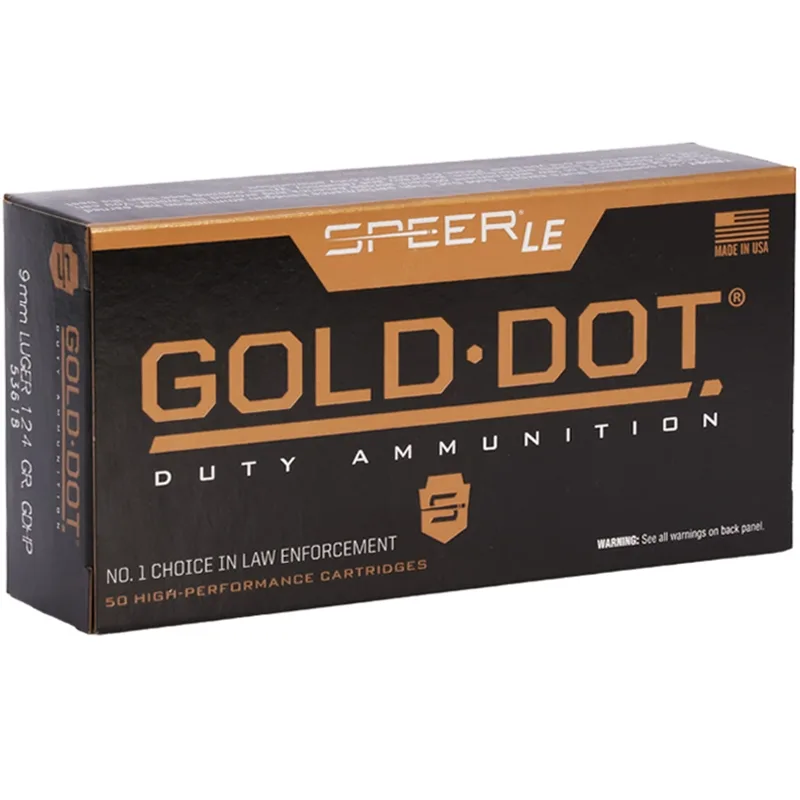
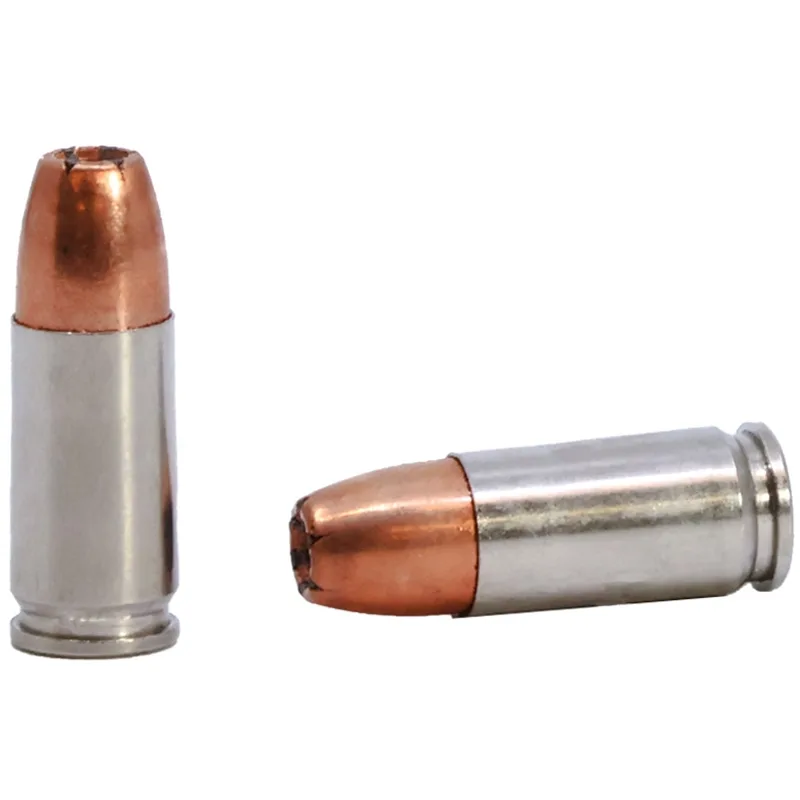
Tied for our highest-rated 9mm at 4.92 — and it has a 45 ACP twin brother waiting for you a few sections down:
“Very good ammunition it was shoot from my Glock 48, this target is from 5 yards up to 25 yards every hit would have taken my aggressor down these shots were rapid fire so all in all I’m very impressed Next I would like to try on a coarse where I’m moving.”
— Jerry B., verified buyer
“Decent price for these unprecedented times! Excellent performance! 50 round boxes are great value compared to 20 or 25 rounders. This is top tier duty/defense ammunition. Targetsportsusa.com comes through again!”
— Thomas R., verified buyer
Check Prices on TARGET SPORTS USA
The Best 45 ACP Ammo (Picked by the People Who Buy It)
CCI Blazer Brass 45 ACP 230 Grain FMJ – 5230 – Best All-Around 45 ACP Range Ammo
| Manufacturer | CCI |
| Caliber | 45 ACP |
| Bullet Type | 230gr Full Metal Jacket |
| Muzzle Velocity | 830 fps |
| Muzzle Energy | 352 ft lbs |
| Grain | 230 |
| Packaging | Box of 50 / Case of 1000 |
| Verified Reviews | 2,205 |
| Avg Performance Rating | 4.77 / 5 |
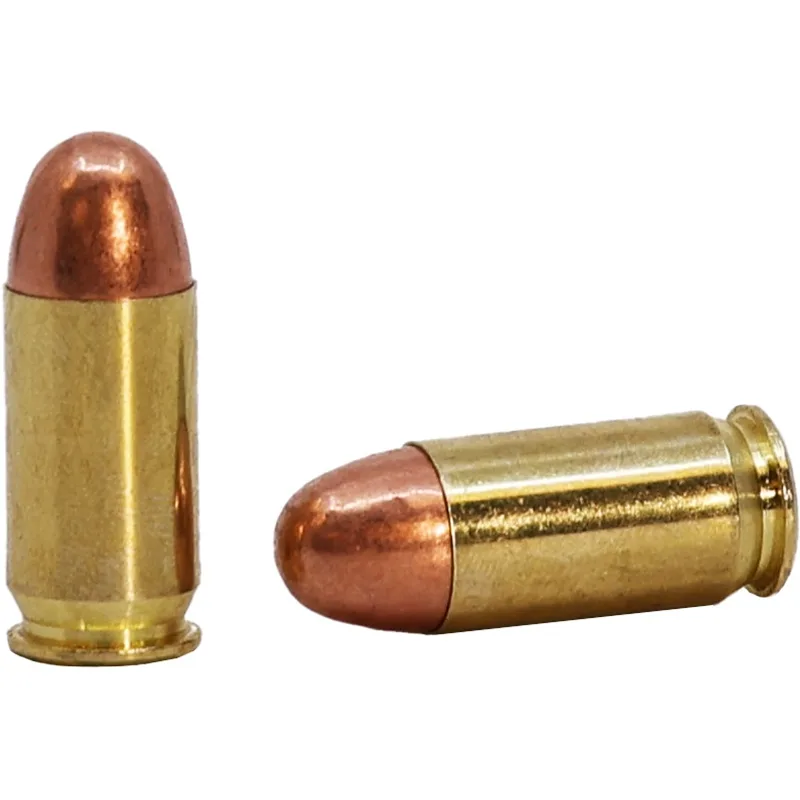
Our most-reviewed 45 ACP — the same Blazer Brass recipe the 9mm crowd buys 17,000 reviews deep, in Browning’s original 230gr formula:
“My son and I put 200 rounds through a couple of Kimber 1911’s. Never a failure to feed and seemed very clean. CCI Blazer brass and Target Sports both just gained a new customer. Highly satisfied with both product and sales. I will buy from Target Sports again!”
— Michael D., verified buyer
“Have shot thousands of these through my 1911. They always cycle perfectly. FTF and FTE are so infrequent I can’t remember the last time it happened. These are a great go-to round for target practice. And the range can recycle the brass casings!”
— Jarrett G., verified buyer
“Fired them in two different weapons. A Glock 36 and an old Series 70 Gold Cup. No problems at all. My only negative comment is the rounds use a small pistol primer not the normal large so, one must be very careful in sorting for reloading.”
— Donald G., verified buyer
Reloaders, heed Donald: this load uses small pistol primers — fine downrange, a sorting chore at the bench. And the minority report:
“Very DIRTY! Inconsistent height of bullets on casings! Lay the whole box of them standing up and you can see the inconsistency in height! At least half a dozen in a box of 50 that are set too low/deep into the casings!” – Kenny L. (2 stars)
2,205 reviews still average 4.77 — but that’s exactly why we quote customers verbatim. Inspect your ammo; it’s a good habit with every brand.
Sellier & Bellot 45 ACP 230 Grain FMJ – SB45A – Best Full-Power 45 Trainer
| Manufacturer | Sellier & Bellot |
| Caliber | 45 ACP |
| Bullet Type | 230gr Full Metal Jacket |
| Muzzle Velocity | 853 fps |
| Muzzle Energy | 372 ft lbs |
| Grain | 230 |
| Packaging | Box of 50 / Case of 1000 |
| Verified Reviews | 1,488 |
| Avg Performance Rating | 4.84 / 5 |
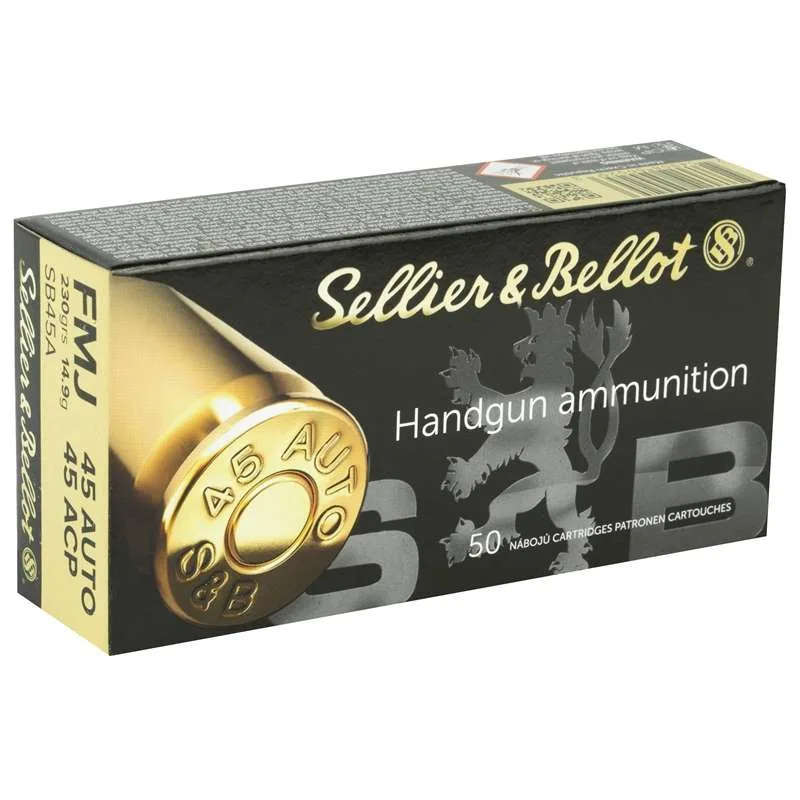
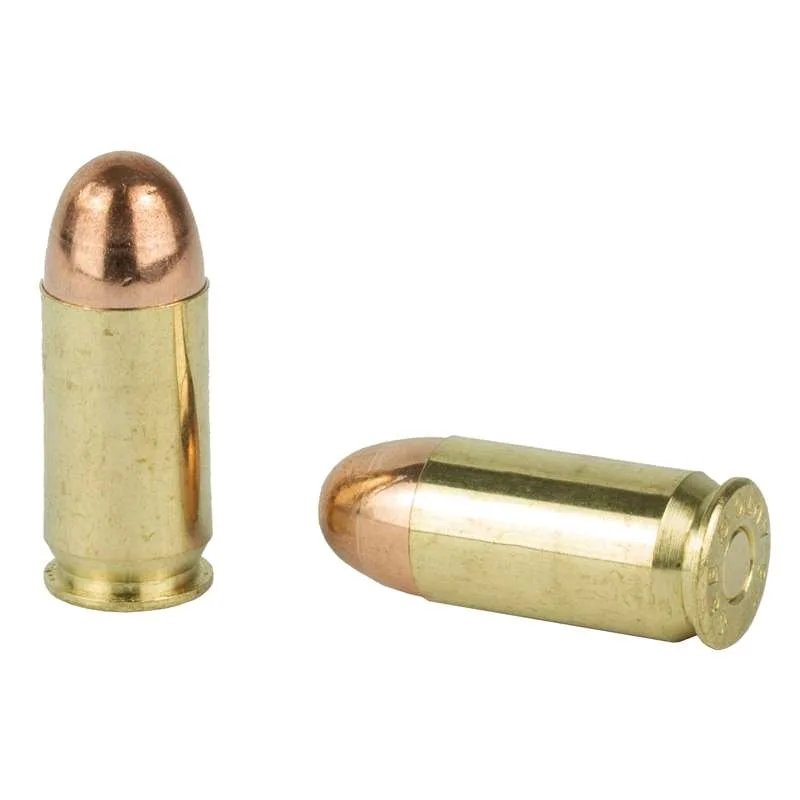
The highest-rated 45 range load we sell — same S&B house style as the 9mm SB9A above, and the two fan bases overlap heavily:
“This is my favorite 45 ammo. Nice and toasty like WIN M1911, but one of the cleanest 45 auto I’ve seen. Costs less too. It’s the all best for me. Burned through over 2 cases this month.Free shipping! I will be buying more from Target Sports USA very soon!”
— David G., verified buyer
“I just bought a new Dan Wesson and purchased this ammo since I have had such good luck with the 9mm they make. Not one single hiccup of any kind, accurate and on the lower end of the price scale. Gonna be my go-to for 45 ACP also.”
— Wynn W., verified buyer
“I am going to say the loads are a little light/weak. I have had a lot of rounds not being chambered. On the plus side, I didn’t have have a round out of 2k that didn’t fire once chambered.” – DAVID T. (2 stars)
Two customers call it toasty, one calls it light — welcome to the eternal truth that every gun has opinions. A 4.84 average over 1,488 reviews says most 45s eat it happily.
Federal American Eagle 45 ACP 230 Grain FMJ – AE45A – Best Premium 45 Range Load
| Manufacturer | Federal |
| Caliber | 45 ACP |
| Bullet Type | 230gr Full Metal Jacket |
| Muzzle Velocity | 890 fps |
| Muzzle Energy | 404 ft lbs |
| Grain | 230 |
| Packaging | Box of 50 / Case of 1000 |
| Verified Reviews | 1,027 |
| Avg Performance Rating | 4.83 / 5 |
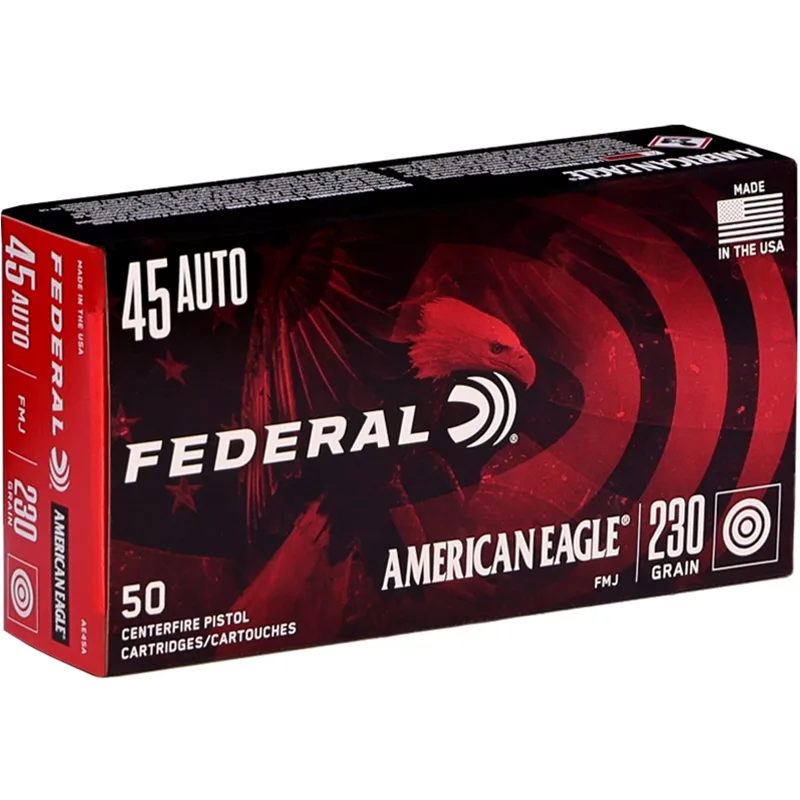
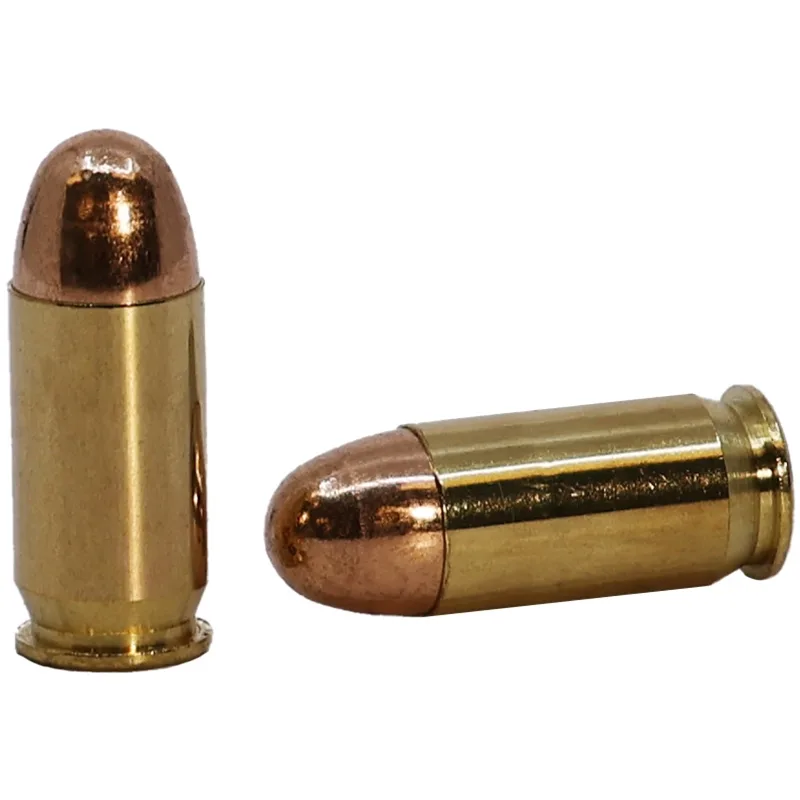
The hottest standard-pressure trainer on the 45 side — 404 ft lbs of book energy, which beats every standard 9mm load in this article. Anyone who tells you the 45 gave up its power argument hasn’t read a spec sheet lately:
“Very good cartridges for plinking and practice. It’s a little dirty but is very accurate. Also, I will be using it for steel matches in my Ruger LC .45acp Carbine. I have had no misfires or failure to feed issues. Highly recommended.”
— Art Z., verified buyer
“Just like all Federal American Eagle ammunition, it’s top of the line for range practice for me. Works great in my Springfield 1911 Milspec. Easily my favorite FMJ .45 A.C.P. loading. Wish it were cheaper though. ”
— Alex S., verified buyer
“Wish it were cheaper though” — five words that summarize the entire 45 ACP ownership experience.
Check Prices on TARGET SPORTS USA
Remington UMC 45 ACP 230 Grain FMJ – L45AP4 & PMC Bronze 45 ACP 230 Grain FMJ – 45A – The Workhorses
| Spec | UMC L45AP4 | PMC Bronze 45A |
|---|---|---|
| Grain / Bullet | 230gr FMJ | 230gr FMJ |
| Muzzle Velocity | 835 fps | 830 fps |
| Muzzle Energy | 356 ft lbs | 352 ft lbs |
| Verified Reviews | 1,305 | 498 |
| Avg Performance Rating | 4.73 / 5 | 4.86 / 5 |
The green box and the bronze box — pure 1911 fuel, per the people feeding them:
“Solid .45 ACP ammo made by Remington UMC. Seems quality has improved with the change of ownership. Shot this box out of 2 1911’s – :Les Baer and Ed Brown. Shot flawlessly and accurately to 25 yards. Very clean and excellent felt recoil.”
— Michael R., verified buyer
“I’ve used a few thousand of these rounds made by PMC. My Glock, HK and Colt 1911 have all reliably/accurately shot these without any issues. Don’t hesitate, it’ll work fine!” – jay d.
“Only ammo that has ever caused a stovepipe in my 1911. Even went out of my way to ask the Range Saftey to shoot through a few clips and make sure it wasnt me. Issue happened every third or fourth clip. Average priced for 45, won’t buy again.” – Gabriel C. (1 star, on the UMC)
One stovepiping 1911 versus thousands of clean reviews — but that’s the data, so it stays in the article. PMC’s 4.86 makes it the quiet overachiever of the budget 45s.
New Republic Training and Range 45 ACP 230 Grain FMJ – RTR45ACP – Best Budget 45 ACP
| Manufacturer | New Republic |
| Caliber | 45 ACP |
| Bullet Type | 230gr Full Metal Jacket |
| Muzzle Velocity | 853 fps |
| Muzzle Energy | 371 ft lbs |
| Grain | 230 |
| Verified Reviews | 628 |
| Avg Performance Rating | 4.75 / 5 |
The 45’s answer to the budget question, with the most useful gunsmithing tip in this article hiding in a review:
“Very affordable 45 ammo, at a phenomenal price point. The ammo is a bit poppy, I had to increase my recoil spring to 20lbs, my groups shrank and no issues. At best 3” at 15 yards off hand with a Rock Island Ultra Match Pro.”
— Kristopher M., verified buyer
“I have become a BIG FAN of the New Republic Ammo. I use thousands of rounds of 9mm, 45 ACP and 357 calipers without any jams and it burns clean. I am very satisfied with this product.”
— Peter T., verified buyer
“This ammo did not work in my firearm! The ammo would jam just before entering the barrel, and the slide wouldn’t fully close! It was a great value, good quality, but did not perform at all in my firearm. I sent it back for a full refund.” – Paul S. (1 star)
Budget ammo is gun-dependent in every caliber. 628 reviews averaging 4.75 say most guns run it; Paul’s says test yours first. (He got a full refund — that part’s evergreen.)
Check Prices on TARGET SPORTS USA
Federal Law Enforcement HST 45 ACP 230 Grain JHP – P45HST2 & 230 Grain +P JHP – P45HST1 – The Defense Standard, Big-Bore Division
| Spec | HST 230gr P45HST2 | HST 230gr +P P45HST1 |
|---|---|---|
| Grain / Bullet | 230gr HST JHP | 230gr HST JHP |
| Muzzle Velocity | 890 fps | 950 fps |
| Muzzle Energy | 405 ft lbs | 461 ft lbs |
| Pressure | Standard | +P (use only in +P-rated guns) |
| Verified Reviews | 676 | 547 |
| Avg Performance Rating | 4.92 / 5 | 4.92 / 5 |
Both wearing a 4.92 — tied for the best performance rating in this entire article, either caliber. The duty world concurs:
“This is my department’s authorized duty ammo for .45 ACP. It has a great reputation and track record. Feeds reliably in both my 4506 and my 1911. Even when we switched our 9mm and .40 to newer ammo we kept the .45 the same. ”
— Daniel R., verified buyer
“After watching Paul Harrell do a 9mm +p vs. .45 +p comparison, this was all I could find during the pandemic. Ran a few mags recently and it’s stout but not brutal and I was drilling steel at 25yds with irons. It’s solid ammo. ”
— Neil C., verified buyer
“Federal HST ammunition is, in my opinion, simply the best choice for a self defense round. Great penetration against all barrier types, totally reliable feeding and absolutely the best bang for the buck. Pun intended. :-)”
— Mark D., verified buyer
And an honest counterweight on the +P from a shooter who tried it and walked it back:
“I had feeding problems in tight 1911s due to slightly larger case diameter. Feeds fine in my Shield 45. +P is too much bark and jump for questionable terminal improvements in my book.” – Greg T. (3 stars)
Greg’s three-star review contains better ballistic judgment than half the articles on this SERP: in a caliber that already starts at .452”, +P buys you bark more than bite. Standard-pressure HST is the sweet spot for most 45 carriers.
Speer Gold Dot LE Duty 45 ACP 230 Grain JHP – 53966 – The Other Defense Standard, Big-Bore Division
| Manufacturer | Speer |
| Caliber | 45 ACP |
| Bullet Type | 230gr Gold Dot JHP |
| Muzzle Velocity | 890 fps |
| Muzzle Energy | 405 ft lbs |
| Grain | 230 |
| Packaging | Box of 50 / Case of 1000 |
| Verified Reviews | 278 |
| Avg Performance Rating | 4.91 / 5 |
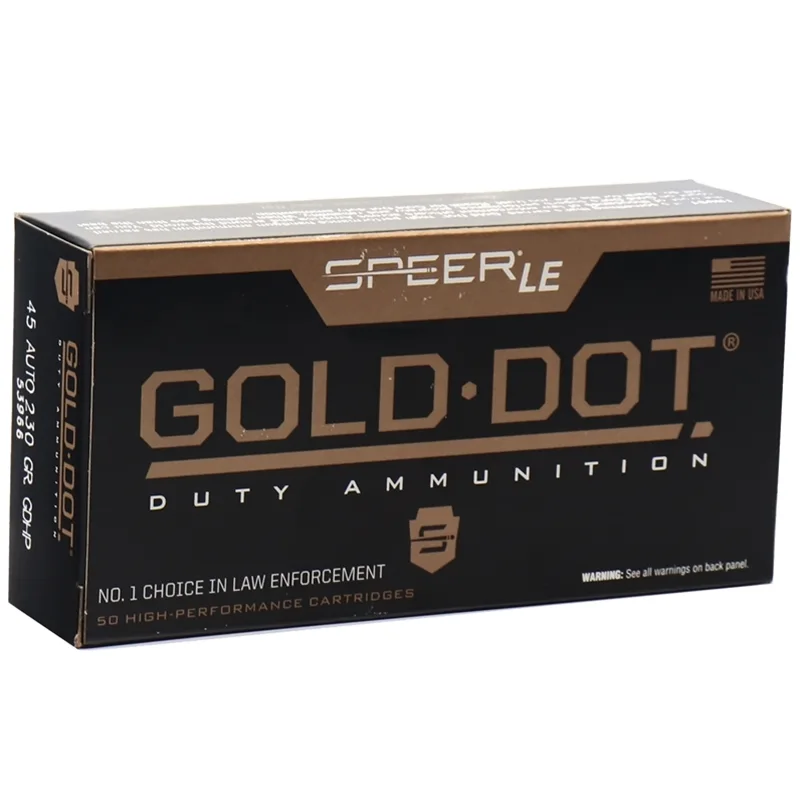
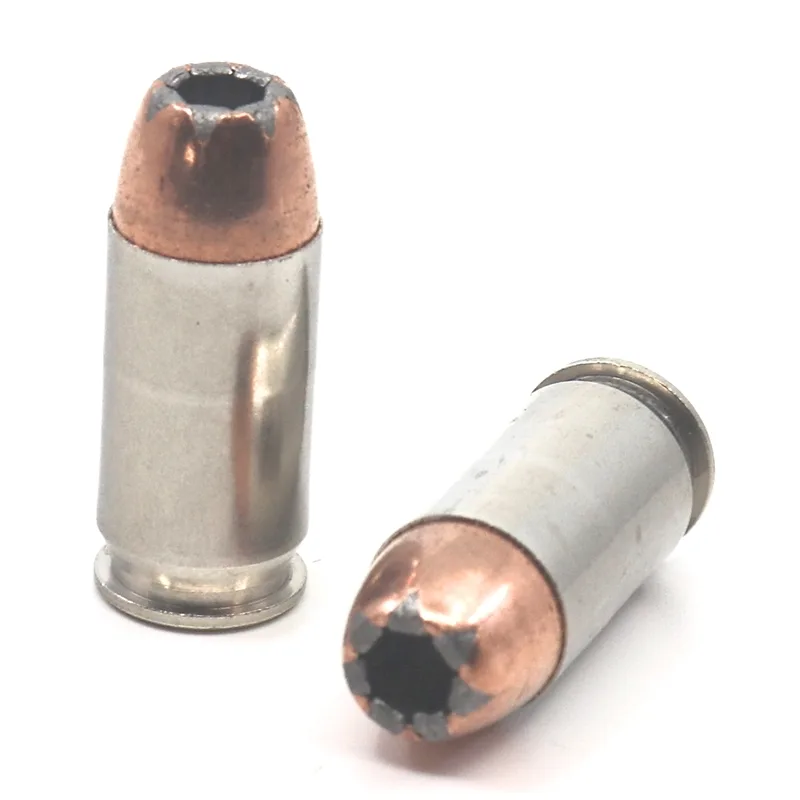
The 45-caliber twin of the 9mm Gold Dot above — same bonded-bullet technology, 4.91 versus 4.92. The caliber war, settled to within a hundredth of a star:
“As a retired LEO I have to take in consideration that many Departments use this for duty carry. I want permanent damage what ever I am shooting. Beats all other ammo I have tried. Only the best. Mike M. ”
— Mike M., verified buyer
“shot 50 rounds thru a S&W M&P 2.0 Everything went smoothly. No difference in feel from the FMJ ammo I usually shoot. Rounds hit the target a little lower than I was use to. Adjusted my aim accordingly and all was good. ” – Michael B. (4 stars)
Michael’s note is the practical gold: your defense load may print differently than your range load. Verify your zero with the ammo you actually carry — in either caliber.
Check Prices on TARGET SPORTS USA
Capacity, Cost, Recoil, and the Suppressor Wildcard
The top-ranking articles fight this out as cartridge-versus-cartridge. Truthfully, a big slice of it is platform-versus-platform — the 9mm’s flagship is a polymer double-stack, the 45’s is a steel single-stack 1911, and each gun flatters its own cartridge.
Capacity: the math nobody can spin
A full-size 9mm typically holds 15–17+1; the same-size 45 holds 8–13+1 (a Glock 17 carries 17 rounds of 9mm; its 45-caliber sibling the Glock 21 carries 13; a classic 1911 carries 7–8). The 9mm wins, period. The honest 45 counterargument isn’t “capacity doesn’t matter” — it’s that most defensive encounters are decided in very few rounds, and 8 rounds of .452” HST is not a hardship. True. But more margin is more margin, and margin is free with the 9mm.
Cost: the compounding advantage
9mm is the cheapest centerfire pistol ammo made, full stop. Comparable 45 ACP range loads routinely run substantially more per round — industry retail comparisons commonly show 45 costing half again to nearly double, simply because a 230gr bullet uses about twice the lead and copper of a 115gr one. Our catalog depth tells the same story: 556 reviewed 9mm products versus 244 in 45. Cheaper practice means more practice, and more practice beats every diameter argument in this article. Compare live pricing yourself: 9mm Luger ammo | 45 ACP ammo — and remember bulk case purchases ship free.
Recoil: push versus snap
The 45 generates meaningfully more recoil impulse — it’s launching twice the bullet weight. But the character differs: shooters consistently describe the 45 as a slow push and the 9mm as a quick snap, and a heavy steel 1911 soaks up a surprising amount of that push (it’s why 1911 guys swear the 45 is a pussycat — in that gun, it nearly is). Put both cartridges in same-weight polymer pistols and the 9mm is clearly faster back on target. For new shooters, rapid follow-ups, and small guns, the 9mm’s recoil advantage is real and decisive. For deliberate, big-gun shooting, the 45’s push is honestly pleasant.
The suppressor wildcard: the 45’s modern ace
Here’s the angle the big comparison articles barely touch. Nearly every standard 45 ACP load is naturally subsonic — 830–950 fps across our entire featured lineup, comfortably under the ~1,125 fps speed of sound. Screw a can onto a 45 and every box of cheap ball ammo is already optimized: no crack, no special-order subsonics, no cycling drama from downloaded ammo. The 9mm can play this game, but only with 147gr loads (like the HST 147 above at 1,000 fps); standard 115/124gr range ammo goes supersonic and cracks anyway. If quiet shooting is in your future, the 45 quietly (sorry) takes a whole category the spec-sheet warriors forget to score.
Which One Goes in Your Holster? (Carry, Home Defense, Suppressors, Range Volume)
Concealed carry: 9mm for most people — and the data isn’t shy about it
Thinner cartridge, thinner gun, more rounds, lighter recoil in small pistols, cheaper practice. The micro-nine generation (P365s, Hellcats, Shield Pluses all over our review quotes) simply has no 45-caliber equivalent at the same size and capacity. The carrier who’s best served by a 45 is the one who shoots a compact 45 better than a 9mm and accepts 8–10 rounds as enough — a real person, but a minority of one caliber’s fan base, not a strategy.
Home defense: either — pick by gun and load, not caliber
Behind a nightstand door, the 45’s weight penalty vanishes and capacity matters less. A full-size 45 with 230gr HST is a superb home gun with a softer muzzle blast profile than hot 9mm; a 17+1 9mm with HST and a light is equally superb with more margin. Whichever you choose, load real defensive hollow points — as our own FAQ desk told a customer asking about target ammo for defense: that’s not what it’s for (full exchange below).
Suppressor host: the 45, and it’s not close
Every bulk box is subsonic. The 9mm needs 147gr loads to stay quiet, and our reviews include a shooter whose suppressed 9mm wouldn’t cycle reliably with certain ammo. If a can is the plan, the 45 ACP is the easy button.
Range volume and new shooters: 9mm, decisively
Half the price, twice the products, milder recoil in everything, and our review database is full of instructors and class-takers proving it 1,000 rounds at a time. The 45 makes a wonderful second caliber — several of our quoted reviewers run both and say so in the same breath.
The 1911 question, answered honestly
If you want a 1911 — and many people are right to — you want a 45. Yes, 9mm 1911s exist and are wonderful range toys, but the platform was born around this cartridge, and our 45 review section is functionally a 1911 owners’ club meeting. Buying the gun is choosing the caliber, and there are far worse reasons to own one of the great American cartridges.
Hot Off the FAQ Desk: What Buyers Wanted to Know
We answer customer questions on product pages every day — 11,000+ published Q&As and counting. Real exchanges (lightly trimmed) that map straight onto this comparison:
Q: “Hi, Would these still work as a self defense round for the budget conscience?” (asked about a bulk 45 ACP target load) A: Our desk’s answer, in full: “not really, no, this is a target practice round.” Brevity is honesty. Range FMJ — in either caliber — is for practice. Carry purpose-built JHPs like the HSTs and Gold Dots featured above.
Q: “Any chronograph data for this ammo? +P? Not +P? Over 850FPS? Anything? Thanks” (asked about Federal’s classic 45 Hi-Shok) A: Straight from our desk: that load “is standard pressure (non +P) and has a muzzle velocity of 850 fps and muzzle energy of 369 ft lbs.” Notice those numbers sit right in the heart of the 45 table above — the 45’s book window is narrow and predictable, which is exactly why suppressor owners love it.
Q: “Is a kimber 1911 5” barrel considered a short barrel firearm for this ammo?” (asked about Speer Gold Dot Short Barrel 45) A: As we told him: “This ammunition can be used in your barrel, it was just designed to be able to run in barrels as short as 1.9″.” Short-barrel-optimized hollow points exist in 45 just like in 9mm — bullet engineering, not caliber, is what rescues velocity-starved guns.
Q: “Is this a magnetic FMJ?” (asked about Magtech 45 ACP 230gr) A: “features a lead core bullet and it is NON-MAGNETIC.” Indoor ranges with steel backstops often run a magnet test at the counter — worth knowing before you buy a case of anything, in any caliber.
Q: “What is the different between 115 grain and 124 grain?” (asked about Blazer Brass 9mm) A: As our desk put it: “the 124 Grain bullet will be a bit slower but will have a higher muzzle energy.” Scale that logic up and you’ve explained the entire 45 ACP: keep trading velocity for bullet weight until grandpa smiles.
Q: “Your site shows a muzzle velocity of 1560 fps for a 230 gr 45 ACP bullet which seemed pretty impossible…” A: A customer caught a bad spec on a 45 listing (the manufacturer’s real numbers were 895 fps / 409 ft lbs), and our desk answered: “we will check on this right of way and update it as soon as possible.” He was right, we fixed it. When 149,000 reviewers and a live Q&A section proofread your spec tables, errors don’t survive long — which is exactly why we publish from this database and double-check everything against manufacturer data.
9mm vs 45 ACP FAQ: The Rapid-Fire Round
Modestly, yes — by the numbers. Comparable factory 45 ACP loads typically deliver around 350–460 ft lbs of muzzle energy versus roughly 320–420 ft lbs for the 9mm, and the 45’s bullet is wider (.452” vs .355”) and about twice as heavy (230gr vs 115–124gr). But the ranges overlap heavily, and with modern hollow points both calibers meet the same FBI penetration standards. The 45 hits with a bigger, slower bullet; the 9mm with a faster, lighter one.
In its widely-circulated 2014 Training Division justification (with the transition beginning in 2015), the FBI concluded that modern premium 9mm ammunition penetrates and expands comparably to the larger service calibers, while agents shoot 9mm faster and more accurately, pistols hold more rounds of it, and it costs less to train with. Most U.S. police agencies have since followed the same logic.
Absolutely. With modern loads like Federal HST 230gr or Speer Gold Dot 230gr, the 45 ACP meets accepted penetration standards and expands to roughly three-quarters of an inch or more. Those two loads rate 4.92 and 4.91 out of 5 across our verified reviews — tied for the best in either caliber. Its trade-offs are capacity (typically 8–13 rounds), recoil, and ammo cost — not effectiveness.
It makes a wider wound channel and transfers slightly more energy, but forensic experts have long concluded there is no appreciable real-world difference in effectiveness between the two with quality ammunition. Handgun “stopping power” comes overwhelmingly from shot placement and adequate penetration — both of which favor the cartridge you shoot best and practice most with.
The 9mm, clearly — it launches roughly half the bullet weight. The 45’s recoil is better described as a push than a snap, and a heavy steel 1911 absorbs much of it, but in similar modern pistols the 9mm gets you back on target faster. New shooters and small-gun carriers will feel the difference immediately.
Yes, substantially — comparable range loads often cost half again to nearly twice as much per round, because a 230gr bullet simply contains about double the material of a 115gr 9mm bullet, and 9mm’s global production scale drives its prices to the floor. Our catalog reflects it: we carry more than twice as many reviewed 9mm products as 45 ACP.
Yes. Nearly all standard 45 ACP ammunition is naturally subsonic (typically 830–950 fps), so it produces no supersonic crack with a suppressor — even cheap bulk ball ammo. The 9mm needs heavier 147-grain loads to stay subsonic; its common 115 and 124-grain loads break the sound barrier and crack regardless of the can.
No — never. The cartridges share nothing: different diameters (.355” vs .452”), case lengths, and pressures. Neither will chamber correctly in the other’s firearm, and attempting it is dangerous. If you want both calibers, the good news is many model families (Glock, M&P, 1911s) offer the same gun in each — several of our reviewers own matched pairs.
Where the Dust Settles
A hundred and forty-nine thousand reviews later, here’s the honest scorecard. The 9mm wins the practical column outright: capacity, cost, recoil, selection (556 products to 244), and the endorsement of the largest ballistics-testing bureaucracy on earth. That’s why it’s the default answer, and the default is correct for most people. But our data refuses to crown it alone: 45 ACP buyers rate their ammo a hair higher (4.78 vs 4.76), the best defense loads in both calibers are separated by a hundredth of a star, and the 45 still owns two things no spreadsheet takes away — the widest bullet in mainstream service pistols, and a subsonic suppressor manner the 9mm can only imitate with special loads.
Our recommendation after 15+ years of selling both: buy the 9mm first, because practice is the real stopping power. Buy the 45 when the 1911 itch or the suppressor itch arrives — and it usually arrives. Half our 45 reviewers mention their 9mms in the same breath. The debate’s been settled for years; it just turns out the answer was “both, eventually.”
Shop the calibers: 9mm Luger Ammo | 45 ACP Ammo | Bulk Ammo – Free Shipping

Jon-Paul (JP) is a seasoned firearms industry professional with over a decade of experience spanning firearms, sport shooting merchandising, and customer service. Passionate about all things 2A, he brings a wealth of hands-on knowledge to the world of firearms and ammunition.
When he’s not working, you’ll likely find JP at the range, diving into the latest ballistics trends, or engaging with the shooting community on forums like AR15.com
Feel free to connect with him to collaborate or chat about anything ammo-related.