We’ve all been guilty of it.
You’re shooting, everything feels normal, and then the gun goes dry or a round doesn’t fire. Instead of recoil, you get a click, and suddenly you see your front sight take a dive down. There was no recoil to fight, but your hands were already trying to fight it.
That’s recoil anticipation, and it’s one of those problems that can hide in plain sight when you’re shooting live ammunition. Recoil happens fast enough that it can cover up a lot of unnecessary movement. The ball and dummy drill takes recoil out of the equation just long enough to show you what your hands are actually doing.
If you don’t think you have a flinch, this drill has a way of settling the argument pretty quickly.
What Is the Ball and Dummy Drill?
The ball and dummy drill mixes live ammunition with inert dummy rounds in a random order. The shooter doesn’t know when the pistol is going to fire and when it isn’t. That uncertainty is what makes the drill useful.
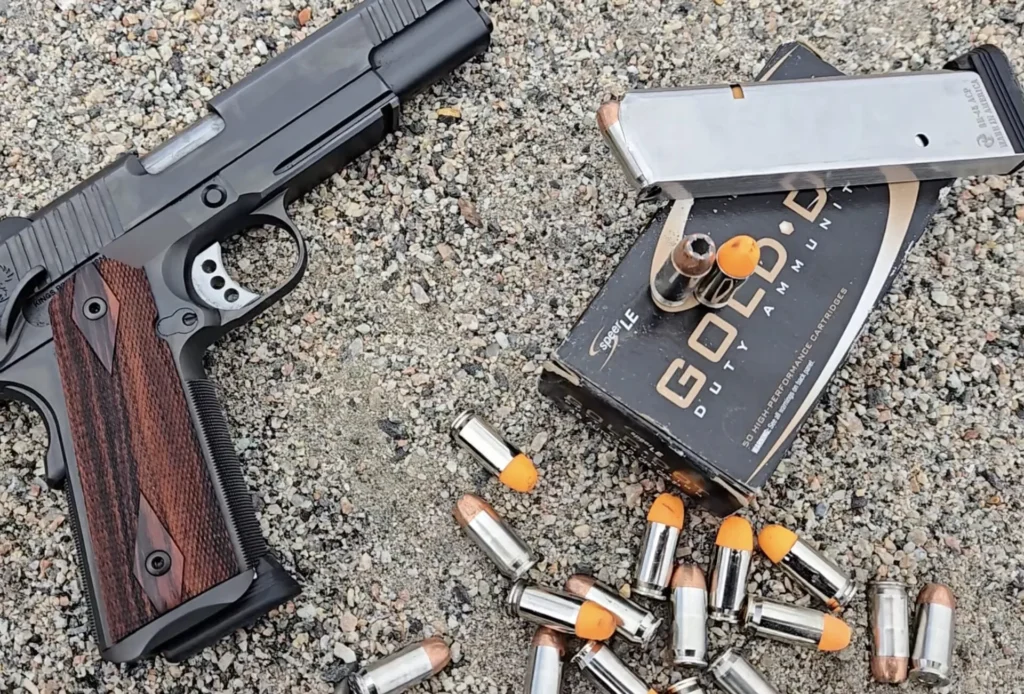
When you press the trigger on a live round, the gun recoils and cycles. When you press the trigger on a dummy round, nothing other than the hammer or striker should move. If the muzzle suddenly dips, jerks, or gets driven downward, you’ve just exposed movement that would normally be hidden by recoil.
The takeaway is simple: you can’t control recoil before recoil happens.
Trying to force the pistol downward in anticipation of the shot usually creates more problems than it solves.
How to Set Up the Ball and Dummy Drill
The drill works best with two shooters but can be done alone.
One shooter turns away while the other loads a magazine with a random combination of live rounds and purpose-built inert dummy rounds. The shooter should not know where the dummy rounds are located. Once the magazine is loaded, shoot normally and pay attention to what happens when you get a click instead of a bang.
If you’re training alone, you can still preserve some of the surprise. Load several magazines ahead of time using different combinations of live ammunition and dummy rounds. Put the magazines into a pouch or bag, mix them up, and select one without looking closely at it. It doesn’t need to be complicated. You just need to remove your ability to predict exactly what is coming next.
Watch the Muzzle
The drill gives you immediate feedback. When the pistol lands on a dummy round, record yourself and watch what happens to the sights and muzzle as you press the trigger.
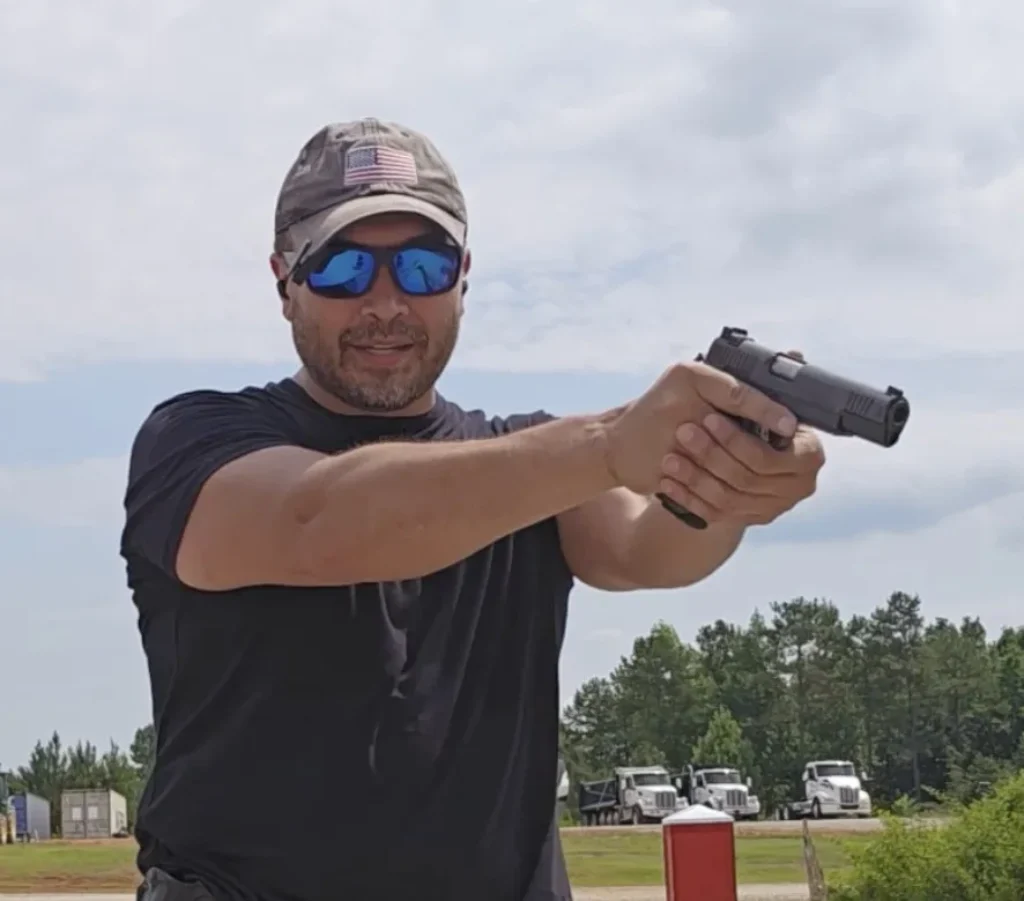
A small amount of movement may tell you something about your trigger press or grip. A dramatic nose-dive is harder to argue with.
If the muzzle dives toward the floor when the gun doesn’t fire, you’re anticipating recoil. Seeing it happen is important because shooters are not always good at feeling their own mistakes in real time. You may think the sights are steady. You may think your trigger press is clean. The dummy round gives you a much more honest answer. As you speed up the drill, anticipation of recoil will be easier to spot.
Use the Click as a Training Opportunity
A dummy round can also turn the drill into immediate action drill practice.
When you get a click instead of a bang, respond using the immediate action method you normally train with and that is appropriate for your firearm and range environment.
Some shooters prefer to power stroke, others sling shot the slide. One-handed shooting may require a different approach entirely.
The important part is consistency. If the gun doesn’t do what you expected, recognize it, fix the problem, and get back to work safely. That makes the ball and dummy drill useful for more than simply catching a flinch. It forces you to deal with an unexpected interruption instead of shooting a perfectly predictable string of rounds.
Try It With One Hand
Once you’re comfortable with the standard drill, you can incorporate one-handed shooting.
Problems that are easy to hide with a strong two-handed grip sometimes become much more obvious when one hand is removed from the equation.
The same principle applies: don’t chase speed or complexity just for the sake of making the drill harder. Use the variation because it tells you something useful about your shooting.
Training should have a reason behind it.
Don’t Overdo It
This is where people sometimes get carried away. The ball and dummy drill is a diagnostic tool. It doesn’t need to consume your entire range session.
If you spend too much time expecting the gun not to fire, you can start building a new bad habit while trying to fix the old one. That’s a training scar, and there’s no prize for creating one.
Use the drill to identify the problem. Make the correction. Then get back to normal shooting and reinforce the fundamentals you actually want to keep. Working more dry fire into your daily routine will help with removing anticipation of recoil.
Whenever possible, finish your range session on successful repetitions instead of ending immediately after struggling through a drill.
Summarizing the Ball and Dummy Drill Purpose
The ball and dummy drill is useful because it removes excuses. Recoil anticipation is hard to see when the gun is cycling. Take the recoil away for one trigger press and the unnecessary movement becomes obvious.
The drill can help expose:
- Recoil anticipation
- Flinching
- Poor trigger control
- Unnecessary muzzle movement
- Inconsistencies in grip
- Weaknesses that appear during one-handed shooting
- Your response when the pistol unexpectedly fails to fire
None of those problems get fixed simply because you discovered them. The drill is there to show you what needs work.
Good training should give you information you can actually use. Sometimes the most useful shot of the day is the one that never went off.
Looking for ammunition for your next range session? Explore handgun ammunition and range-ready options available from Target Sports USA.
Get your AMMO+ Membership for $99.99/year to save up to 8% on ammo and receive free shipping on any order, no minimums HERE.
Watch the full video by Kevin Estela here.

Kevin Estela is the Owner of Kevin Estela, LLC. He is the best-selling author of 101 Skills You Need to Survive in the Woods and Beyond the Field. Estela has been a professional bushcraft and survival instructor since 2007 and has a background in teaching high school history. He has been featured on the History Channel, Weather Channel, and Outdoor Channel along with numerous podcasts. Estela has authored hundreds of articles for over two dozen publications and multiple blogs. He is a consultant and product designer for various outdoor product companies and has product collaborations with multiple reputable brands. Estela has trained pistol, rifle, shotgun, and precision rifle at multiple shooting schools, has an extensive martial arts background, and is an instructor with Obsidian Spear Group. He resides in Moore County, North Carolina and his website is kevinestela.com He can be found on social media @estelawilded.
- Kevin Estela