Skip the Hype — 128,000+ of Our Customers Already Ran This Experiment
Deciding between a 5.7 and a 9mm? You’re really deciding between the most proven handgun cartridge on earth and the one cartridge genuinely engineered to replace it — and we have receipts on both.
Having been in the ammo game for over 15 years here at Target Sports USA, we’ve watched the 5.7x28mm go from “that weird P90 round from the video games” to a caliber that Ruger, Smith & Wesson, Palmetto State Armory, and KelTec all build pistols for. Our customers have left more than 135,000 verified reviews across these two calibers. Yes, the split is lopsided — over 134,000 of those are 9mm — but here’s the kicker: our 5.7x28mm buyers have left over 1,000 verified reviews of their own, which is more 5.7 review data than any comparison article we could find cites in total. And the two calibers’ average satisfaction scores? Identical. We’ll show you.
Most “5.7 vs 9mm” articles give you a winner-by-category scorecard built on book specs and call it settled. We’ll give you the full picture: factory ballistics for named, purchasable loads on both sides, the velocity-versus-energy paradox most articles dance around, real capacity and cost math, the availability problem nobody warns you about, and review-backed recommendations you can click and buy today.
Who this guide is for:
- Shooters eyeing a Ruger-57, FN Five-seveN, S&W M&P 5.7, or KelTec PR57 and wondering if the caliber is worth the buy-in
- 9mm loyalists wondering whether the flat-shooting newcomer actually does anything their Glock can’t
- PS90 dreamers doing the ammo math before pulling the trigger (pun fully intended)
- Anyone who wants review-backed ammo recommendations, not another spec-sheet shootout
What’s in the guide:
- A true side-by-side using named, purchasable loads with factory specs — including the one table row that explains this entire debate
- Aggregate ratings from our verified review database — 134,000+ reviews on 9mm ammo and 1,000+ on 5.7x28mm
- The topics top-ranking articles skip: the energy paradox, the terminal-performance debate handled honestly, ammo scarcity, range rules that ban certain 5.7 loads, and real negatives
- Real questions customers asked our ammo desk — restock anxiety, price gripes, magnetic-ammo range rules, and more
- A deep-dive FAQ written to answer the exact questions people ask Google
BONUS: Every load featured links to its live product page where you can read all of its reviews and customer Q&As yourself. We’re not asking you to take our word for anything.
5.7 vs 9mm: The Fast Answer
The 9mm is the better all-around choice for most shooters — it hits harder at handgun distances, costs a fraction as much per round, and offers hundreds of load and pistol options against the 5.7’s handful. The 5.7x28mm wins on its own terms: blistering velocity, the flattest trajectory in the pistol world, featherweight recoil, and 20+ round magazines. If you’re buying one practical pistol, buy the 9mm. If you want the flattest, fastest, softest-shooting centerfire pistol experience there is — and you’ve made peace with the ammo bill — the 5.7 delivers something no 9mm can.
Join AMMO+ to save even more on every load in this article | Notice: Ratings and review counts are from our verified customer review database at the time of writing and will only grow from here.
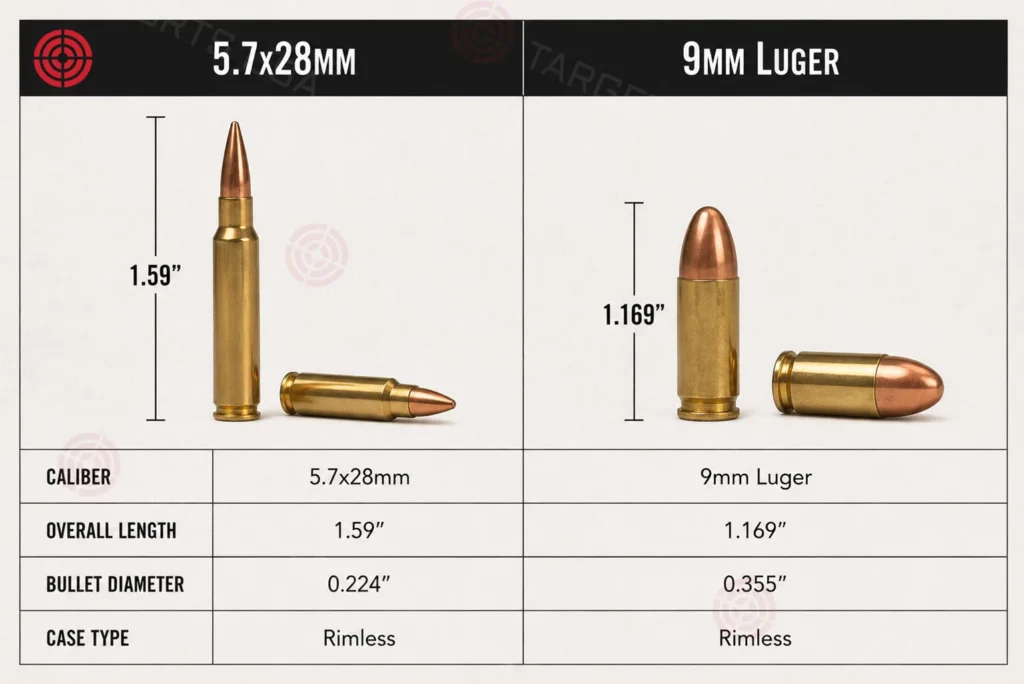
5.7 vs 9mm Spec Sheet: Dimensions to Dollars
| Spec | 5.7x28mm | 9mm Luger |
|---|---|---|
| Introduced | ~1990 (FN Herstal, Belgium) | 1901 (Georg Luger, DWM) |
| Designed For | NATO’s Personal Defense Weapon program (FN P90 / Five-seveN) | German military sidearm trials |
| Case Type | Rimless, bottlenecked — a miniature rifle case | Rimless, tapered straight wall |
| Bullet Diameter | .224” (same diameter class as .223/5.56) | .355” |
| Overall Length | ~1.59” | 1.169” |
| Common Bullet Weights | 27–40 grains | 115–147 grains |
| Typical Muzzle Velocity (our catalog) | 1,655–2,216 fps | 1,000–1,280 fps |
| Typical Muzzle Energy (our catalog) | 222–294 ft lbs | 323–418 ft lbs |
| Typical Magazine Capacity | 20+ rounds (Five-seveN/Ruger-57 class) | 15–17+ rounds (full-size) |
| Felt Recoil | Famously soft — the caliber’s calling card | Mild, but noticeably more than 5.7 |
| Typical Cost per Round | Several times higher | The cheapest centerfire pistol round there is |
| Reloadability | Not recommended (lubricated cases) | The most reloaded pistol case on earth |
| Practical Strong Suit | Velocity, flat trajectory, capacity, low recoil | Energy, price, availability, proven terminal record |
[IMAGE SUGGESTION: side-by-side cartridge photo, 5.7x28mm next to 9mm Luger — the bottlenecked “baby rifle round” silhouette vs the stubby pistol case tells the whole story; ideally next to a Five-seveN 20-round magazine and a double-stack 9mm magazine]
Look at those two bullet-weight rows, because they explain this entire comparison. The 5.7 throws a 27–40 grain bullet — a fifth to a third the weight of a 9mm projectile — at rifle-adjacent speeds from a little bottlenecked case. The 9mm throws three to five times the bullet weight at half to two-thirds the velocity. One cartridge bets everything on speed; the other bets on mass. Almost every argument you’ll ever read about these two rounds is downstream of that bet.
And one wrinkle nobody puts in their spec table: the 5.7’s bullet is a .224” projectile — the same diameter class as the .223 Remington/5.56 NATO. It is not the same cartridge as a .223 (the case is far smaller and runs different pressures from a different action), but if you’ve ever wondered why people call the 5.7 “a pocket rifle round,” that’s why.
What Is the 5.7x28mm? (The Round NATO Asked For)
In the late 1980s, NATO went shopping for something specific: a replacement for the 9mm in personal defense weapons, because Cold War-era soft body armor had gotten good at stopping standard 9mm ball. FN Herstal’s answer, patented in 1989 and introduced around 1990, was the 5.7x28mm — a tiny bottlenecked cartridge pushing a lightweight .224” bullet fast enough to stay flat to 200 meters. It debuted in the FN P90 PDW, the sci-fi-looking bullpup you’ve seen in every movie armory since, and later the FN Five-seveN pistol with its 20-round magazine. NATO never replaced the 9mm — but it did formally standardize the 5.7x28mm in 2021, a quiet vindication three decades in the making.
For its first twenty-odd years on the U.S. market, the 5.7 was a one-gun, one-ammo-maker curiosity. Then Ruger detonated the niche in January 2020 with the Ruger-57 — a 5.7 pistol at a mainstream price — and the floodgates opened: Smith & Wesson’s M&P 5.7, Palmetto State Armory’s 5.7 Rock, KelTec’s P50 and PR57, plus new factory loads from Speer Gold Dot and Hornady. Our own search data agrees: 5.7 ammo and Five-seveN queries are some of the highest-impression caliber searches on our entire site. The niche isn’t niche like it used to be.
What does the 5.7 actually deliver? Velocity (every load we sell leaves the muzzle faster than any 9mm we sell), a trajectory flat enough that our customers casually report hits at 200 yards with iron sights, recoil so soft it feels like a rimfire with attitude, and 20+ round capacity. What it costs you: money, and a terminal-ballistics conversation we’ll have honestly below.
Browse all in-stock 5.7x28mm handgun ammo here — and if you feed a PS90 or other carbine, the same loads live under 5.7x28mm rifle ammo too.
What Is the 9mm Luger? (The Round That Refused to Retire)
Georg Luger developed the 9x19mm in 1901 by necking up his 7.65mm Parabellum case, and it has spent the 120 years since absorbing every challenger the industry could invent — including, so far, the one purpose-built to kill it. NATO standardized it in 1955. The FBI left it, then famously came back. Today it’s the standard sidearm cartridge of the U.S. military, the overwhelming majority of police agencies, and the armed-citizen market, and it is without serious argument the most popular handgun cartridge on the planet.
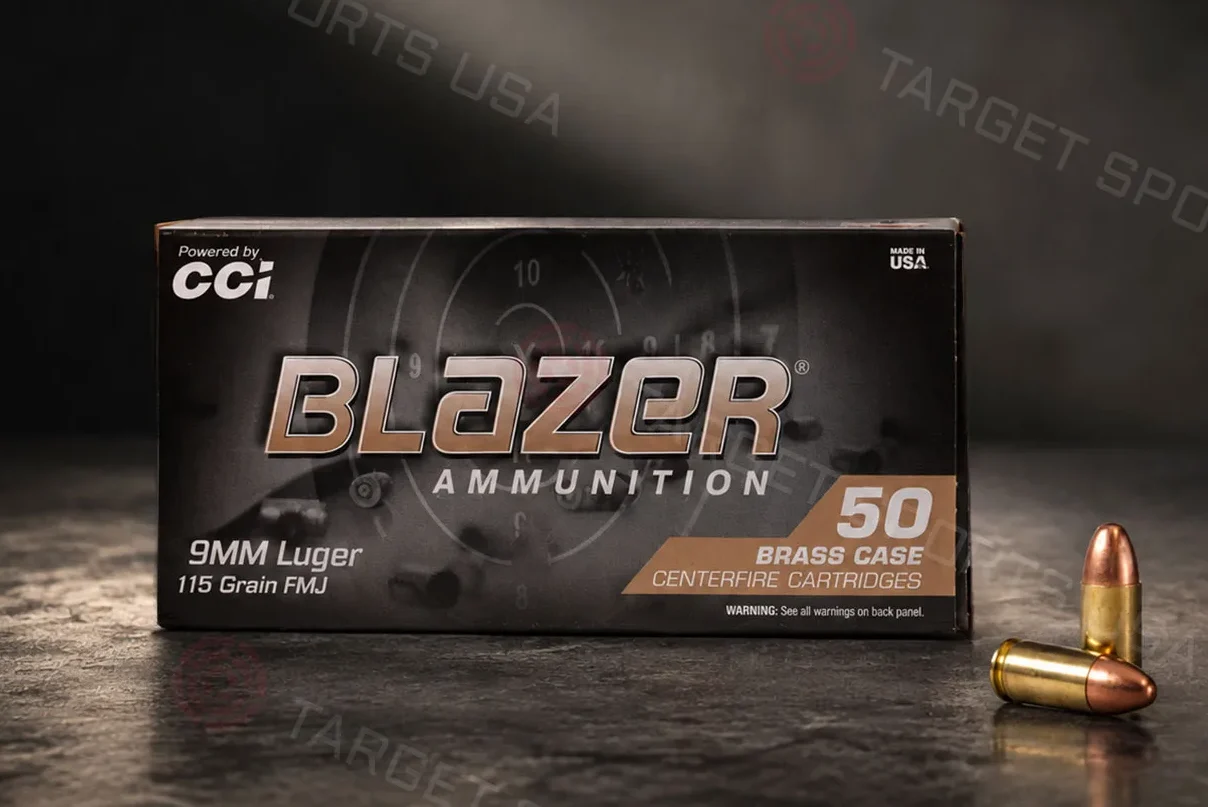
The reasons are boringly practical. Modern bullet design closed the terminal-performance gap with bigger calibers, so the world kept the round that was cheaper, softer-shooting, and higher-capacity. Economies of scale made 9mm the cheapest centerfire pistol ammo you can buy, which buys more practice per dollar, which builds more skill — and skill beats every caliber debate ever held in a comment section.
In our own review database, 9mm isn’t just popular — it’s the most-reviewed caliber we sell, in anything: over 134,000 verified reviews across 611 products. When the 5.7’s fans say their round was “designed to replace the 9mm,” this is the incumbent it was designed to replace. Incumbents like this don’t go quietly.
Browse all in-stock 9mm Luger ammo here.
5.7 vs 9mm Ballistics: Real Loads, Real Numbers
Here’s where most comparison articles hand you a chart of generic loads you can’t actually buy. Every load in this table is a real product with factory specs and a live customer rating next to it — including every single 5.7x28mm load our customers have reviewed.
| Load | Caliber | Grain | Muzzle Velocity | Muzzle Energy | Verified Reviews | Avg Performance |
|---|---|---|---|---|---|---|
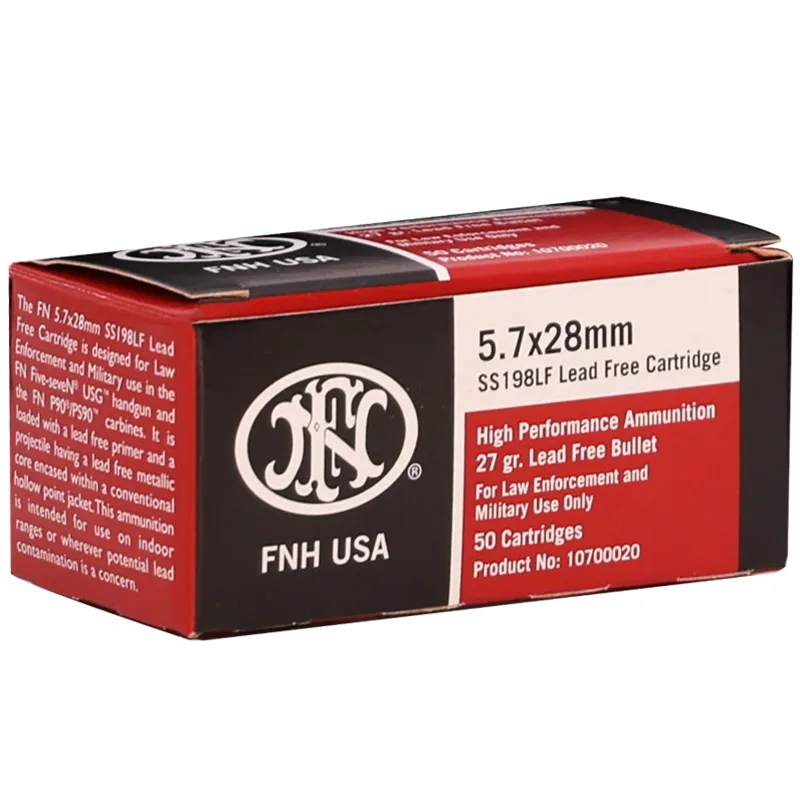
| FNH USA 27gr Lead-Free HP – SS198LF | 5.7×28 | 27 | 2,216 fps | 294 ft lbs | 126 | 4.85 / 5 |
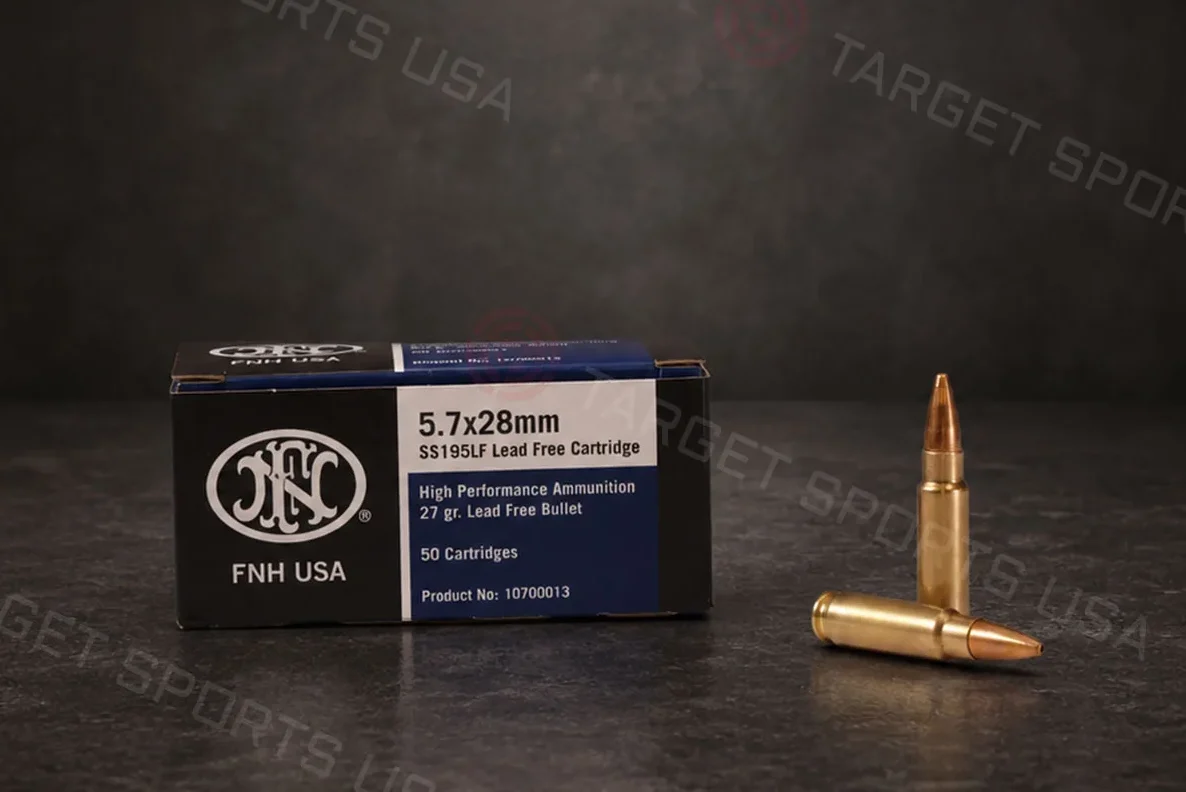
| FN Herstal 27gr JHP Lead-Free – SS195LF | 5.7×28 | 27 | 1,890 fps | 222 ft lbs | 33 | 4.91 / 5 |
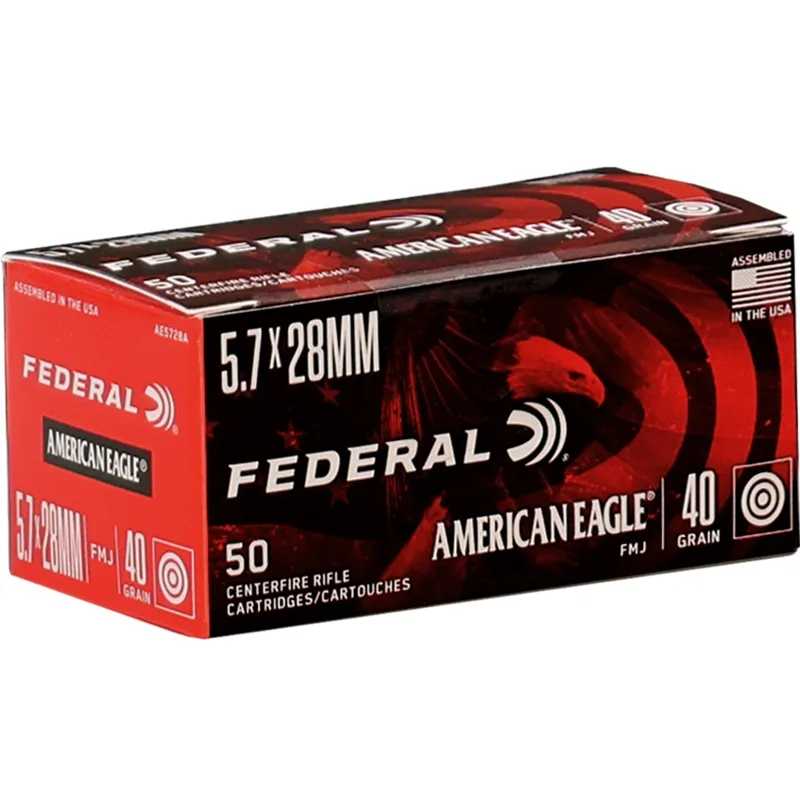
| Federal American Eagle 40gr TMJ – AE5728A | 5.7×28 | 40 | 1,655 fps | 243 ft lbs | 900 | 4.75 / 5 |
| Sellier & Bellot 115gr FMJ – SB9A | 9mm | 115 | 1,280 fps | 418 ft lbs | 2,920 | 4.84 / 5 |
| New Republic Training and Range 115gr FMJ – RTR9BR | 9mm | 115 | 1,180 fps | 380 ft lbs | 3,699 | 4.75 / 5 |
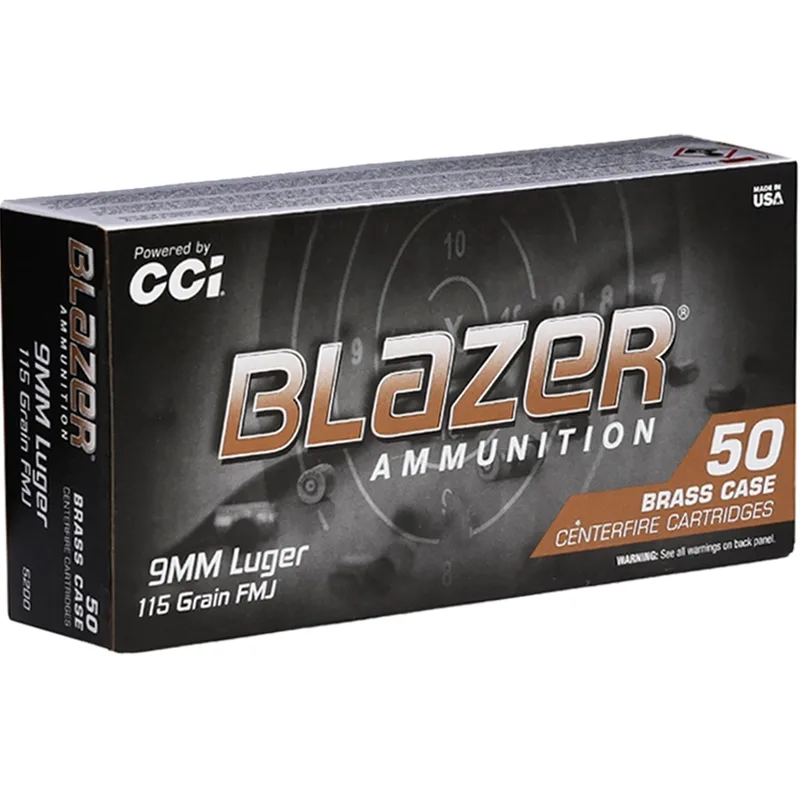
| CCI Blazer Brass 115gr FMJ – 5200 | 9mm | 115 | 1,125 fps | 323 ft lbs | 9,705 | 4.82 / 5 |
| Federal American Eagle 124gr FMJ – AE9AP | 9mm | 124 | 1,150 fps | 364 ft lbs | 3,180 | 4.84 / 5 |
| CCI Blazer Brass 124gr FMJ – 5201 | 9mm | 124 | 1,090 fps | 327 ft lbs | 7,429 | 4.83 / 5 |
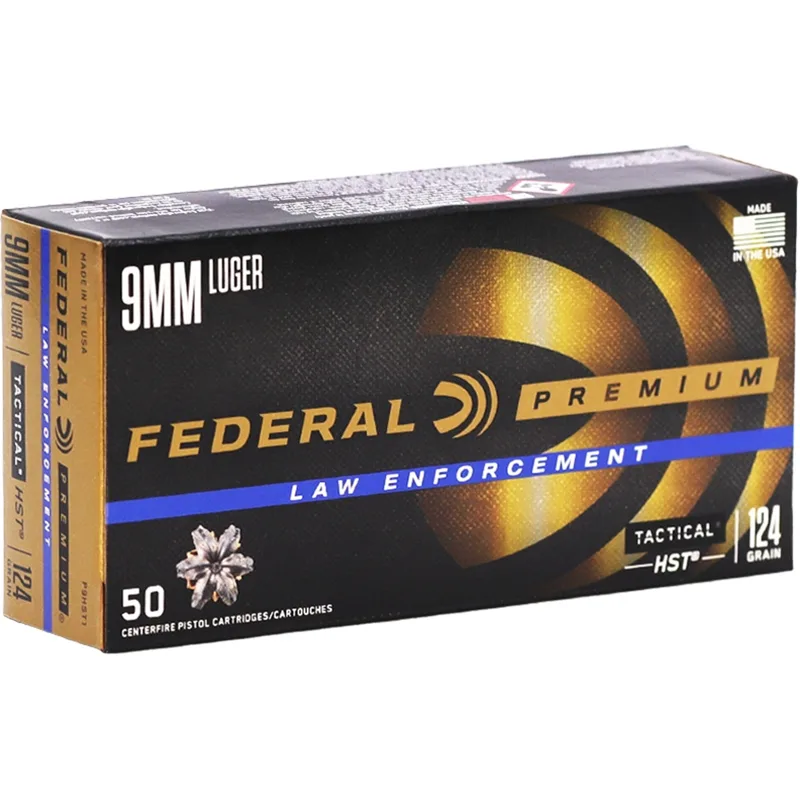
| Federal LE HST 124gr JHP – P9HST1 | 9mm | 124 | 1,150 fps | 365 ft lbs | 2,896 | 4.90 / 5 |
| Speer Gold Dot LE Duty 124gr JHP – 53618 | 9mm | 124 | 1,150 fps | 327 ft lbs | 1,226 | 4.92 / 5 |
| Federal HST LE 147gr JHP – P9HST2 | 9mm | 147 | 1,000 fps | 326 ft lbs | 2,285 | 4.92 / 5 |
Note: Velocity and energy figures are manufacturer specs from factory test barrels; your pistol will run slower than book values, and a 16” PS90 or 5.7 carbine barrel will run faster. Independent chronograph testing of 5.7 pistols (typically ~4.75–5” barrels) commonly lands 40gr loads in the high-1,600s fps — right on the book number — while boutique ultralight 5.7 loads from specialty makers have been clocked well above 2,400 fps. Both calibers vary meaningfully by barrel length.
What the table actually tells you
- The 5.7 owns the velocity column — completely. Our slowest 5.7 load (1,655 fps) is nearly 400 fps faster than our fastest 9mm (1,280 fps). The SS198LF leaves the muzzle at 2,216 fps — almost double a 147gr 9mm. Nothing in the 9mm catalog touches it, and nothing needs to be said about trajectory after that: flat is flat.
- The 9mm owns the energy column — also completely. And this is the plot twist newcomers never see coming, so we gave it its own section below.
- The 5.7 lineup is three loads; the 9mm lineup is a buffet. This table shows 8 of our 611 reviewed 9mm products. It shows 100% of our reviewed 5.7 products. That ratio — not any ballistic number — is the 9mm’s biggest practical advantage.
- Satisfaction doesn’t care about the spec sheet. The three 5.7 loads average 4.75–4.91 stars, right alongside the 9mm’s best. People who buy the 5.7 know exactly what they’re buying — and they love it.
- Trajectory in one customer anecdote: a 9mm 124gr drops roughly four times as much at 100 yards as a 40gr 5.7 (published trajectory tables from major retailers put it around 8” vs 2–4” with a 50-yard zero). That’s why 5.7 owners talk about 100–200 yard pistol hits without sounding crazy.
The Velocity Paradox: Why the Faster Round Isn’t the Harder-Hitting One
Stare at the table above and you’ll spot the strangest fact in this whole comparison: the 5.7’s fastest load (2,216 fps / 294 ft lbs) makes LESS muzzle energy than our mildest featured 9mm (1,125 fps / 323 ft lbs). The round that’s almost 1,100 fps faster hits with less math-on-paper energy. How?
Mass. Kinetic energy is velocity squared times weight — and a 27-grain bullet is giving up 88 to 120 grains to the 9mm. The 5.7 makes a heroic down payment in speed, and the 9mm still out-muscles it with sheer bullet weight. Across our catalog, 9mm loads carry roughly 30 to 90 percent more muzzle energy than 5.7 loads, book spec against book spec.
So which one “stops better”? Here’s the honest version of a debate the internet refuses to have honestly:
- The case for the 9mm is depth and track record. Heavier bullets carry more momentum and penetrate more consistently, and modern 9mm JHPs like the HST and Gold Dot have decades of documented law-enforcement results and lab data behind them. They reliably expand AND reach the FBI-standard 12+ inches in ballistic gel. That’s why duty holsters across America still say 9mm.
- The case for the 5.7 is speed, capacity, and shootability. Its military pedigree was built on defeating soft armor with specialized loads (which aren’t on the civilian shelf), and at very high velocities lightweight bullets can yaw and disrupt tissue out of proportion to their size. Modern purpose-built 5.7 defensive loads — Speer and Hornady both make them now — are dramatically better than the caliber’s early offerings. And 20+ rounds of soft-recoiling, dead-flat ammo means fast, accurate follow-ups, which matter more than any single number.
- Where sources genuinely disagree: some claim the 5.7’s light bullets reduce over-penetration risk through walls; others argue its high velocity makes it worse. Gel results for 5.7 hollow points also vary by load and tester more than 9mm results do. We’re not going to pretend that debate is settled — it isn’t. What’s settled is that load selection matters more in 5.7 than in 9mm: with a 9mm you can grab any major-brand JHP and be well-served; with a 5.7, do your homework on the specific load.
Our plain-English verdict: for a defensive pistol, the 9mm’s terminal performance is the proven quantity and our default recommendation. The 5.7 is a legitimate defensive cartridge with the right modern load — and its recoil and capacity advantages are real — but you’re an early adopter, and early adopters should choose ammo carefully.
Inside Our Review Database: 128,000+ Verified Buyers Speak
Here’s the part nobody else ranking for this comparison can show you — aggregate stats from our verified customer review database (approved reviews only) across every 5.7x28mm and 9mm Luger product we carry:
| 5.7x28mm | 9mm Luger | |
|---|---|---|
| Verified customer reviews | 1,059 | 126,943 |
| Products reviewed | 3 | 556 |
| Average performance rating | 4.76 / 5 | 4.76 / 5 |
| Five-star performance ratings | 881 (83%) | 111,995 (83%) |
Honest takeaways from the data:
1. The popularity gap is a canyon — roughly 127 to 1. For every 5.7 review in our database there are about 127 9mm reviews, and the catalog depth says the same thing: 611 reviewed 9mm products versus exactly three 5.7 loads. That’s the entire availability argument in two numbers. When ammo gets scarce — and 5.7 has gone through brutal droughts; you’ll see our customers living through one in the FAQ Desk section below — the niche caliber goes first and comes back last.
2. But satisfaction is literally identical: 4.76 vs 4.76. Same average, same 83% five-star rate. Our 5.7 owners are not suffering buyer’s remorse — they’re exactly as happy as the crowd shooting the most popular cartridge on earth. A thousand-plus reviews is a real sample, and it says the people who chose the weird little speed demon would choose it again.
3. The 5.7 crowd is a different culture, and the reviews show it. Read the 5.7 reviews and you meet PS90 owners, Five-seveN devotees reporting 200-yard iron-sight groups, and Ruger-57 buyers thrilled the caliber finally got affordable guns. They talk velocity, optics, and suppressors. The 9mm reviews are class-takers and league shooters burning thousand-round cases. Same hobby, very different garages.
4. Even the niche caliber’s defense-grade loads rate like champions. The SS198LF (4.85) and SS195LF (4.91) sit right up with the 9mm’s HST (4.90–4.92) and Gold Dot (4.92). When stakes are high, customers grade hard — and both calibers’ premium ammo aces the test.
The Best 5.7x28mm Ammo (All of It — Customer-Ranked)
Most “best 5.7 ammo” lists are padded with loads nobody stocks. We’ll do something different: here is every 5.7x28mm load our customers have reviewed — all three — with full specs, live ratings, and real customer feedback quoted word-for-word, typos and all. Click any product name to view it on Target Sports USA.
Federal American Eagle 5.7x28mm 40 Grain TMJ – AE5728A – Best 5.7 Range Ammo (The Volume Pick)
| Manufacturer | Federal |
| Caliber | 5.7x28mm |
| Bullet Type | 40gr Total Metal Jacket |
| Muzzle Velocity | 1,655 fps |
| Muzzle Energy | 243 ft lbs |
| Grain | 40 |
| Packaging | Box of 50 / Case of 500 |
| Verified Reviews | 900 |
| Avg Performance Rating | 4.75 / 5 |
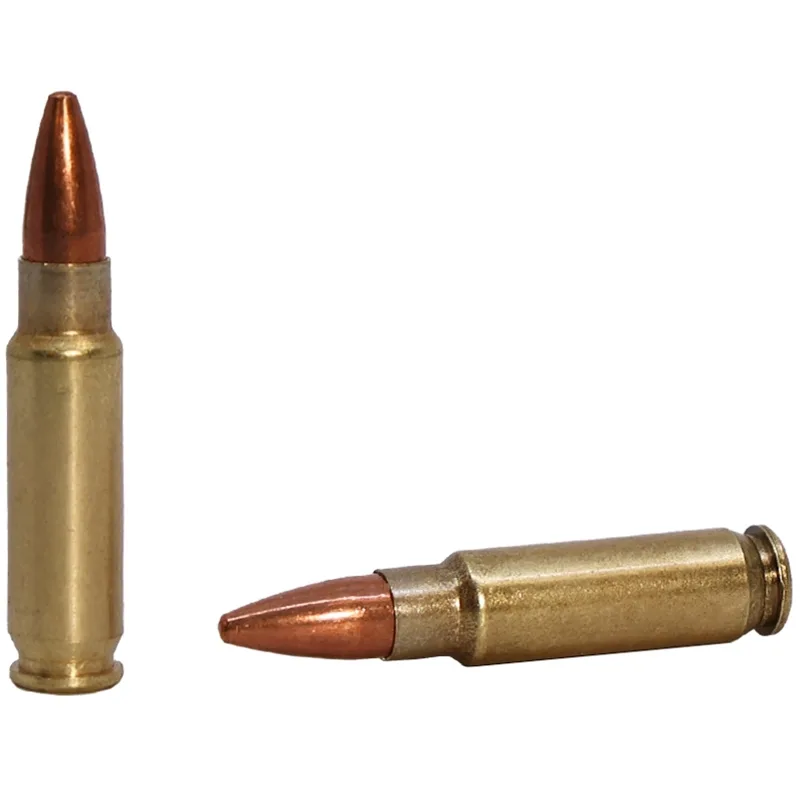
The round that feeds America’s Ruger-57s and PS90s. Nearly 900 of our 1,059 5.7 reviews belong to this one load, which makes it — by a mile — the most customer-vetted 5.7 ammo we can show you:
“More accurate than expected – I was shooting sub-2 inch groups (10 shots) at 25 yards out of a Five-Seven even considering my poor eyesight. Great round for plinking as the price rivals the best found (when adding in the shipping costs from other vendors).”
— Jeremiah A., verified buyer
“Great plinking round for an FN PS90 or Five-seveN, or anything else chambered in 5.7x28mm for that matter. 100% function and reliability in both PS90 and Five-seveN. Excellent value.”
— Kieth P., verified buyer
“I recently got a new Ruger 57 in 5.7X28 caliber. But I couldn’t find it in any gun shop near me. Thank goodness Target Sports came through. Thanks again for the help and the gun shoots great with this brand of ammo.”
— William K., verified buyer
“Little dirtier than FM rounds. How I know is I use these through a Switchback suppressor I clean after each use. Never had a malfunction just a bit dirtier on the baffles.” – Jason S. (4 stars)
And because we print the bad with the good — here’s the other side:
“Some slight issues with quality and performance however it’s a great value for the money but out of 500 rounds probably 10 rounds of the projectile detached from the casing before I got them out of the box” – John S. (3 stars)
That’s a minority report against a 4.75 average over 900 reviews, but bullet setback/separation complaints appear more than once in this product’s history — inspect your boxes, and send anything questionable back. That’s exactly why we quote customers verbatim.
Check Prices on TARGET SPORTS USA
FNH USA 5.7x28mm 27 Grain Lead-Free Hollow Point – SS198LF – The Speed King
| Manufacturer | FNH USA (loaded by Federal) |
| Caliber | 5.7x28mm |
| Bullet Type | 27gr Lead-Free Hollow Point (green tip) |
| Muzzle Velocity | 2,216 fps |
| Muzzle Energy | 294 ft lbs |
| Grain | 27 |
| Packaging | Box of 50 / Case of 2000 |
| Verified Reviews | 126 |
| Avg Performance Rating | 4.85 / 5 |
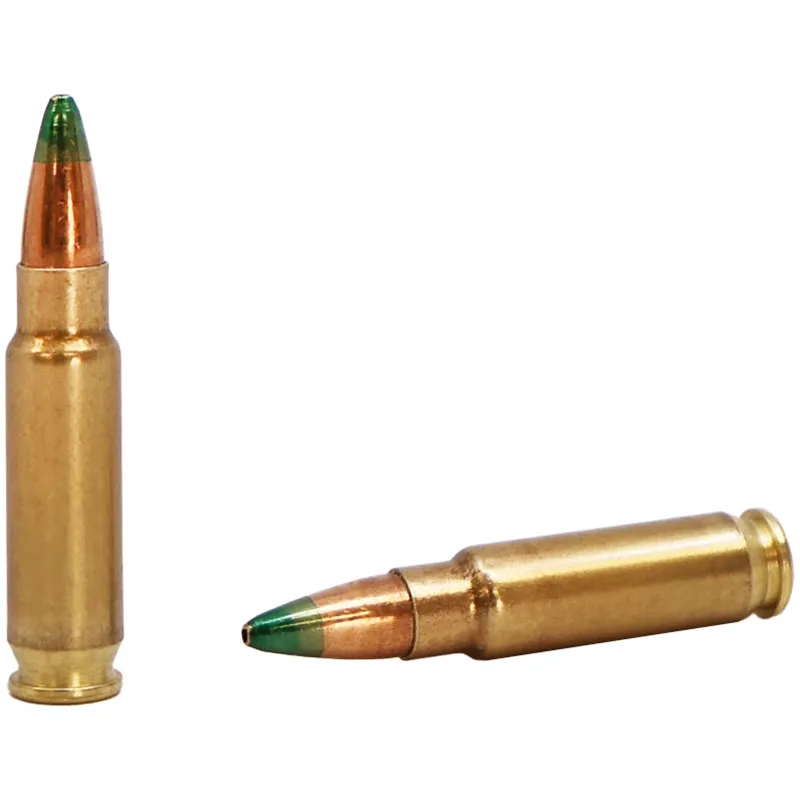
The fastest thing in this article and the highest-energy 5.7 we carry — the green-tip load the Five-seveN faithful treat like treasure:
“Great Federal FNH ammo, hope TS_USA continues to keep this in stock. 20 for 20 at 200 yards, with a FN Five Seven pistol, open sights, on a IPSC paper target.”
— Jeff K., verified buyer
“This ammo is very hard to find. Made for military and law enforcement, I qualified at the Police Academy and it worked perfectly. Had to get special permission from supervisor to use it due to high velocity. Worked great in my FN5.7N 20 shot!!! Crossdraw”
— Gary W., verified buyer
“A bit on the pricey side, but it’s 5.7 after all. Fast, very precise round. In spite of what the box claims, these are not limited to Mil or LE use. If your state/locale permit it, they’re are civilian legit.”
— Ruben O., verified buyer
Twenty for twenty at 200 yards with a pistol and iron sights. Find us the 9mm review that says that. Now the honest counterweights:
“If you run a Ruger 57 with the optics this will jam when breaking in. too much mass with the optics to reliably operate I think.” – joe m. (4 stars)
“Expensive and unable to use at my gun range due to the steel core” – Joseph E. (1 star)
That last one matters: this load’s lead-free construction can trip the magnet test at indoor ranges, and some ranges turn it away. Check your range’s rules before you buy a case — a courtesy heads-up most articles never give you.
Check Prices on TARGET SPORTS USA
FN Herstal 5.7x28mm 27 Grain JHP Lead-Free – SS195LF – The Highest-Rated 5.7 We Sell
| Manufacturer | FN Herstal |
| Caliber | 5.7x28mm |
| Bullet Type | 27gr Jacketed Hollow Point, Lead-Free |
| Muzzle Velocity | 1,890 fps |
| Muzzle Energy | 222 ft lbs |
| Grain | 27 |
| Packaging | Box of 50 / Case of 2000 |
| Verified Reviews | 33 |
| Avg Performance Rating | 4.91 / 5 |
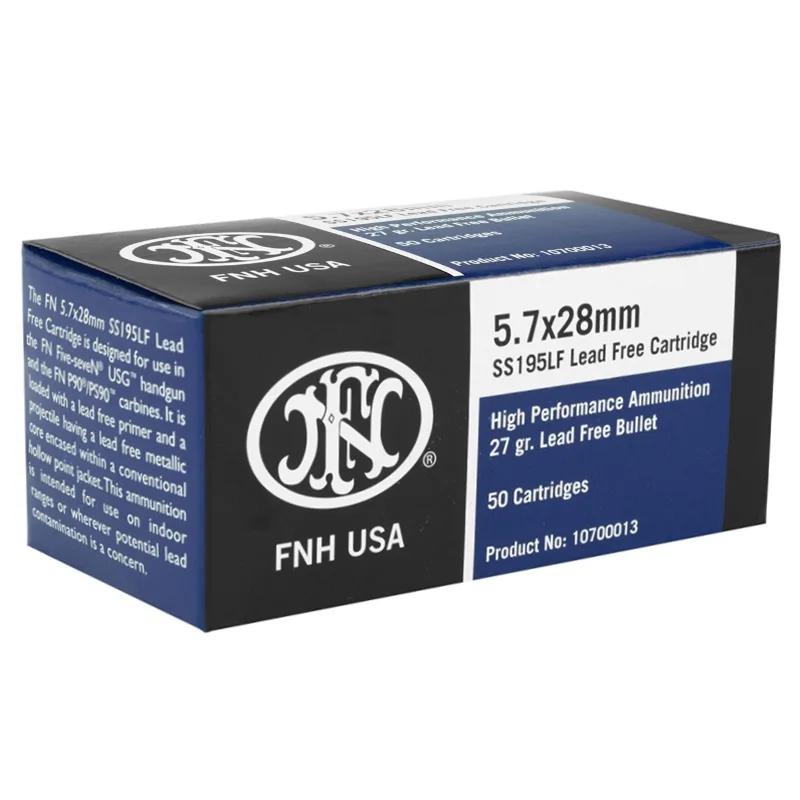
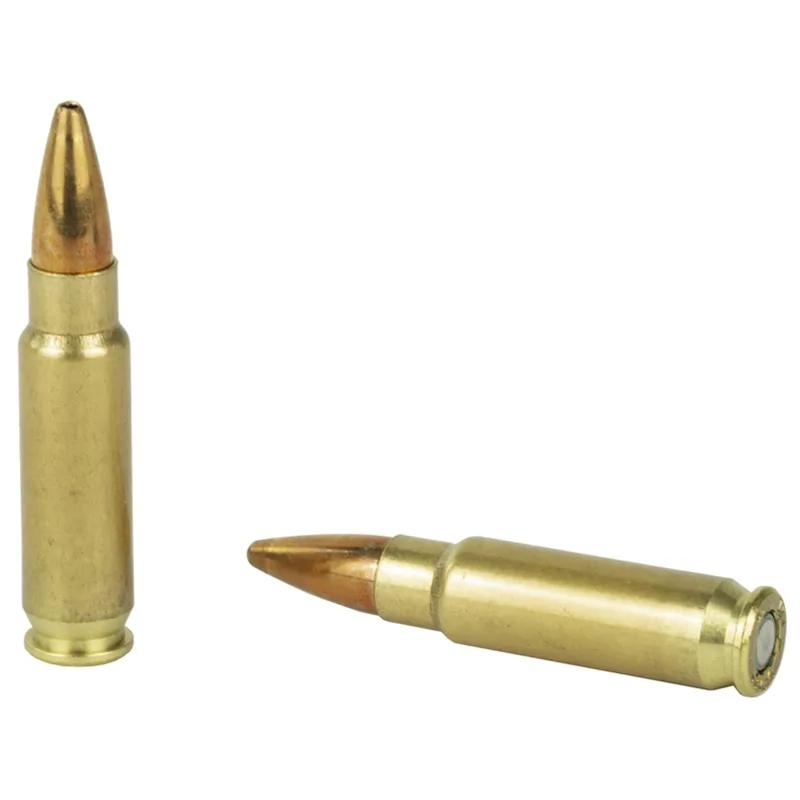
The factory FN hollow point — small review count, but the best average rating of any 5.7 load we carry:
“Love the performance on this 5.7x28mm ammo made by Federal FNH. Great ammo for the price, thanks Target Sports USA!”
— Francisco B., verified buyer
“Does what it’s supposed to do. No malfunctions.” – robert s. (4 stars)
“Good ammo that shoots well. It is way overpriced though. Better to stick with with ss197 for plinking, as it is more cost efficient.”
— Jonathan H., verified buyer
Jonathan’s advice is the 5.7 ownership manual in one sentence: run the cheaper 40gr American Eagle for volume, save the premium 27gr loads for serious use. Which is the same train-cheap/carry-premium playbook 9mm shooters run — the calibers agree on strategy, just not on price.
Check Prices on TARGET SPORTS USA
The Best 9mm Ammo (Customer-Ranked)
CCI Blazer Brass 9mm Luger 115 Grain FMJ – 5200 & 124 Grain FMJ – 5201 – The People’s Champ
| Spec | Blazer Brass 5200 | Blazer Brass 5201 |
|---|---|---|
| Grain / Bullet | 115gr FMJ | 124gr FMJ |
| Muzzle Velocity | 1,125 fps | 1,090 fps |
| Muzzle Energy | 323 ft lbs | 327 ft lbs |
| Packaging | Box of 50 / Case of 1000 | Box of 50 / Case of 1000 |
| Verified Reviews | 9,705 | 7,429 |
| Avg Performance Rating | 4.82 / 5 | 4.83 / 5 |
Seventeen thousand reviews between these two SKUs — sixteen times the entire 5.7 caliber’s review count, from two products. This is what America actually trains with:
“I purchased 1000 rounds of this for a class. At a time when some manufactures are letting quality control suffer to push out more rounds, I was one of the few on the line who didn’t have any ammo malfunctions. I’ll be getting more of this in the future.”
— Donald W., verified buyer
“Phenomenal price on great ammo, halfway through the case and I have yet to have a single malfunction, even in a few compensated configurations. I typically like higher grain weights but got this for a good deal and couldn’t be happier. Would buy again.”
— Kyle P., verified buyer
And our favorite for this particular comparison — a 124gr review that reads like a trajectory test:
“Very good RANGE ammo. Some less expensive ammo is dirty but the Blazer Brass seems to be pretty clean. Performance is better than average as I notice very little drop at 50 yards from a 4″ Staccato C (2024). At 100 yards the performace is still very good.”
— Kenneth C., verified buyer
So yes — 9mm shooters stretch to 100 yards too. The 5.7 just makes it easier. One honest counterpoint:
“I have been fine using Blazer on all my high-end 1911’s 45, 10 but finally found an issue with the 9MM with my Nighthawk Firehawk . It would not feed properly. Even though I bought a case I will use on my other 9MM WIlson EDC which eats it up no problem.” – Joseph K. (2 stars)
A 4.82 average across 9,705 reviews means the misses are rare — but they exist, and we’d rather you read them here than find out alone.
Federal American Eagle 9mm Luger 124 Grain FMJ – AE9AP – Best Premium 9mm Range Load
| Manufacturer | Federal |
| Caliber | 9mm Luger |
| Bullet Type | 124gr Full Metal Jacket |
| Muzzle Velocity | 1,150 fps |
| Muzzle Energy | 364 ft lbs |
| Grain | 124 |
| Packaging | Box of 50 / Case of 1000 |
| Verified Reviews | 3,180 |
| Avg Performance Rating | 4.84 / 5 |
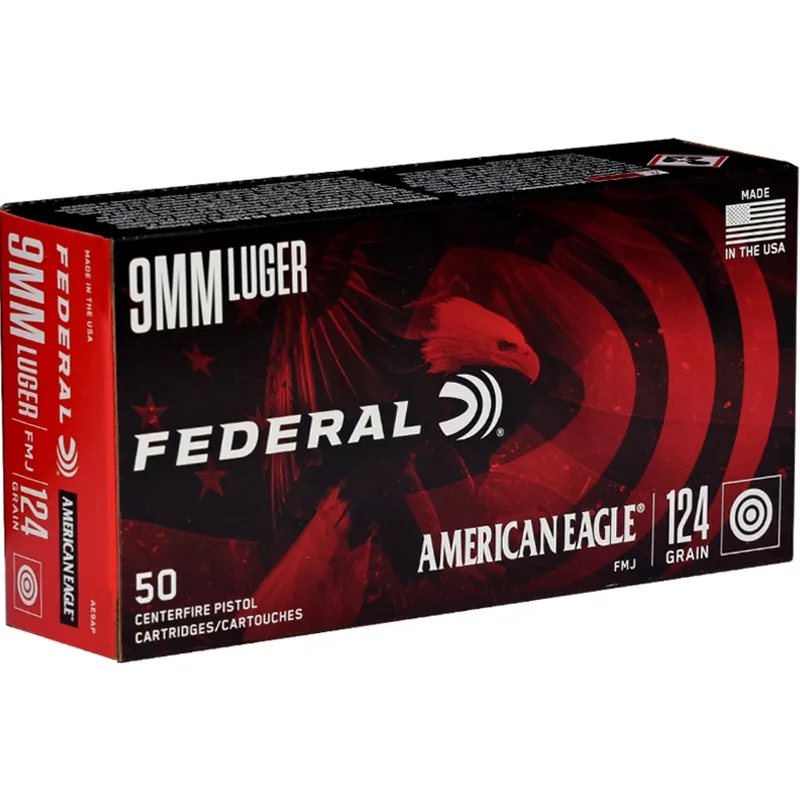
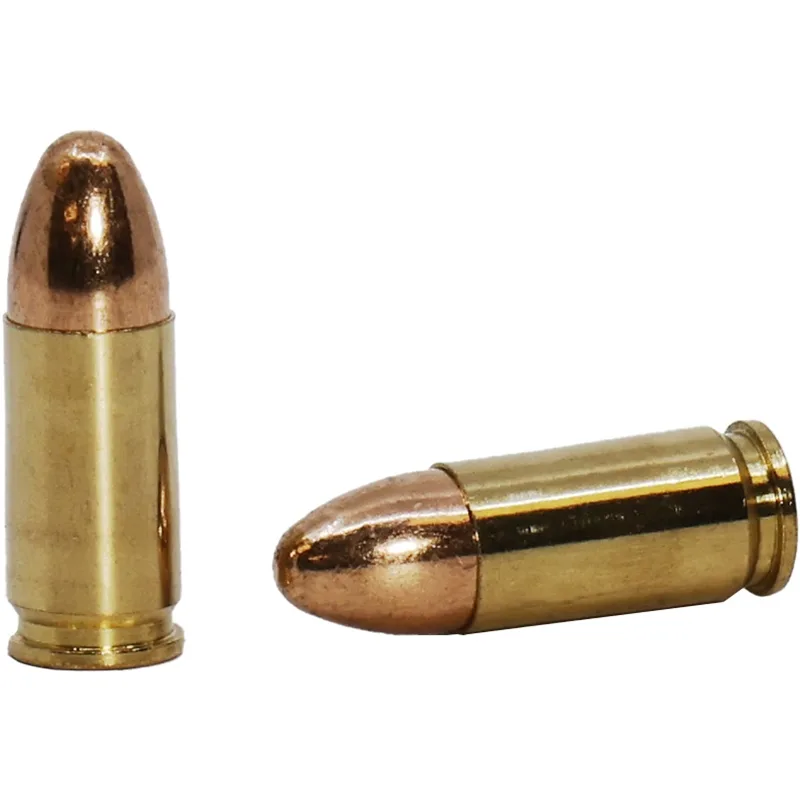
Same maker as the American Eagle 5.7 above — Federal’s range line, in the caliber where it costs a fraction as much per trigger pull:
“One of the highest quality and affordable target loads. Put around 7-10k rounds of this over the years through hk, Glock, sig, walther, full size down to tiny micro 9’s and I’ve never had a malfunction or bad round that I can remember.”
— KEITH S., verified buyer
“great ammo so far after shooting 1000 rounds. Checked my zero with my carry ammo (speer gold dot 124) and all was perfect. 10 yard zero with glock 19 and trijicon rmr. under 2″ group with both loads. But like all AMMO the Price is too damn high!!!!!!” – Gun Garage T.
That second reviewer is running the train-like-you-carry playbook: range ammo matched to carry ammo at the same weight and point of impact. Note for 5.7 shooters: with only three loads in the caliber, that matching game is much harder to play.
Check Prices on TARGET SPORTS USA
Sellier & Bellot 9mm Luger 115 Grain FMJ – SB9A – Best Full-Power 9mm Trainer
| Manufacturer | Sellier & Bellot |
| Caliber | 9mm Luger |
| Bullet Type | 115gr Full Metal Jacket |
| Muzzle Velocity | 1,280 fps |
| Muzzle Energy | 418 ft lbs |
| Grain | 115 |
| Packaging | Box of 50 / Case of 1000 |
| Verified Reviews | 2,920 |
| Avg Performance Rating | 4.84 / 5 |
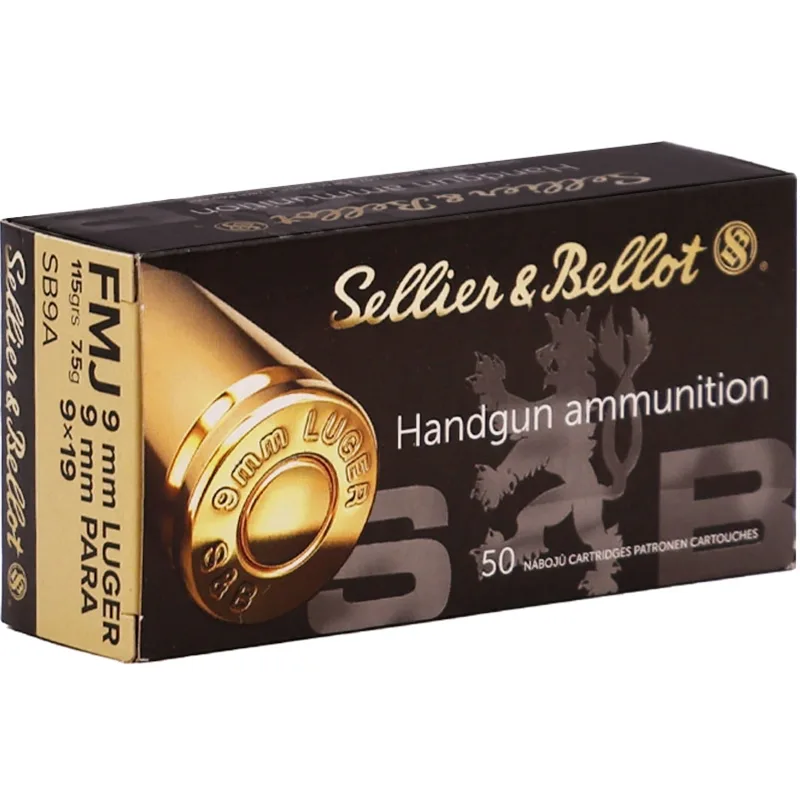
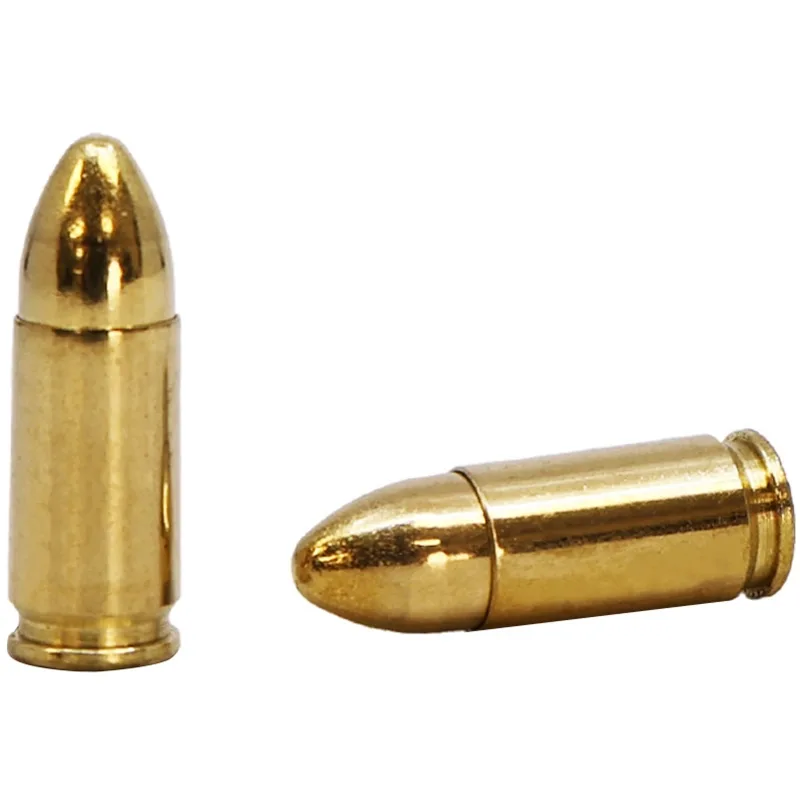
The closest thing the 9mm world has to “5.7 energy”: European-spec, 1,280 fps, and the highest book energy in this entire article at 418 ft lbs — 42% more than the hottest 5.7 we sell:
“Sellier & Bellot 9mm is great ammo. Reliable and accurate, although burns a little dirty. TSUSA has the best products at the cheapest prices available online. They keep the best products in stock and have the best variety of products. Free shipping.”
— Hans S., verified buyer
“Out of 200 rounds I only had one failure to load from a gen 5 glock 19. Wife shot 200 from glock 43 and no problems. Ammo ran clean. I will say these are a little too hot for her 43. I did notice they shot a tab low compared to other rounds I have used. ” – Jeremy C. (4 stars)
“These ran fine except when I tried to run them through my suppressor. I’ve run plenty of 115 grain ammo through it. In this case, the gun wouldn’t dependably cycle. Never had that problem with any other brand. Without a suppressor, it’s top notch.” – Michael S. (4 stars)
Check Prices on TARGET SPORTS USA
New Republic Training and Range 9mm 115 Grain FMJ – RTR9BR – Best Budget 9mm
| Manufacturer | New Republic |
| Caliber | 9mm Luger |
| Bullet Type | 115gr Full Metal Jacket |
| Muzzle Velocity | 1,180 fps |
| Muzzle Energy | 380 ft lbs |
| Grain | 115 |
| Verified Reviews | 3,699 |
| Avg Performance Rating | 4.75 / 5 |
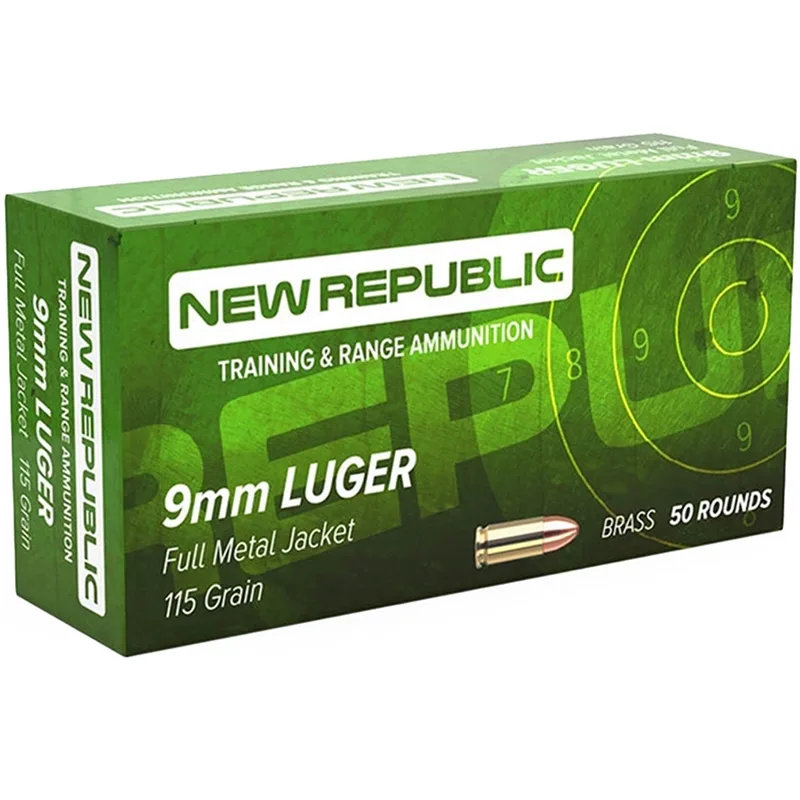
The price-floor pick, and the single clearest illustration of the cost gap in this article — budget 9mm exists as a thriving category; budget 5.7 does not exist at all:
“Shot 2k rounds so far. Only had 1 light strike on a Glock which fired after a 2nd try, and found one other with a missing primer. No failure to feeds, no other malfunctions. A little dirty but not a big deal. Great value for range ammo in the current market.”
— Julian C., verified buyer
“Reluctant to try new stuff when plenty of old stuff works great, BUT. This was a little cheaper, a little hotter, a little faster, so what the heck. It was a good move 200 flawless. Glock 23,22, (9 conversion barrels) Glock 19. Sig 365 and 2 PSA PCC .”
— Michael S., verified buyer
And the honest one:
“I bought 1000 rounds of this ammo in July of last year. I have been getting 2-3 duds in every box. Does not matter whether I shoot it with my VP9 or XDS Mod2. Strong dimple on the primer but no bang. I do not recommend this ammo.” – dennis g. (1 star)
3,699 reviews averaging 4.75 says dennis drew a bad lot — but budget primers are where budget ammo saves its pennies. Buy a box before you buy a case.
Check Prices on TARGET SPORTS USA
Federal Law Enforcement HST 9mm 124 Grain JHP – P9HST1 & 147 Grain JHP – P9HST2 – The Defense Standard
| Spec | HST 124gr P9HST1 | HST 147gr P9HST2 |
|---|---|---|
| Grain / Bullet | 124gr HST JHP | 147gr HST JHP |
| Muzzle Velocity | 1,150 fps | 1,000 fps |
| Muzzle Energy | 365 ft lbs | 326 ft lbs |
| Verified Reviews | 2,896 | 2,285 |
| Avg Performance Rating | 4.90 / 5 | 4.92 / 5 |
This is the bar any 5.7 defensive load has to clear: the most documented, most lab-tested, most street-proven duty ammo family in existence:
“This is my standard defensive ammo for my EDC pistols. Runs perfect through my M&P Shield 2.0 Performance Center 4″ and also through my Shield Plus Carry Comp. Recoil is mild. Plenty accurate at the range. Reasonably priced through Target Sports.”
— Dustin B., verified buyer
“Speer Gold Dot, Federal HST and Hornady critical Defense are the only rounds I carry for self defense. You can’t go wrong with any of them. The 147 grain seems to be more accurate and better for longer ranges in a full sized pistol. Thanks TSUSA.”
— Kent S., verified buyer
“I tested this ammo alongside other hollow points. I definitely like it. For a 147 grain, the recoil is mild and the ammo is very clean and clean burning. Praying I never have to use it. Shot out of my Beretta M92FS and KelTec Sub 2000. Shoots very well.”
— Samuel O., verified buyer
Speer Gold Dot LE Duty 9mm 124 Grain JHP – 53618 – The Other Defense Standard
| Manufacturer | Speer |
| Caliber | 9mm Luger |
| Bullet Type | 124gr Gold Dot JHP |
| Muzzle Velocity | 1,150 fps |
| Muzzle Energy | 327 ft lbs |
| Grain | 124 |
| Packaging | Box of 50 / Case of 1000 |
| Verified Reviews | 1,226 |
| Avg Performance Rating | 4.92 / 5 |
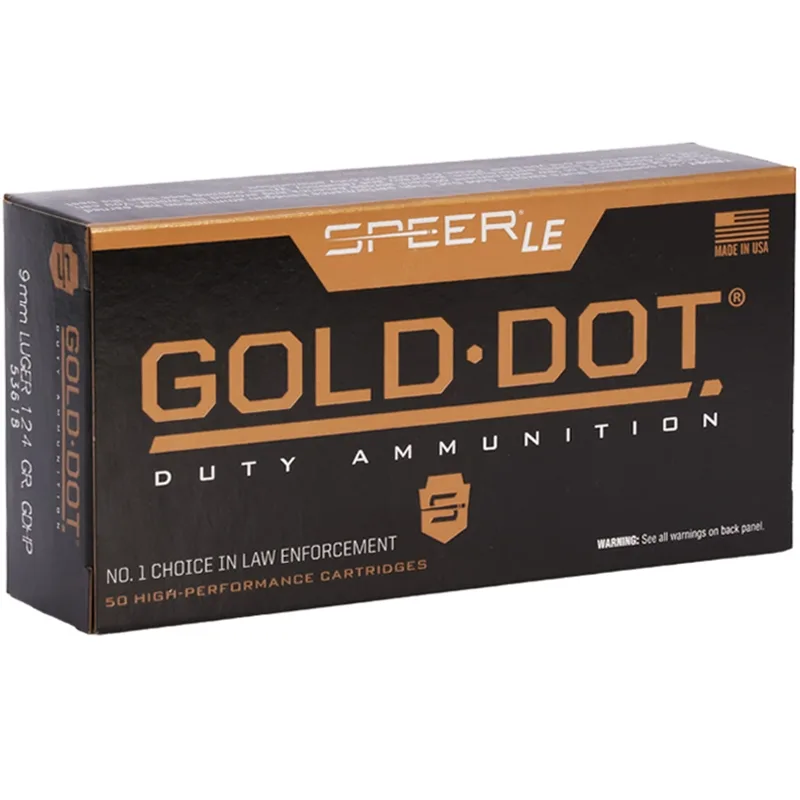
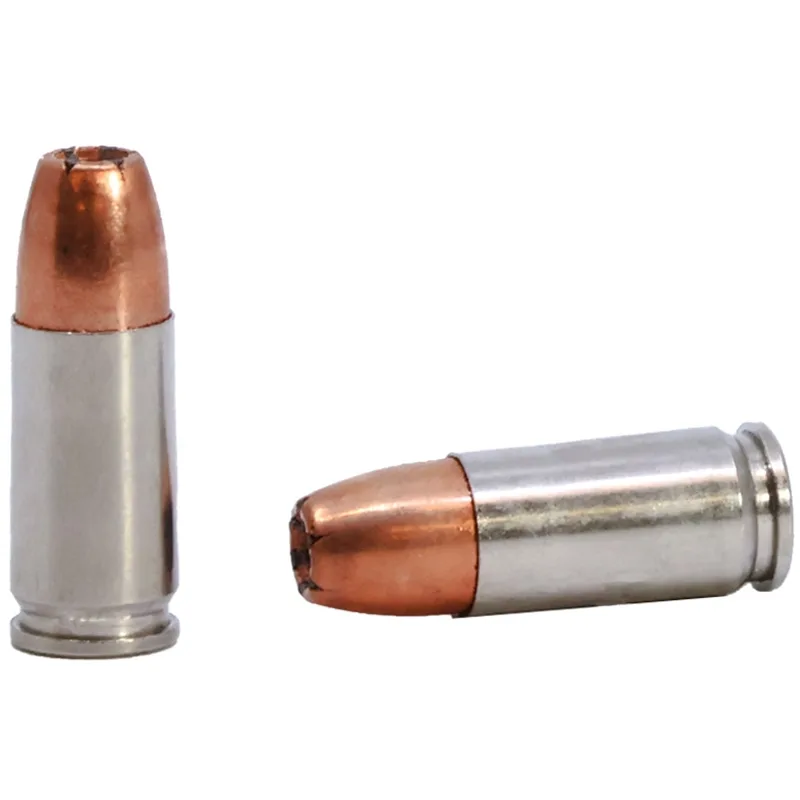
Tied for our highest-rated 9mm at 4.92 — and worth noting for the 5.7-curious: Speer now builds Gold Dot in 5.7x28mm too, one of the clearest signals yet that the big ammo makers consider the caliber a permanent resident:
“Feeds great through my g19. Pretty accurate with my red dot zeroed with Blazer 124gr. I can train with Blazer knowing this defense ammo will feel nearly the same and hit in the same place I expect. ”
— Fernando M., verified buyer
“Outstanding .9mm ammo at reasonable price. Functions perfectly in Sig P365, Springfield Hellcat, Kimber EVO SP and Sig P320. Very accurate. Good stuff from Speer Gold Dot.”
— John G., verified buyer
Check Prices on TARGET SPORTS USA
Capacity, Cost, Recoil — and the 5.7 Scarcity Problem
The top-ranking articles score these calibers category-by-category and tally a winner. Fair enough — but three of those categories deserve more honesty than a scoreboard row.
Capacity: the 5.7’s quiet superpower
A standard FN Five-seveN or Ruger-57 magazine holds 20 rounds in a grip no fatter than a service 9mm’s, and S&W’s M&P 5.7 holds 22 — KelTec’s P50 takes 50-round P90 mags, because why not. Typical full-size 9mms run 15–17. The skinny bottlenecked case stacks tighter, and the ultralight ammo means a fully loaded 5.7 pistol often weighs less than a loaded 9mm. If round count on board is your metric, the 5.7 wins outright — no asterisk.
Cost and availability: the 9mm’s compounding advantage
Here’s where the 5.7 pays for its magic. 9mm is the cheapest centerfire pistol ammo made; 5.7x28mm typically runs several times the cost per round for range ammo — industry pricing comparisons commonly put 5.7 at three to four times the per-round cost of bulk 9mm. Our catalog tells the structural story: 611 reviewed 9mm products from dozens of makers versus three 5.7 loads, effectively all from one corporate family (FN/Federal). One supply chain means shortages hit harder: ask the customers in our FAQ Desk section below who spent months refreshing the restock page. And don’t plan on reloading your way out — 5.7 cases wear a dry lubricant essential to function, and reloading them is widely advised against (the 9mm, meanwhile, is the most-reloaded pistol case on the planet). Compare live pricing yourself: 9mm Luger ammo | 5.7x28mm ammo — and remember bulk case purchases ship free.
Recoil: the 5.7 wins, and nobody seriously argues otherwise
Every major comparison agrees, and so do our reviewers: the 5.7’s featherweight bullets and small charge produce a recoil impulse commonly described as a third less than 9mm — closer to a hot .22 Magnum than a centerfire pistol shove. The 9mm is no thumper; a full-size 9mm is one of the softest-shooting service pistols there is. But the 5.7 is in another room entirely. For recoil-sensitive shooters, shooters with hand or wrist issues, or anyone who values fast, flat follow-up shots, this category isn’t close. It’s the single most common reason our 5.7 reviewers say they bought in.
Match the Round to the Mission: Carry, Home Defense, Range Fun, First Pistol
Concealed carry: 9mm for most people — 5.7 for the recoil-sensitive and capacity-obsessed
The 9mm compact is the default for good reasons: proven JHPs, endless holster and gun options, cheap practice. But the 5.7 case is real for specific carriers — 20+1 capacity, a feathery loaded weight, and recoil soft enough that shooters who struggle with 9mm snap can run a 5.7 fast and flat. If that’s you, load a modern purpose-built 5.7 defensive round and train with it. If you just want the safest bet, it’s still 9mm with HST or Gold Dot.
Home defense: 9mm on the proven math — 5.7 with homework
Behind a nightstand door, the 9mm with a quality JHP is the boring, correct answer with decades of data behind it. The 5.7’s counterpitch is 20+ soft-shooting rounds anyone in the household can control — and on the over-penetration question the sources genuinely split, so we won’t pretend it’s a tiebreaker either way. If you go 5.7 for home defense, choose a modern defensive load deliberately; don’t stuff the mag with green-tip range ammo and call it done.
Range fun and skill-building: this is the 5.7’s home turf
Let’s be honest about why most people buy a 5.7: it’s an absolute riot. Dead flat to distances that embarrass other pistols, recoil like a cap gun, 20-round mags, and a ballistic personality nothing else on the pistol shelf has. Our reviewers ring 200-yard steel with iron sights and shoot sub-2” groups at 25. The catch is the meter running on every magazine — high-volume training is the 9mm’s kingdom, at a few cents per trigger pull through loads like the Blazer Brass and New Republic above. Plenty of our customers solve this the obvious way: a 9mm for volume, a 5.7 for joy.
First pistol: 9mm, full stop — with one exception
A new shooter needs cheap practice, forgiving guns, and ammo on every shelf: that’s the 9mm job description. The exception is the shooter for whom recoil is the barrier to entry — for them, a 5.7’s gentleness can be the difference between practicing and quitting. Budget for the ammo bill, or the practice won’t happen anyway.
From Our Inbox: Questions Buyers Sent Us
We answer customer questions on product pages every day — 11,000+ published Q&As and counting. Real exchanges (lightly trimmed) that map straight onto this comparison:
Q: “When will this or any 5.7 ammo period be back?” (asked on the American Eagle 5.7) A: “we have 100 cases arriving here tomorrow, however we will not put them in stock until Friday.. Keep an eye out of sign up to be notified.” During the last big shortage, the AE5728A product page collected more restock questions than almost anything we sell — one customer told us he’d close his shop for an hour just to be online when it dropped. That’s 5.7 ownership in a shortage: a single-source caliber goes out of stock first and comes back last. Plan your reserves accordingly.
Q: “Is the current price about supply and demand or is this what it is going to be. Because if so might have to look at different calibers.” A: Straight from our desk: “supply/demand controls the price, nothing else at this moment. All the raw materials cost the same as before.” The honest economics of a niche caliber — there’s no competition pressure from dozens of makers like 9mm enjoys, so prices breathe with demand.
Q: “Is this ammo magnetic?” (asked constantly about range ammo) A: For the Blazer Brass 9mm: “features a lead core Non-Magnetic Full Metal Jacket bullet” — fine at any indoor range. This question cuts the other way in 5.7: the lead-free SS198LF can fail a range’s magnet test (one of our reviewers got turned away). If you shoot indoors, check your range’s rules before stocking up on the green tips.
Q: “What is the different between 115 grain and 124 grain?” A: As our desk put it: “the 124 Grain bullet will be a bit slower but will have a higher muzzle energy.” Now scale that logic up and you’ve got the entire 5.7-vs-9mm energy paradox from earlier — bullet weight does heavy lifting that velocity alone can’t.
Q: “Ok to use for Glock 19C with ported barrel?” (asked about Blazer Brass 9mm) A: “CCI recommends you do not use this product in a firearm with a ported barrel.” Compensated and ported guns can have ammo restrictions in any caliber — check your manuals, plural.
Q: “besides the price for 50 rounds vs 20, what is the difference in performance between the law enforcement 124 hst’s and the self defense 124 hst’s?” A: From our desk: “there is 100% No difference between the two rounds… except for the packaging and quantity.” Buy the 50-round LE boxes and use the savings to actually vet your carry load — fifty flawless rounds through YOUR gun minimum, in 9mm or 5.7, before you trust it.
FAQ: 5.7 vs 9mm Questions We Hear Most
For most shooters, no — the 9mm delivers more muzzle energy (roughly 320–420 ft lbs vs 220–300 ft lbs in factory loads), costs a fraction as much per round, and offers vastly more ammo and pistol choices. The 5.7 is better at specific things: velocity (1,650–2,200+ fps), flat trajectory, very soft recoil, and 20+ round magazine capacity. Which is “better” depends on whether you value proven versatility or specialized performance.
It can be, with the right ammunition. Modern purpose-built 5.7 defensive loads from major makers (FN, Speer, Hornady) are dramatically better than the caliber’s early options, and the round’s soft recoil and 20+ round capacity are genuine defensive assets. The 9mm still has the deeper terminal-performance track record, so load selection matters more in 5.7 — choose a dedicated defensive load, not range ammo.
Scale. Effectively a single corporate family (FN and Federal) produces nearly all factory 5.7x28mm, while dozens of manufacturers compete on 9mm — our own catalog carries 611 reviewed 9mm products versus three 5.7 loads. Less competition and lower volume mean higher prices and slower restocks, typically several times the per-round cost of bulk 9mm.
The classics are FN’s Five-seveN pistol and P90/PS90 carbine. Since 2020 the field has exploded: the Ruger-57, Smith & Wesson M&P 5.7, Palmetto State Armory 5.7 Rock, and KelTec’s P50 and PR57 all chamber it, plus several pistol-caliber carbines. Most feed from 20+ round magazines — capacity is one of the caliber’s signature advantages.
Yes, clearly. The 5.7’s 27–40 grain bullets and small powder charge generate a recoil impulse commonly described as about a third less than 9mm — many shooters compare it to a magnum rimfire. The 9mm is already a soft-shooting service cartridge, but the 5.7 is the softest-recoiling centerfire pistol round in common use, which is exactly what it was designed to be.
No. The 5.7x28mm uses a .224”-diameter bullet — the same bullet diameter class as the .223 Remington — but the cartridges are completely different sizes and pressures and are absolutely not interchangeable. Think of the 5.7 as a miniature bottlenecked rifle-style case scaled for pistols and PDWs.
It’s generally advised against. The 5.7 case is coated with a dry lubricant that’s essential to reliable function in its delayed-blowback firearms, and that coating doesn’t survive repeated firing and resizing. The 9mm, by contrast, is the most commonly reloaded pistol cartridge in the world — if handloading matters to you, that’s a point for the 9mm.
Farther than nearly any other pistol cartridge. The 5.7 was designed to be effective to 200 meters, and its flat trajectory makes 100-yard pistol hits realistic for ordinary shooters — published trajectory data shows roughly half to a third the drop of a 9mm at 100 yards. One of our verified buyers reports going “20 for 20 at 200 yards” on a silhouette with a Five-seveN and iron sights.
The Send-Off
A hundred and thirty-five thousand reviews later, here’s the honest scorecard. The 9mm wins the practical comparison and it isn’t close: more energy, a tiny fraction of the cost, six hundred products to the 5.7’s three, and a defensive track record the 5.7 will need decades to match. But our 5.7 customers rate their ammo at exactly the same 4.76 stars as the 9mm army — because the 5.7 isn’t trying to win the 9mm’s contest. It sells the one thing the 9mm can’t: rifle-like speed, a laser-flat trajectory, 20-round mags, and recoil your wrist won’t believe, all in a pistol.
Our recommendation after 15+ years of selling both: if you’re buying your one practical pistol, buy the 9mm. If you’re buying your next pistol — the fun one, the flat one, the one that rings steel at 200 — the 5.7 has earned its slot. Just walk in knowing the ammo bill, and stock deep when it’s in stock, because the one thing 5.7 owners never say is “I’m sure they’ll have more next week.”
Shop the calibers: 9mm Luger Ammo | 5.7x28mm Handgun Ammo | 5.7x28mm Rifle Ammo | Bulk Ammo – Free Shipping

Jon-Paul (JP) is a seasoned firearms industry professional with over a decade of experience spanning firearms, sport shooting merchandising, and customer service. Passionate about all things 2A, he brings a wealth of hands-on knowledge to the world of firearms and ammunition.
When he’s not working, you’ll likely find JP at the range, diving into the latest ballistics trends, or engaging with the shooting community on forums like AR15.com
Feel free to connect with him to collaborate or chat about anything ammo-related.