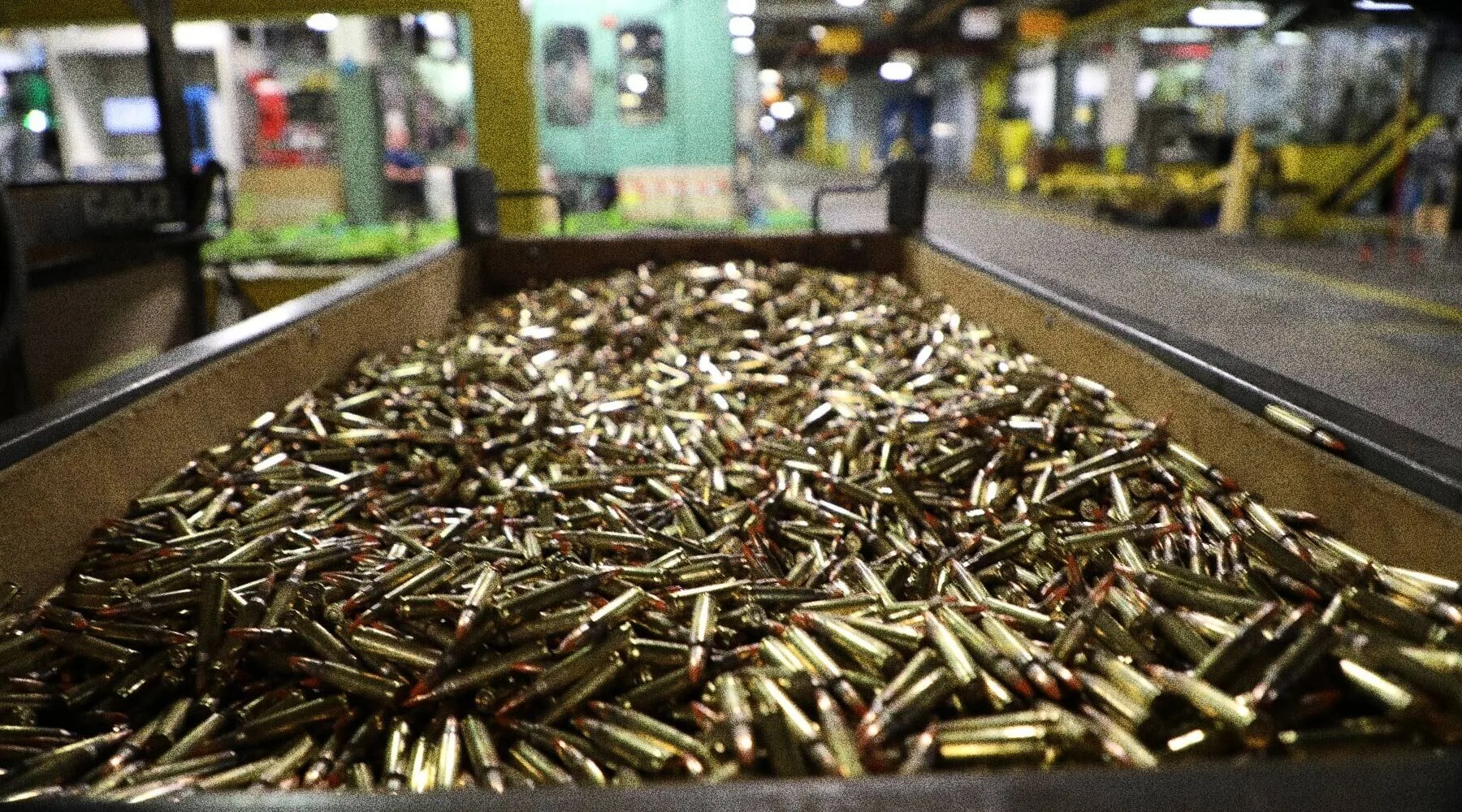
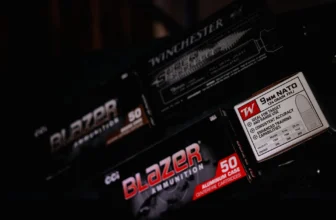
Quick Summary: Major ammunition brands including B&P, Blazer, CCI, Federal, Fiocchi, HEVI-Shot, Remington, and Speer have confirmed another ammunition price increases set to take effect April 1, 2026. The increases are expected to impact rifle, handgun, shotshell, and rimfire ammunition across a wide range of popular product lines, with adjustments generally falling between 2% – 10% depending on category. Manufacturers cite continued volatility and rising costs tied to key raw materials, including copper, lead, zinc, antimony, and propellants, as the primary drivers behind the pricing changes, with additional uncertainty remaining around pricing beyond mid-2026.
What the April 2026 ammunition price announcement says
The upcoming pricing adjustments will apply broadly across rifle, handgun, shotshell, and rimfire ammunition produced by brands such as Federal, CCI, Remington, Blazer, Fiocchi, HEVI-Shot, Speer, and B&P. Any existing or future orders scheduled to ship on or after April 1, 2026, are expected to reflect the updated pricing unless orders are canceled ahead of shipment. Updated price lists are expected to be distributed in advance of the effective date, giving dealers and distributors a limited planning window before the changes take effect.
Manufacturers are also signaling that pricing conditions beyond mid-2026 remain uncertain due to ongoing volatility in global commodity markets. While current pricing adjustments are scheduled to take effect April 1, 2026, brands have indicated that they may reassess pricing later in the year if raw material costs or supply-chain conditions change materially. In such cases, additional price adjustments could be implemented on relatively short notice, with customers retaining the option to cancel affected orders if necessary.
Key takeaways
- Several major ammunition brands, including Federal, CCI, Remington, Blazer, Speer, Fiocchi, BP, and Hevi-Shot, announced a 2% to 10% price increase effective April 1, 2026.
- The price changes apply to rifle, shotshell, handgun, and rimfire ammunition and will affect all orders shipping on or after April 1, 2026.
- The manufacturers cite unprecedented volatility in key raw materials such as copper, lead, antimony, zinc, and propellants as the primary drivers of the adjustment.
Why major ammo brands say prices are rising
Manufacturers attribute the April 2026 ammunition price increases to sustained cost pressure and volatility across critical raw materials used in ammunition production. Core inputs cited include copper, lead, zinc, antimony, propellants, tungsten, and bismuth, materials that directly affect everything from brass cases and bullet jackets to shot and powder.
Copper remains one of the most influential drivers. Widely used in bullet jackets and brass alloys, copper has been trading near multi-year highs, with 2026 price projections commonly falling in the 10,000–12,000 USD per metric ton range. Demand from power infrastructure, data centers, and industrial manufacturing continues to strain supply. Lead, another essential ammunition metal, has also experienced volatility through 2025 amid tariff concerns and shifting demand from battery and industrial sectors, before stabilizing closer to the 1,900–2,050 USD per metric ton range late in the year.
Additional pressure comes from antimony and zinc. Antimony, used to harden lead alloys and in certain specialty projectiles, is sourced from a relatively concentrated global supply base, increasing exposure to disruption. Zinc, critical for brass and coatings, has faced its own supply-demand challenges, with analysts warning of near-term tightness even as longer-term capacity expansion remains uncertain.
Propellants and primers add another layer of sensitivity. While some high-volume calibers saw retail pricing soften in parts of 2025, upstream material costs, tariffs, logistics constraints, and geopolitical risk continue to ripple through the supply chain. The result is a market where temporary retail relief does not always reflect long-term wholesale stability.
How much prices are expected to change by ammunition type
While exact SKU-level pricing has not been released, manufacturers have outlined adjustment ranges by category. All major ammunition types are expected to see increases between 2 and 10 percent beginning April 1, 2026.
| Ammunition Type | Expected Adjustment Range |
|---|---|
| Rifle | 2% – 10% |
| Handgun | 2% – 10% |
| Shotshell | 2% – 10% |
| Rimfire | 2% – 10% |
Rifle and handgun ammunition, including widely used calibers such as 9mm, .40 S&W, and .45 ACP, are expected to move within the same range across brands like Federal, CCI, Blazer, Remington, Speer, and Fiocchi. Shotshell ammunition will see comparable adjustments, with particular attention on tungsten- and bismuth-based loads from Federal, Remington, Fiocchi, HEVI-Shot, and related product lines, where material costs are already elevated.
Rimfire ammunition is also included in the adjustment, affecting high-volume products such as .22 LR and .17 HMR. Even modest percentage changes can become meaningful at scale when applied to bulk quantities.
How long the new pricing could last?
Manufacturers have indicated that pricing beyond July 1, 2026 remains uncertain due to ongoing volatility in commodity markets. While the April 1 increase is confirmed, companies have reserved the option to reprice again later in the year if raw material or supply-chain conditions change materially, with order cancellation options remaining in place should further adjustments occur.
Commodity forecasts suggest this caution is warranted. Copper markets remain sensitive to supply disruptions, tariffs, and energy-transition demand. Lead pricing continues to react to regulatory and inventory shifts, while antimony and zinc markets face their own supply and regulatory pressures. These factors collectively influence the cost structure behind bullet jackets, cores, cases, and shot, reinforcing the possibility of additional pricing movement in the second half of 2026.
How this fits into broader ammunition market trends
The April 2026 adjustment reflects broader trends that have shaped the ammunition market over the past several years. Following pandemic-era demand spikes and supply constraints, some calibers have partially normalized, while others remain structurally elevated. Industry forecasts continue to project steady global ammunition market growth through 2026 and beyond, driven by defense demand and consistent civilian use.
At the same time, structural demand for raw materials across sectors such as energy, automotive, and infrastructure has kept key inputs expensive and volatile. That backdrop aligns with manufacturers’ stated need to adjust pricing to maintain production continuity and quality standards across brands, including Federal, CCI, Remington, Blazer, Speer, Fiocchi, B&P, and HEVI-Shot.
For our Target Sports USA readers, as previously mentioned, the April announcement serves as another indicator that ammunition pricing remains closely tied to upstream commodity conditions. While competition, promotions, and inventory cycles will continue to create pockets of value, the broader pricing environment is increasingly shaped by factors well beyond retail demand alone.
Disclaimer: This article is provided for informational purposes only and reflects industry-wide pricing announcements communicated by ammunition manufacturers. Target Sports USA has not implemented any price increases or executive pricing changes at this time. All pricing on TargetSportsUSA.com remains subject to change based on market conditions, inventory availability, manufacturer adjustments, and other factors, and may change at any time without prior notice.

Kailon Kirby covers the ammunition market for Target Sports USA, where he has a view most writers never get. Working inside one of the country's largest online ammo retailers, he tracks pricing movements, supply conditions, and brand-level shifts as they happen, not after the fact.
A Connecticut State Pistol Permit and Concealed Carry holder, Kailon isn't just watching the numbers. He shoots, he carries, and he understands what market changes actually mean for the person standing at the counter or checking out online. That combination of ground-level industry access and shooter perspective is what shapes everything he writes.
When something is moving in the ammunition market, Kailon is usually the first to see it.
- Kailon Kirby
- Kailon Kirby
- Kailon Kirby

- Kailon Kirby