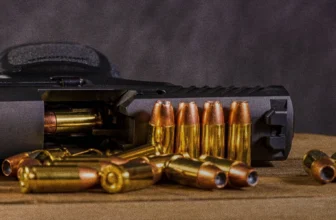
Choosing between subsonic and supersonic ammo starts with understanding that the only real dividing line is the speed of sound: subsonic loads are built to stay below roughly 1,100–1,125 feet per second, while supersonic loads are designed to exceed it and create the familiar downrange “crack.” That speed difference drives everything else shooters care about, from how loud each shot sounds (especially with a suppressor) to how flat the bullet flies, how hard it hits, and how reliably it cycles your firearm. In this guide, the goal is to cut through marketing and internet lore and give you a clear, practical look at how subsonic and supersonic rounds actually behave so you can match the right load to your range work, hunting, or suppressed shooting without sacrificing safety, reliability, or realistic performance expectations.
Subsonic vs Supersonic Ammo: At-a-Glance Comparison
| Characteristic | Subsonic Ammo | Supersonic Ammo |
|---|---|---|
| Bullet speed | Below the speed of sound (roughly under 1,100–1,125 fps, depending on conditions) | Above the speed of sound, commonly 2,000+ fps in rifle cartridges |
| Noise level | Much quieter; no “sonic crack,” especially effective with a suppressor | Louder; creates a sharp crack as it breaks the sound barrier even when suppressed |
| Recoil | Generally softer recoil because of lower velocity and pressure | Usually more recoil due to higher velocity and energy |
| Trajectory | More bullet drop; best at short to moderate ranges | Flatter trajectory; better for longer‑range shooting and easier holds |
| Kinetic energy | Lower impact energy and reduced penetration potential | Higher impact energy and typically better terminal performance |
| Best with suppressors | Ideal choice when using a suppressor and prioritizing stealth or hearing safety | Can be suppressed, but sonic crack remains, so less overall noise reduction |
| Typical uses | Training, plinking, close‑range hunting, pest control, tactical/urban use, and home defense where noise is a concern | General target shooting, duty/self‑defense, most hunting, and situations needing reach and power |
Subsonic ammo travels below the speed of sound, so it avoids the loud sonic crack and pairs very well with suppressors, but it has more bullet drop and lower impact energy. Supersonic ammo is faster, louder, and delivers more energy with a flatter trajectory, which makes it better for longer‑range shooting and most hunting or defensive roles.
What “subsonic” and “supersonic” really mean
At the core of this comparison is the speed of sound. In standard conditions near sea level, the speed of sound in air is roughly 1,100–1,125 feet per second (fps), and this threshold divides subsonic from supersonic behavior. Subsonic ammunition is intentionally loaded so the bullet stays below that threshold, while supersonic ammo is loaded so the bullet exceeds it for more velocity and energy.
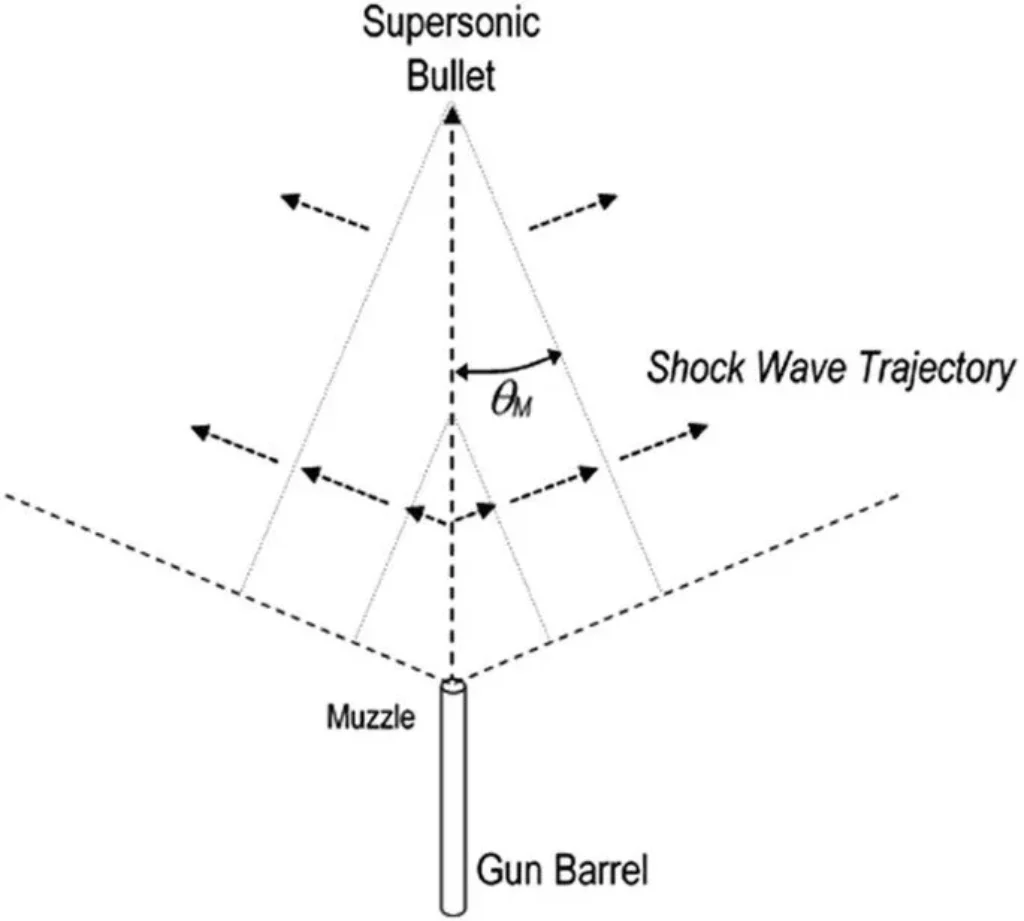
When a bullet is supersonic, it creates a shock wave, often described as an N‑wave, that propagates along its flight path and is heard as the familiar sharp crack downrange. Subsonic bullets never generate this shock wave, so the only major sound source is the muzzle blast, which can be further reduced by a suppressor and good hearing protection.
Key Takeaways
- Subsonic ammunition travels below the speed of sound and avoids the ballistic “crack” created when a bullet breaks the sound barrier.
- Supersonic ammunition is more common, typically offers a flatter trajectory and higher impact energy, but produces more overall noise.
- Combining subsonic ammunition with a quality suppressor can reduce peak gunshot noise by more than 20 dB compared with unsuppressed high‑velocity loads in some test conditions.
Muzzle energy is calculated using bullet weight and velocity, which helps explain why some slower rounds still deliver meaningful terminal performance.
Energy (ft-lbs) = (Bullet Weight (grains) × Velocity²) ÷ 450240
————————————————————————————–
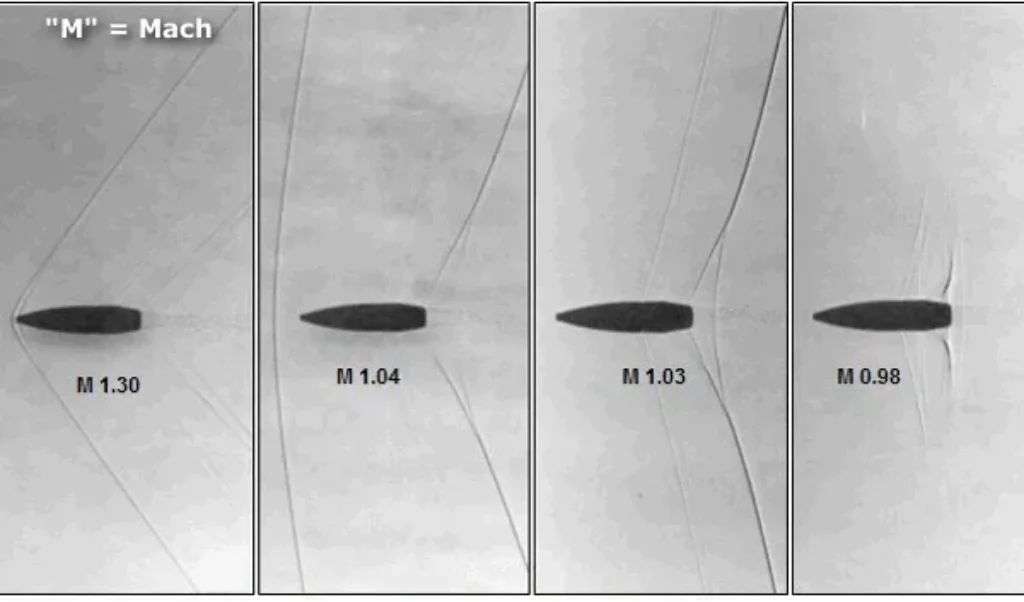
Speed can also be expressed using Mach numbers, where Mach 1 equals the speed of sound. For example, a bullet traveling at Mach 0.98 corresponds to roughly 1,116 fps, keeping it safely below the sonic threshold.
Speed = Mach Number × Speed of Sound
Speed = 0.98 × 1116.5 fps
Speed ≈ 1094.17 fps
Subsonic vs Supersonic Ballistics Chart (9mm, 5.7×28, 300 BLK)
9mm Example Ballistics
These examples show how common 9mm loads differ in speed and energy.
| Load type | Bullet weight | Muzzle velocity | Muzzle energy |
|---|---|---|---|
| Supersonic FMJ practice | 115 gr | ~1,180 fps | ~355 ft‑lbs |
| Supersonic defensive JHP | 124 gr | ~1,150 fps | ~360 ft‑lbs |
| Subsonic JHP | 147 gr | ~975–1,000 fps | ~320 ft‑lbs |
Winchester Super Suppressed 9mm 147 gr Full Metal Jacket – SUP9 990 fps
5.7×28mm Example Ballistics
These examples highlight how standard high‑velocity 5.7 loads compare to newer subsonic options.
| Load type | Bullet weight | Muzzle velocity | Muzzle energy |
|---|---|---|---|
| Supersonic FMJ practice | 40 gr | ~1,900–2,050 fps | ~260–370 ft‑lbs |
| Supersonic defensive JHP | 40 gr | ~1,800 fps | ~285 ft‑lbs |
| Subsonic heavy FMJ | 62 gr | ~1,050–1,080 fps | ~150–160 ft‑lbs |
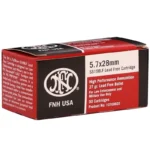
FN Herstal 5.7x28mm 27 gr Lead Free Hollow Point – SS198LF 2216 fps
300 Blackout Example Ballistics
These 300 BLK figures highlight the contrast between subsonic and supersonic loads.
| Load type | Bullet weight | Muzzle velocity | Muzzle energy |
|---|---|---|---|
| Supersonic hunting / defense | 110–125 gr | ~2,100–2,250 fps | ~1,300–1,400 ft‑lbs |
| Subsonic heavy bullet | 220 gr | ~1,000 fps | ~500 ft‑lbs |
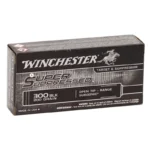
Winchester Super Suppressed 300 AAC Blackout 200 gr Open Tip – SUP300BLK 1060 fps
Join AMMO+ to save even more | Notice: Prices shown are accurate at the time of writing and may change without notice. | Restock Ammo List
How speed affects noise, recoil, and trajectory
Noise differences (crack vs muzzle blast)
The biggest practical difference most shooters notice is sound and recoil. High‑velocity ammunition produces both muzzle blast and the supersonic crack, so peak sound levels for unsuppressed rifle fire can exceed 140–150 dB at the shooter’s position. Laboratory measurements have shown that moving from high‑velocity to low‑velocity ammunition, and adding a suppressor, can reduce overall sound levels at the ear by around 40 dB compared with unsuppressed high‑velocity conditions.
Recoil impulse and shootability
Subsonic ammunition also tends to generate less recoil because it uses less powder and lower velocity, even when paired with heavier bullets to preserve energy. That reduced recoil can make it easier to maintain sight picture and shoot longer strings comfortably, especially in platforms like pistol‑caliber carbines or suppressed .22 LR rifles.
Trajectory and holdover considerations
However, the slower speed of subsonic bullets means a more arcing trajectory and more drop at distance. Supersonic loads, by contrast, offer flatter trajectories and generally retain more kinetic energy downrange, which is why they dominate in hunting and most rifle applications.
When subsonic ammo makes sense
The primary reason to choose subsonic ammunition is noise management. For shooters using suppressors, keeping bullet speed below the sound barrier avoids the downrange crack, so the suppressor can work mostly on the muzzle blast and make the overall shot significantly quieter. Medical and acoustic research on gunshot noise confirms that low‑velocity loads plus a suppressor substantially reduce both peak levels and long‑term noise exposure compared with unsuppressed high‑velocity fire.
Subsonic ammunition also has niche roles in training and certain forms of target shooting. Heavier subsonic bullets can still create meaningful wound channels at short range, but they carry less energy and penetrate less than comparable supersonic loads, which can be relevant for backstop and barrier considerations on managed ranges. For shooters evaluating subsonic performance in their own rifles, a recommended test protocol is to chronograph several five‑shot strings, record group size at incremental distances, and confirm that velocities remain below the transonic region (roughly 1,050–1,125 fps depending on conditions).
Where supersonic ammo still excels
Although subsonic rounds offer real advantages in noise and recoil, supersonic ammunition remains the standard for most general use because of its ballistic performance. The extra velocity improves energy on impact, which is important for reliable expansion with many modern hunting and defensive bullets within their designed velocity windows. This same speed also flattens the trajectory and reduces wind drift over typical field distances, simplifying holds and expanding the margin for error in range estimation.
Supersonic loads are also far more widely available across calibers, bullet weights, and price points, making them the default choice for most shooters who are not specifically optimizing around suppressor performance. For anyone comparing the two in a given rifle, a practical approach is to zero with the chosen supersonic load, document point‑of‑impact shift with a representative subsonic load at multiple distances, and keep those offsets in a data card or notebook with the rifle.
Safety, standards, and how to choose responsibly
Whichever ammunition type is used, hearing protection remains necessary. Even with low‑velocity ammunition and a suppressor, peak levels at the ear can still exceed recommended occupational limits, so combining suppressors, subsonic loads, and proper hearing protection provides the best margin of safety. Velocity and pressure specifications for commercial ammunition are guided by industry bodies such as SAAMI, whose published test data helps manufacturers keep loads within safe operating envelopes for typical firearms.
Disclaimer: From a compliance and safety standpoint, ammunition choice should always account for backstop quality, local laws, and range rules, not just noise and ballistic performance. For many shooters, the practical path is to use commonly available supersonic loads for hunting and general rifle work, reserve subsonic loads for suppressed shooting or specialized range setups, and confirm actual performance of both through documented testing rather than assumptions.

Kailon Kirby covers the ammunition market for Target Sports USA, where he has a view most writers never get. Working inside one of the country's largest online ammo retailers, he tracks pricing movements, supply conditions, and brand-level shifts as they happen, not after the fact.
A Connecticut State Pistol Permit and Concealed Carry holder, Kailon isn't just watching the numbers. He shoots, he carries, and he understands what market changes actually mean for the person standing at the counter or checking out online. That combination of ground-level industry access and shooter perspective is what shapes everything he writes.
When something is moving in the ammunition market, Kailon is usually the first to see it.
- Kailon Kirby
- Kailon Kirby
- Kailon Kirby

- Kailon Kirby